

DECATUR, Ga.–One of the biggest challenges in having conversations around race is often the issues are “too heavy” for most white people to deal with. But having those conversations, explained one expert, is the only way to effectively handle emotions and heal communities—and that includes credit unions.
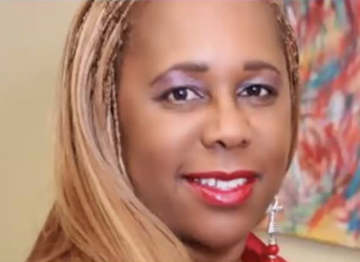
During the opening session of the five-part “Commitment to Change Conversation Series” being hosted virtually by the African American Credit Union Coalition this week, Jai Dei Jackson, a licensed professional counselor, offered insights around handling emotions and healing a community, while making clear the pain many African Americans experience every day.

Black Lived Experience
“Imagine for a moment if someone was constantly kicking you in the leg or punching you in the bag, but with your clothing the bruises were not visible,” said Jackson. “And then (the person kicking and punching) walked away. And then another person walked up, but they didn’t see you being punched and kicked. They wonder why you are agitated and angry. And this is it. There is this invisible emotion that no one can see that gets played out day after day.”
Jackson said the Black Lived experience is mostly left unacknowledged by White America and corporate America until it becomes “too egregious to ignore.”
But even in those egregious cases, Jackson said African Americans have learned not to discuss racial issues in a mixed race audience.
“It would be safe to say most White people are clueless about the lived experiences of African Americans,” said Jackson. “How is this possible that so many don’t understand? When it’s too heavy for white people to deal with, we tend to not deal with it.”
For there to be a genuine connection with someone who is different from oneself it requires first being able to empathize with their world as they experience it and authentically empathize with their experience, said Jackson. “If not, it’s virtually impossible.”
‘I Don’t See Color’
Jackson said many white people, believing themselves to be enlightened on racial issues, will say, “I don’t see color.”
“It does not often occur to them they are being dismissive, insulting or racist,” said Jackson. “There is beauty in seeing color. What’s implied in this statement is whiteness is the norm, which allows them to not see racist, discriminatory practices. It allows them to stop listening, engaging, understanding and/or participating in change.”
‘It Hurts’
Jackson shared what she called a “news flash” with her credit union audience: “Racism, racist hate mail, racist comments, racial profiling, racial discrimination, microaggression—all of it hurts,” said Jackson. “They are very painful to experience personally, vicariously and second handedly.”
Related to that pain, Jackson posted a poll for webinar participants to answer the question, “How do you handle your emotions and deal with your pain and mistrust?”
The responses:
- Cry, feel sad depressed: 19%
- Express anger: 9%
- Struggle with what to do next: 40%
- Ask for help or see a counselor: 10%
- I’m numb to it: 22%
Holding Onto Pain
Jackson said even when the pain is terrible, African Americans are conscious of struggling to avoid being labeled the “ABP, the angry Black person.” An ABP, she said, is a person who is often ignored.
“Most African Americans are holding onto way more pain than they are releasing; however, we usually don’t feel we have the luxury of expressing that pain,” Jackson said, noting regardless of how much pain an African American may feel, they respond by telling themselves, “‘I will not give them the satisfaction of letting them know they have hurt my feelings.’ If that is case, how can you ever expect to move beyond the pain?”
Too Heavy
Jackson said talking about racial issues is often deemed to be an inappropriate conversation that is too heavy for white people to deal with. Many white people, she said, will make comments in such conversations as, “I didn’t do it, I’m not a racist.”
“We don’t want to make them uncomfortable, and we do not want to have to deal with their discomfort or have to provide them comfort when we are the ones in pain,” Jackson explained. “It feels impossible, but I’m here to say with patience and effort we can learn to understand each other. It’s not easy; it can be difficult. But it’s worth it, because the alternative is to continue deferring the pain.”
Dealing/Not Dealing With Pain
Jackson asked her audience what happens to pain and/or anger that doesn’t get addressed or healed?
“Is pain deferred like a dream deferred? When people feel unheard or unable to express their emotional pain, it will either turn inwards or outwards,” she said. “Anger is outwardly expressed pain, and depression is unhandled emotions. A lot of people have anger, explosion, rage—it’s not uncommon.”
But not dealing with it is no panacea, she stressed.
“You cannot heal what you will not reveal,” continued Jackson. “Unhealed emotional wounds, pain, and hurt will express itself in your behavior and attitudes. It will show up as mistrust. It will perpetuate itself over and over throughout your experiences within you interactions and your reactions.”
The reward in healing emotional wounds, said Jackson, is stopping the transference of the pain to children.
The Healing
Where does healing begin? With “us,” said Jackson.
“You cannot heal a community if you are unwilling to heal yourself, “ she said. “When you are healed, that’s when you can demonstrate and teach.”
Jackson said it’s time for the African American community share its experiences and for White America to listen without judgement in order to hear the “hard truths.”
“In other words, it is time for them to stop being defensive and they are not a racist and they have a Black friend, and to stand in a place of openness,” Jackson said.
Knowledge, said Jackson, allows one to choose to do something different also provides the power to heal emotional wounds. Healing also requires a willingness to be healed, she added.
To make progress, Jackson said people will need to come together and support one another and remain committed to “H.E.A.L.,” which stands for:
- Honesty
- Empathy
- Acknowledgement
- Love
To heal a community, Jackson said:
- There must be a willingness to learn from one another
- There must be support for each other by getting involved
- People must continue to have table talks at work, school communities and home
- Everyone must continue to educate themselves and others