

DULUTH, Ga.–Four credit union CEOs shared insights on how they are leading during the pandemic, what their CUs have done and will do—including with employees worried over their jobs--how they have dealt with racial justice and inclusion, and numerous other pressing issues during a more than hour-long discussion.
The views were shared during a webinar on “Leadership in Times of Crisis” hosted by the African American Credit Union Coalition as part of its week-long Commitment to Change series. The participating CEOs included Lynette Smith of True Energy FCU, Deborah Fears of Chicago Post Office Employees CU, Max Villaronga of El Paso Area Teachers FCU, and Timothy L. Anderson of United States Senate FCU.
The conversation was moderated by Shelton Roulhac, vice president of communications with NASCUS. Below is a look at what was discussed:
Roulhac: Tell us about your philosophy in leading and managing during a crisis?
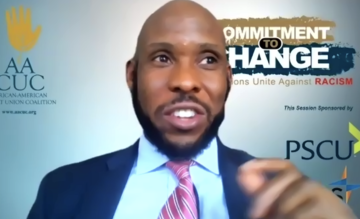
Shelton Roulhac
Smith said there are four behaviors that help leaders manage a crisis, citing a Harvard Business Review article. Those four behaviors are:
- Decide with speed over precision. “What does that mean? Leaders need to quickly process available information and make decisions with conviction,” said Smith. “We are not going to be perfect.”
- Adapt boldly. “Decide what not to do,” said Smith. “Review your strategic business plan; it may no longer be relevant.”
- Deliver reliably. “This is very important. We have to take control in this situation, even in situations where we are not in control.”
- Engage for impact. “Take care of your team and keep them engaged. Their health and well-being are a top priority for your continued success.”
“Speed is something we really had to do,” said Smith, noting that before COVID-19, 38% of her CU’s employees had the ability to work remotely. Within two weeks it was able to change that number to 90%.
Roulhac: How do you respond to those four behaviors?
Villaronga: “One of the things I did before Credit Union Land was serving as an infantry officer in the Marine Corps and one of the things I learned was an 80% solution delivered on time is more important than a 100% solution delivered late.
Fears: I became president/CEO the week before the pandemic. It’s definitely not how I thought I would spend first five months in this role. I had been interim president. But officially being president makes it so much more real. I realize the decisions I make could potentially affect whether our staff can feed their children. The one that stands out to me is the ability to adapt boldly. We didn’t have a choice. We had to step in and step up. Part of the adaptability for me is having a growth mindset. I tried to really focus on what we could discover, where were the opportunities, and how can we improve--our staff, our credit union, our member services. That has been my focus for the past five months.
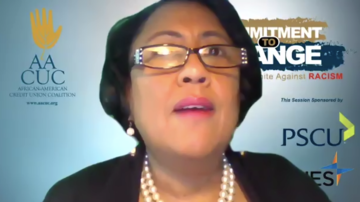
Lynette Smith
Anderson: This is a self-induced shutdown and unlike any downturn we’ve seen. It’s like a self-induced coma. This is different; no blueprint. It requires some speed and precision. One of the things I will say is at our CU we have about 120 employees, $1.1 billion in assets. We did not have a philosophy of teleworking. We didn’t subscribe to that as something we wanted to do, and then we were presented with this crisis with no blueprint. We had to move with speed. We put together a crisis management team and were able to take the entire CU remote in a matter of three weeks. Everyone stepped up in the time of crisis. One of the things I’ll say in relation to ‘engage for impact’ is we talked about taking care of the environment at our credit union, which simply means looking after each other, and I think that’s critical.
Roulhac: Talk about leading during this time.
Anderson: I am reminded of Theodore Roosevelt, who said, ‘People don’t care how much you know until they know how much you care.’ This pandemic requires empathy and leadership where everyone can rally together. Our employees are at home looking after relatives. People have lost jobs. Some have lost their lives, unfortunately. As a leader, you have to look after the whole person. I came up in banking way back in the day when it was leave your problems at home when you come to work. I just don’t believe that. I believe I have to be concerned with the whole person so they can get more done at work.
Smith: I have daily COVID task force meetings, whether they require 15 minutes or an hour, with myself, our COO, CFO and HR manager. We want to make sure the whole team remains engaged. Employees are worried about their jobs. One thing I will say about the industry is I am so proud we’re able to serve 120 million members around the country and that we stepped in and did what we needed to do.
Roulhac: There is a constant theme of this empathetic leadership. Tell us about your leadership journey and how your staff has reacted?
Fears: As CEO, you can’t help but be empathetic. I have been in their shoes and am in their shoes. I have a young son, too. My team has been phenomenal. I’ve seen so much growth in the team over these last few months. They have stepped up for our membership and each other. We had to shut down a branch for a bit and we don’t have a drive-through, so we implemented curbside service. Members loved it. It’s a cashless branch. The staff really just banded together for our membership to make sure we could offer the best service we could.
Roulhac: What have you noticed is the biggest difference early on in the pandemic versus now?
Villaronga: It’s hard to answer. Everything that’s going on creates this environment of anxiety. This isn’t just a little bit of penicillin at one time. We need a long-term treatment plan--this is an 18-month type event. We need to continue multiplying our access points to our team, we have to be visible to our team.
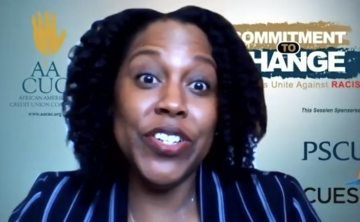
Deborah Fears
If not, the team feels very much like a ship without a rudder. Our teams are going to continue to feel isolated at home when working remotely, and even in our offices where we have a lot fewer people. We have to keep this top of mind. It’s important not to sugarcoat it. I’ve heard national and state leaders say ‘We hope this will be over soon.’ That really doesn’t help anyone; hope is not a strategy.
Anderson: We don’t have a blueprint--we’ve never had a downturn like this. The economy was going well, and then we had to bring it to a screeching halt. At our credit union we have a lot of initiatives around this stay-at-home environment. We have a very active HR department. We are mindful this is new and stressful. One thing I wanted to get out in front of was assuring our people we would do everything possible to keep everyone employed. All of a sudden people were worried. They see people being laid off. I thought that was critical. We normally do a town hall every quarter with me and I thought it was important to continue to do that. One thing I said was no one is going to be laid off; we are going to do everything possible to cut expenses everywhere else, and I’m challenging our team to find those areas where we can cut expenses. Again, the financial impact on the credit union is real, but we are in the people business and we wanted our people to know we are all in this together.
Roulhac: As CEO, how have you empowered your middle managers to connect with their people?
Anderson: As opposed to just having our senior executive team meet, we bring everyone together--our VPs, our middle managers. We bring them all to the table and empower our middle managers to be part of the leadership team. They are in there with the strategic approaches we are taking. They can then take it out to their people and it permeates the organization.
Smith: Our middle managers are currently receiving professional coaching sessions in effective leadership, which we had planned to do anyway. With our asset size and number of employees, I myself am able to engage with them. I pick up the phone and ask, ‘How are you doing, how is your family?’
Fears: We’re a small team, small staff. It’s always all hands on deck. The managers have stepped up. This has been a moving target. We have also taken the opportunity to do a lot of training from management all the way down to the staff. What a better time to train than when our lobbies are closed? We are focused on professional development. Our league here in Illinois has partnered with Louisiana league to offer the certified financial planner certificate, and we have had several staff members opt to take that. It’s really about trying to keep everyone engaged.
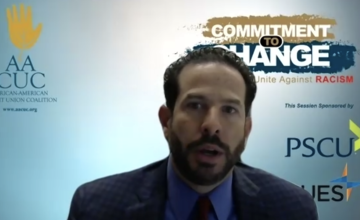
Max Villaronga
Roulhac: How are you interacting with other CEOs during this time?
Fears: If I didn’t understand the power of a network before this crisis, I absolutely understand it now. My network has been invaluable. The AACUC, the league, other CEOs--I feel so blessed that I can just pick up the phone and ask any one of them a question. I can’t say enough about building your network. It’s what I love about the credit union industry; people are so eager and willing to help.
Smith: I sit on several CEO roundtables and a common thread when it comes to COVID and racial injustice is I feel we are all on the same page. That has given me new life and I look forward to continuing to be int his industry.
Villaronga: A lot of my peers in Texas, the Cornerstone league, CUNA--I lean on them all from time to time. Just the other day we were talking about ALLL and how we should be reserving during this pandemic. It was really interesting hearing from a few of those peers and hearing about their levels of over-funding. Having a peer network is really critical, particularly in a CEO role. It’s important to be a life-long learner.
Anderson: Certainly, in credit union world, the people helping people philosophy is a lifestyle. Just having the resources available in credit unions means we all learn from each other. I’ve been in banking and credit unions for 40 years and I’m still learning, and that will always be my mindset.
Roulhac: What has been the response of your members to your leadership style?
Anderson: We have over-communicated to our members. They can communicate back to us and they do that often. They do the same thing with managers throughout our organization. Our members have been appreciative; they see the things we are doing in terms of helping them through this hardship. They know we have their backs.
Fears: The membership has been great. They have adjusted so well; they were actually sad to see the curbside service go. We did wellness checks with our members, starting with the older members. They were very appreciative and we helped get them signed up for online services. We weren’t trying to sell them anything. They have been so receptive to all of our communications and the initiatives we are putting in place.
Smith: I think our members responded very well. We have implemented the skip-a-pay, waived fees, hardship loans. I want to acknowledge NCUA, which has done a fantastic job in making these products and services easier and providing leeway. Another thing our members have embraced, because we only have one branch, is our digital platform. I’ve been amazed we’ve seen about a 25% increase in remote deposit capture. CEOs tell me their strategy going forward is, ‘If it’s not digital, we’re not touching it.’
Villaronga: (Referring to messaging the CU has used around inclusion and racial equality, including newspaper ads.) I got some voicemails. I called those members back and had some lively discussions. They all appreciated that I called them back personally and certainly, I listened to everything they had to say. I think in every case they made assumptions around what was meant rather than what was said. I just restated what was there and how important it is in this nation for everybody to be treated in a way that’s just, and currently that’s not the case. In some cases they remained a little perturbed at the end, but we knew that was going to be the case.
Smith: I left my team and my members with three words of advice: Learn—first we must learn what has happened and move forward. Listen—we must have a conversation and not be afraid to discuss the elephant in the room. Love. We need to show love.
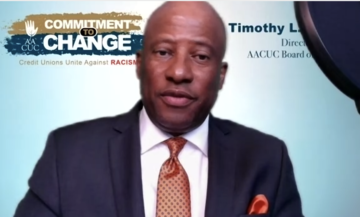
Timothy Anderson
Anderson: I think as leaders it’s incumbent upon us to certainly address issues, especially as it relates to some of what has transpired. But I think it starts with just being inclusive. We didn’t get any negative responses from anyone. We said we stand for what is right. As leaders, we have to have those discussions. You have to begin from a point of view of being inclusive. This is in our DNA as CU professionals to lead on this issue, to lead on the COVID issue, to lead on the racial injustice issue. Not only are our members talking about, our employees are talking about it, also.
Roulhac: How have you responded to the racial justice aspect?
Fears: We do have a large African American population of members. We didn’t get a lot of pushback. We had a brick thrown through the window. We just put out the message that we remain inclusive and that is the key, communicating we are all in this together.
Roulhac: What have you learned during this environment between the recession, social justice and pandemic?
Fears: It’s a laundry list, but I think the biggest thing is I love the phrase ‘Leadership is a decision.’ You have to step up. You have to decide plan and execute and make decisions and be confident in your decisions. That and the power of the network have been the biggest things I’ve learned, and I’m sure I will continue learning.
Anderson: One of the things I will say is I’ve learned you have to be adaptable. We had a very productive planning session last fall, and everything we talked about then had to be ripped up. I don’t think we will go back to times as we knew them. Life as we know it has changed, and the way we run the business has changed, as well. We have to be sure to seize the new opportunities, because they are out there even in the midst of a crisis.
Smith: Our best practices are the new normal. We have to look at our whole business plan. We need to have an open mind and really think about our members. They come first, and you have to balance that with your employees, and we do have the support of our board, and that helps a great deal.
Villaronga: Unconscious bias is something we all have. I think it’s important for me to get real with myself and for all of us to do that. It’s time to get comfortable with being uncomfortable. You may not be what you think you are. And to get closer to being what you want to be, you’ve got to get uncomfortable. It may not be your fault, but it is your problem. What all this has done for me is make me resolute to protect the health of the people I directly and indirectly care for, and I’m more vocal than I probably would have been. But I think it’s necessary.
Roulhac: What has surprised you?
Villaronga: I don’t want to say we’ve been surprised, but everyone has been so resilient. People have been so flexible with the new work arrangements. It’s during a time that is relatively scary and terrifying at times. Seeing the resilience of our team has been energizing.