

TUCSON, Ariz.–The credit unions that will be the “winners of tomorrow” have something in common, and it isn’t asset size, according to a panel gathered here that also offered its thoughts on everything from soothing pain points to people with thin credit files to what “goes a long way” with members.
The panel, themed “Divergent Minds,” was part of Co-op Solutions’ THINK 23 event here. Participating in the panel were Jake Tamarkin, CEO and co-founder of Everyday Life; Omar Jordan, founder and CEO of Coviance; Michael Broughton, founder and CEO of Altro; Claire Meney, SVP-member experience with Connexus CU, and Matt Kardell, chief revenue officer with Co-op Solutions.
The panel was moderated by Jean Chatzky. Here is some of what was discussed:
Chatzky: First, tell us what you do?

Jake Tomarkin
Tamarkin: Everyday Life is about building the premier life insurance platform for everyday people. I tell people that, simply, we are eliminating the word ‘underserved’ from life insurance. We are doing that because we noticed life insurance as an industry, a trillion-dollar industry, is in the middle of a slow train wreck toward irrelevance. And the reason is that people above $100,000 in income are buying insurance as they always have, but the people below that, about 85-million households, aren’t using life insurance. We see technology as a way to solve real human problems here.
Jordan: Coviance, formerly known as MemberClose, is on a mission to redefine member experience. What’s fun is that’s a moving target. We are constantly building toward the ultimate borrower experience. Our focus is home equity lending and…making sure we are not necessarily disrupting the disruptors but that we are meeting members where they need to be met. We are an automation engine that plugs into your LOS or other systems.
Broughton: Altro is a platform helping underserved communities to build credit using their everyday subscriptions, such as Netflix. There are 80-million people in the U.S. who are underserved and we’re trying to bring them back into the market.
Meney: One aspect of our mission is around relevancy. That is the focus of my role in member experience and how that needs to happen in different situations.
Kardell: I spent 25 years at First Data, mostly working with mega-sized banks, and over the course of that time it became apparent to me the conversations were more about their bottom lines and their next quarterly updates and not anything about who their clients and customers were.
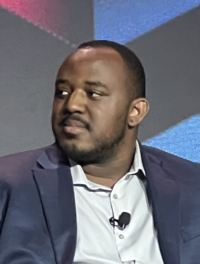
Michael Broughton
One of the things that attracted me to Co-op was Co-op and PSCU and other (CUSO) conversations were so different. It was more about serving their members and what they could do for the underserved. I really enjoyed that and felt like I was making a difference. What we try to do every day is help credit unions to compete with the technology of the big banks, and then adding their overall empathy and passion.
Chatzky: What makes a great member experience?
Meney: Quality and consistency are table stakes, and then it’s human-centered design in terms of the interactions, even in a digital setting. The more we can have personality behind it and understand the needs of that member on a human level as an individual and at a macro-level, and then deliver on that is really the ultimate experience.
Chatzky: What does human centered design mean”
Tamarkin: I think what it means for us at Everyday Life and other start-ups is putting your customer, your user, at the center of what you’re trying to do. It’s really counter to a lot of product-led initiatives. It’s about thinking about what a person is trying to do in a broader way. It’s hard to change your perspective, especially in a well-established organization, but also as a human being. But when you do you get the insights into serving people better.
Chatzky: How do you show up for consumers with thin credit files?
Broughton: I was the first in my family to go to college. We were a low-income family. Two months into college and I owed $10,000 in tuition and I didn’t have the money. I needed a loan. I couldn’t get it and the reason was I had no credit. The Card Act of 2008 really limited the access young adults had to financial products. It was supposed to be about consumer protection, it was really consumer restriction. So, at our company we are thinking about getting products into the hands of consumers who need it most.
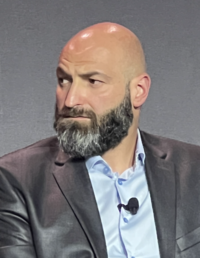
Omar Jordan
Chatzky: When you try to give individual customers what they need while also trying to reach a large swath of customers, how do you do it?
Jordan: Really personalizing (the offering) is the key objective. I ask myself, ‘How do we expect to take that general segmentation and make it personal?’ I’m not saying it’s not getting done, but it’s not getting done the way it needs to be. I’m a Pinterest addict. I’m always pinning stuff. Not once have I gotten a pop-up from my credit union meeting me where I’m at. ‘Hey, how about remodeling your bathroom?’
We know how much goes into our members’ accounts, how much goes out. We know where they live and their home equity. We know their credit scores. I have yet to get a notification from my credit union about home equity. It’s not happening at the scale it needs to be and maybe the solution behind it is what is your R&D budget at your credit union. Is there one? What is your product marketing budget? I’m sure there is one. Triple that.
Think about empowering your team. Embracing failure has got to be a priority. And I’ve been saying for the longest time, stop talk about managing risk. I’m not going to say that anymore, but I will say remove ‘can’t’ from your vocabulary, and that’s what we say to our compliance folks.
Chatzky: What is the opportunity here in doing that?
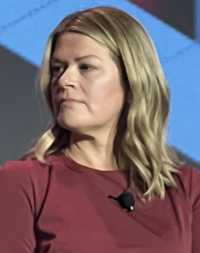
Claire Money
Kardell: Meeting the member at a particular moment in time is a difficult thing to do. I have two kids graduating from college. They live away from where we are but I get all their mail. That’s old school marketing. One-hundred percent of the solicitations they have been getting about opening an account is from the big banks. Not one solicitation from a credit union. I think that understanding and spending a lot of time from a segmentation perspective is a really worthwhile exercise.
Those (growing) credit unions I walk into have a couple of things going on, and one is a diverse age group in the meeting room. They talk about segmentation. They know where their shortcomings are and are asking for help. Those are the credit unions that will be winners tomorrow. I often go into sub-$500 million credit unions and they are the most creative and most willing to take risk. They tend to be a younger leadership group, frankly, and understand segmentation and digital.
Meney: We have a diverse member base. We do a lot of indirect lending. To fuel that lending we do a lot of deposit raising, and they are very different member types. To successfully engage with them from an onboarding perspective and long term, they are very different. It’s not always easy. The data we need to do this, the behavioral data, can be extremely challenging to coordinate. What we’ve done is partner with companies like Co-op to understand the micro-moments, to deliver more and to create that connection with our brand.
Chatzky: Once you’ve tackled that first problem, how do you expand other problems and grow your business?
Tamarkin: In our case, the pain point we’re solving is the lack of attention to a particular service segment and its unique service needs. What we’ve done is built a technology to take the place of the agent to find an underwriter that actually wants their business and will approve them in an affordable way. We narrowed down our pain point.
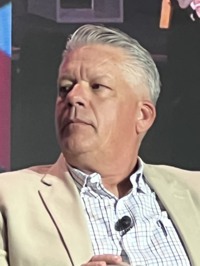
Matt Kardell
We then grow through partnerships. Trust is the number-one factor in life insurance. We like to partner with brands that have trust in place. There is also the opportunity to expand on your products once you’ve earned that trust.
Jordan: I started this company in 2015. What it takes to scale an idea is your people. Having the right people at the right stage of that company is so important. Then you empower those people to get creative. You embrace failures. And from there you have to trust and verify and the circle of life comes in. At some point you come to realize that to build a great company requires great people around you. That’s the number-one opportunity I see for credit unions to go to the next level. It’s the hunger to grow.
Chatzky: Anything you see, traits that these leaders embody, we should look for?
Kardell: I look at credit unions that really aren’t afraid to fail. That sounds so cliché. They try things. They either bring them to market or not. They do it quickly and everyone is standing at the end whether it worked or it didn’t work. Those are the ones that not only survive and thrive, their members recognize them for trying. I think one of the coolest things about credit unions is the connection you have to members. I think they’re willing to be a little more lenient with you. They know you care. My advice is to continue to do that. Communication to the member can always be improved. Communicate to the member why you’re trying something goes a long way.