DURHAM, N.C.–As part of what is said is its ongoing commitment to reduce operational and portfolio emissions, the Center for Community Self-Help has released results of two parallel analyses that investigate the greenhouse gas emissions (GHG) associated with its business activities and investments.
The Center for Community Self-Help is an umbrella organization that includes Self Help Credit Union and Self Help FCU.
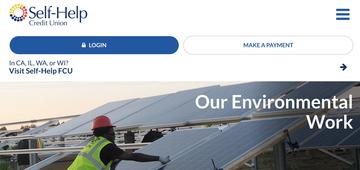
According to the Center, its first analysis focused on the operational GHG footprint associated directly with staff, the buildings they occupy and the business travel they do, based on the GHG Protocol methodology published by World Resources Institute.
The second analysis examined the GHG footprint of Self-Help’s commercial loan portfolio, through which it said it examined indirect emissions associated with borrowers funded through commercial loans.
Among the findings: Self-Help’s portfolio of solar loans avoided emissions in 2020 totals 173,167 metric tons of CO2e—comparable to avoiding pollution produced by electricity powering 21,000 houses for a year, the Center reported.
The projects were led by Self-Help Sustainability Director Melissa Malkin-Weber, who said the projects reflect Self-Help’s deep commitment to sustainability.
Carbon Accounting Principles
“This effort entailed learning to use carbon accounting principles, building organizational information collection and analysis tools, and opening the dialogue with internal stakeholders about how to use this information to drive change,” Malkin-Weber continued. “We aspire to set ambitious goals for Self-Help. The GHG analyses of our operations and our lending portfolio are critical to establishing a solid baseline for setting carbon goals, as well as being able to assess progress toward them.”
According to the organization, the report shows that the direct footprint of Self-Help’s operations in 2020 was just under 4,400 metric tons of CO2e. The report further measured the footprint of Self-Help’s commercial loans, which it said is “many, many times” the impact of Self-Help’s direct emissions, “highlighting a challenge for the future.”
The report notes, though, that despite this challenge, Self-Help is starting out from a greener baseline than many other financial institutions. Since Self-Help does not finance fossil fuels, the footprint of its loan portfolio is many orders of magnitude smaller than the footprint of lenders who do.
The Center for Community Self Help said the report also lays out the positive impact of the clean energy that Self-Help’s portfolio of solar loans generates. As noted above, the emissions these solar projects avoided totaled 173,167 metric tons of CO2e in 2020.
An Early Adopter
Self-Help noted it is among the early adopters of carbon footprint analysis among credit unions and Community Development Finance Institutions. Self-Help was part of the Partnership for Carbon Accounting Financials(PCAF) North America Working Group that shaped standards for financial institutions to disclose the greenhouse gas emissions of their investment portfolios.
To date, 156 financial institutions representing $50 trillion in assets have committed to assessing and disclosing the GHG emissions of their loans and investments, the organization said.
Self-Help added it continues to work on the environmental sustainability efforts that align environmental impact with social justice impact.
The full report can be found here. Green impact statistics can be found on its websites at www.self-help.org/green and http://www.self-helpfcu.org/green.
Give Us Less Than 1 Minute & We’ll Give You Good News!
The ongoing popularity of CUToday.info’s daily Fresh Today newsletter has led to a need to move to a new server in order to provide improved service to our readers. In order to continue to receive the daily email, you must register by March 7. To register, just click here. The daily Fresh Today news headlines email remains FREE! The new service is being launched as part of a partnership with ResponseGenius.