

FRISCO, Texas–No one cares how good you or your credit union used to be. People don’t care how many times you or your credit union knocked it out of the park in the past or how good you will be in the future.
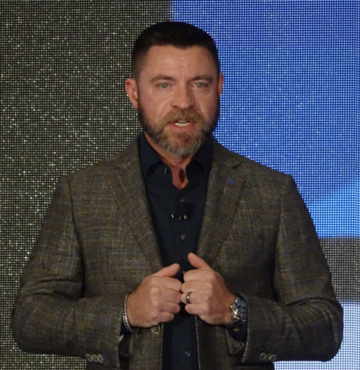
Kevin Brown
What they do care about is how you can solve challenges for them right now, and that requires “heroic” leadership, according to one person.
But what makes for a hero when it comes to leadership? Four attributes according to Kevin Brown, the author of The Hero Effect and a consultant to organizations on leadership.
The word “hero” is frequently and often overused today, said Brown, who believes it’s also misunderstood, as it’s most often applied to careers such as first-responders and members of the military.
A Decade of Exploration
Brown told Catalyst Corporate’s Economic Forum here he has been exploring the question of what a hero looks like for more than a decade and that the process has changed his life.
“How do you define this group of people, the influencers, the people who when they show up to do what they do they do it differently than everyone else?” he asked.
He said the issue has become especially relevant in a world where he said “everything is a condition, a transaction, an I’ll do this for you if you do this for me.’” Heroes, he said, don’t expect such a quid pro quo.
What heroes do within organizations, he said, is create environments where people can be the best version of themselves.”
“Heroes are ordinary people,” said Brown, before allowing his audience to complete the sentence, “who do extraordinary things.”
But Brown said that cliché is not just over-used, it’s not right.
‘Absolutely Dead Wrong’
“I heard it a hundred times and began to wonder, and after a thousand times I learned it was absolutely dead wrong,” he said. “We’ve been taught and conditioned to think about heroes in a dangerous ways. If your people buy into that you are giving your people permission to be ordinary most of the time.”
Brown suggested as people go through their lives they are increasingly conditioned to believe they are ordinary.
“Ordinary is a choice. I think heroes understand it’s not ordinary people doing extraordinary things, it’s extraordinary people who choose not to be ordinary,” he said.
For credit unions, that translates into making a choice to own the whole pie and not just settling for a slice, he told the meeting.
Referencing his own childhood dreams of being Superman, Brown asked, “When did you forget how to fly? It’s an important question for you and your organization. Are you a faceless presence in a sea of sameness?”
It’s the decision to have a face that separates one credit union from another. It’s the reason why members will wait in line to deal with one member service rep versus others.
What Heroes Do Differently
According to Brown, heroes do four things differently:
- Heroes help people, with no strings attached. “You want to be THE choice, not A choice. Most organizations in your world are content to carve out their little sliver of the market. You do that and you will spend the rest of your life defending that.”
Quoting Oprah, Brown said every person has three questions: Do you see me? Do you hear me? Do what I say to you matter to you at all. “Everyone on your life is asking those same questions. Do I matter to you or am I just another deposit?”
- Heroes create an exceptional experience. “Nobody notices normal. Nobody notices ‘satisfied.’ But what does every company chase? Satisfaction. If that’s what you’re changing, you’re like everyone else. Don’t you want unpaid spokespersons for your credit unions? We will pay a premium for that which reaches beyond the required. In the absence of that, we will be commoditized.”
- Heroes take responsibility. “Heroes own the moments that matter. They are actively present and engaged and do not believe in random acts of kindness. The hero is motivated instead by intentional acts of difference making. They live by a simple code: Bring your best stuff to the present moment and pour it into the lives of others. They understand that before you can lead anyone else, you must first be able to lead yourself. The hero owns their attitude, their actions and their results. They are committed to the best possible outcome in every situation regardless of circumstances or events beyond their control. The hero leads by example and knows that true success is found in the power of simple choices.”
- Heroes live and work with optimism. “Heroes see the world differently. For them, it’s not about positive thinking, it’s about perspective,” he wrote on his website. “Looking through the lens of optimism gives the hero supernatural vision. They see what others cannot. They see opportunities instead of obstacles – possibilities instead of problems. When things go wrong…and they will, optimism is what helps the hero’s turn life’s messes into a masterpiece.”
Two Questions
Brown closed with two questions for his audience.
“Can you look in the mirror and see the faces of the people who make you better, the people who moved you to the place you are today? If you can do that, before your head hits the pillow tonight, thank them.
“But here’s the real question? Who looks in the mirror and sees your face? Who looks in the mirror and knows they are better because of you, because you picked them up?”