

WASHINGTON–Consumers in America’s rural communities lack access to physical financial institution branches, are more likely to seek credit from nonbanks, and are heavily affected by medical bills, according to a new report from the Consumer Financial Protection Bureau.
The Bureau said in releasing its report will be expanding its efforts to address these and other challenges facing the people and families of rural America.
“For decades, many government agencies have turned a blind eye to pressing problems facing families, farmers, and businesses in rural communities,” said CFPB Director Rohit Chopra. “The CFPB will be focusing on ways to ensure that rural communities can better access relationship banking services and achieve their economic potential.”
In response to the report’s issuance, NAFCU President and CEO Dan Berger said, “Credit unions have always played an important role in helping those of modest means and the CFPB’s report reaffirms this mission. By nature, the credit union industry prioritizes meeting the financial needs of those who are underbanked and left behind by big banks. I’m proud to serve as an advocate for credit unions across the country and thank them for their unwavering efforts to expand financial equity to communities that need them most.”
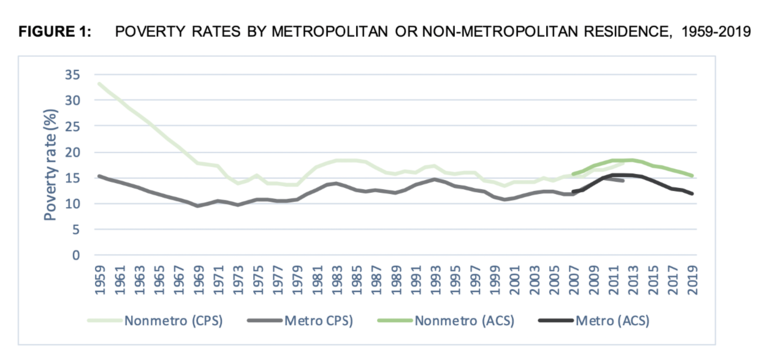
According to the Bureau, there are multiple ways to define rural communities. According to the definition of the U.S. Department of Agriculture’s (USDA) Economic Research Service, rural, or “non-metro,” counties are home to 46-million people, which is 14% of the U.S. population. People living in rural counties tend to have lower income and higher rates of poverty, the report states.
Earn Just 16 Cents for Every Dollar Spent
“The overwhelming majority of persistent poverty counties across the U.S. are located in rural areas,” according to the Bureau. “While agriculture has historically been a pillar of rural economies, the number of farms has decreased over several decades. Today, less than 10 percent of people in completely rural counties work in agriculture, and the farmers who remain earned only 16 cents for every dollar spent by consumers on agricultural products, according to a USDA analysis. Another pillar of rural economies is small businesses, with people living in rural communities more likely to be employed by small businesses than people living in other parts of the country.”
The CFPB said local financial institutions, such as community banks and credit unions, often offer products and services that fit the local economic terrain.
“However, rural communities are experiencing a fast-paced exodus of in-person banking services, with rural communities 10 times more likely than urban communities to be located in banking deserts,” the CFPB said “In fact, the Federal Reserve has identified more than 2,100 existing and potential banking deserts across the country with more than 1,500 located in rural areas.”
The Key Findings
According to the Bureau, key findings in its report include:
- Rural Americans depend on physical bank branches and smaller banks. “In 2019, nearly 9-in-10 rural households visited a bank branch. Rural banking customers tell the CFPB that given the unique qualities of rural economies, if they are reduced to a number and fed into a large bank’s algorithm, their credit needs will not be met. However, these same customers are the ones most likely to not live within 10-miles of a bank with in-person services.”
- Rural Americans are less likely to have a credit history and more likely to use non-bank credit, resulting in rural consumers paying more for credit. “Compared to the rest of the country, rural areas have the highest rates of people without a usable credit history maintained by one of the three nationwide consumer reporting agencies (i.e. Equifax, Experian, and TransUnion). Rural consumers without credit records have more difficulty accessing credit when they need it, such as to fill short term income gaps, recover from weather emergencies, or seek new opportunities,” the CFPB said. “Many rural consumers who have difficulty accessing traditional sources of credit may turn to pawnshops and payday lenders, whose extensions of credit are often costlier and can quickly put consumers on treadmills of increasing debt.”
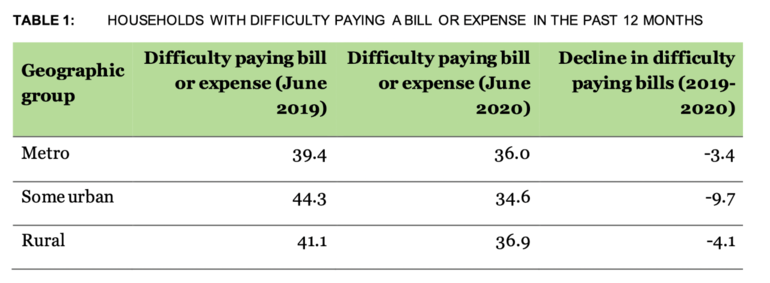
- Unpaid medical bills are affecting access to credit, housing, and employment. “Almost 1-in-5 U.S. households have allegedly past-due medical bills, which can unfairly, and adversely, affect credit reports and limit access to credit, housing, and employment. According to a recent study by the CFPB, Medical Debt Burden in the United States, unpaid medical bills are more common in the Southeastern and Southwestern U.S., which also have significant rural populations. Additionally, healthcare and insurance costs tend to be highest in rural communities, compared to urban and suburban communities, which leads to more expensive medical bills and charges.”
New Initiative
The CFPB reported it has launched a new Rural Initiative to focus its authorities and resources to address the particular needs of rural communities, adding it has begun making a concerted effort to work with government and civil society stakeholders to establish lines of communication and gain more visibility into the most pressing consumer finance issues in rural areas.
Specifically, the CFPB said it plans to:
- Dig deeper to understand the unique needs of rural communities by analyzing data and developing effective ways for the people living in those communities to file complaints. “The CFPB will conduct research to fill in data gaps on rural communities, particularly on the unique needs of those in the agricultural sector, rural housing, and trying to access credit. The CFPB will also gain more insights into the dynamics of rural communities from rural people themselves by identifying more effective ways for rural people to access and use the CFPB’s complaint tool.”
- Hear directly from rural communities and the financial institutions that serve them. “The CFPB will be conducting roundtables with rural stakeholders – including workers, farmers, and small business owners. These roundtables will be online and in-person in rural communities across the country, including in the Deep South, Appalachia, Indian Country, and the Rio Grande Valley,” the CFPB said.
- Work with federal partners to meet the needs of rural communities. The CFPB further said it is working with the U.S. Departments of Agriculture, Housing and Urban Development, and Treasury, along with other agencies, to ensure that rural communities have the resources they need to thrive and that they are protected from lawbreakers within the financial sector.
For the full report, go here.