

PLEASANTON, Calif.–One California credit union is warning scammers have been increasingly targeting teenagers in its markets under the ruse of a romantic interest or make-money-quick schemes. The basis for the scam will be familiar to many; it’s the target that’s new and vulnerable.
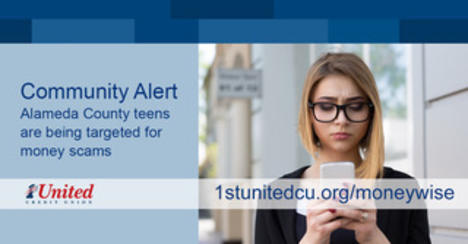
1st United Credit Union said it has “witnessed this recent wave of money scams” and has been urging families and teens to be aware of the scam and to protect family members.
“We’ve seen these scams in the past targeting adults, but have noticed an uptick recently targeting high school-aged youth,” said Greg Pulliam, chief administrative officer at 1st United Credit Union. “We are concerned about the welfare of our members and community and want to be sure families are aware of how their teens are being contacted.”
According to 1st United, criminals have been connecting with teens through social media, romance websites or by text and offering the potential for the teen to make or receive money. The teen is given a check or photo of a check to deposit into their account and are instructed to keep a portion of the money and send the rest back by Venmo, pop money, or by mailing gift cards. In some cases, the teen is coaxed into providing their mobile banking login information and the fraudster deposits the check themselves. Eventually, the check comes back as counterfeit and the victim is left owing the financial institution money.
“These scams are occurring in our own backyard and we have learned that teens are sharing text numbers and websites amongst each other as a way to make money. Since teens are sharing information with their friends, the scams spread at an incredible pace,” said Pulliam. “We encourage families to speak with their teens about these schemes.”
Discussion Points
1st United has shared discussion points family members should raise when speaking with a teen, including:
- Risks of meeting online. Make sure teens know the risks of meeting people online and accepting money or checks from strangers.
- Never deposit checks from strangers. “It’s safer to accept cash, a cashier’s check, or PayPal if someone needs to pay you money,” the credit union said. “It takes several days for a check to fully clear, even if the funds are not on hold, and the account owner is responsible for any funds withdrawn against it.”
- Never provide personal information. “Account numbers, Social Security numbers, bank login information, passwords, or even cell phone numbers can give fraudsters surreptitious access to your money.”
- Trust your instincts. “If the offer is too good to be true, it probably is.”