

WASHINGTON–Credit unions are paying attention to a number of hearings on Capitol Hill this week—especially a markup of the National Defense Authorization Act—as well as primaries in three different states taking place today.
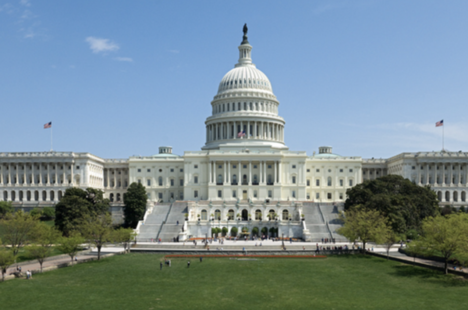
Both the House and the Senate are in session.
The Senate Banking Committee today will hold a hearing titled “The Digitization of Money and Payments,” while the House Financial Services Committee will hold a hearing beginning at 12:30 ET titled, “Oversight of the Treasury Department’s and Federal Reserve’s Pandemic Response.” The latter hearing will feature Treasury Secretary Steven Mnuchin.
On Wednesday, the House Committee on Small Business will hold a hearing titled “The Economic Injury Disaster Loan Program: Status Update from the Administration.”
On Thursday, in the House Armed Services Committee, there will be a full committee markup of HR 6395, the National Defense Authorization Act for FY 2021. That legislation is again being watched carefully by credit unions, as the House version lacks language that would give banks equal access to leases on military bases, while a Senate version includes the CU-opposed provision.
State Primaries
Separately, Eli Joseph, CUNA’s deputy chief advocacy officer, said the trade group’s Credit Union National Action Committee (CULAC) and respective state associations are watching primaries in Colorado, Oklahoma and Utah today. Credit unions are backing 13 candidates in all, 12 for the House and one for the Senate. In all cases credit unions are supporting the incumbents.
CUNA Sends Letters
Separately, CUNA has sent a number of letters to Capitol Hill and NCUA. Among the letters sent:
Letter on AML Bill
CUNA joined with other organizations in a letter to the Senate Armed Services committee leaders in support of passage of the Anti-Money Laundering Act of 2020, a bill that is being considered for inclusion in the Senate National Defense Authorization Act (NDAA) for fiscal year 2020. The trade groups said the Anti-Money Laundering Act would create a secure beneficial ownership registry of legal entities, held at the Financial Crimes Enforcement Network, and the organizations believe it represents the best path forward to provide law enforcement with needed information to pursue criminals looking to exploit the financial system. The organizations noted that the bill “strikes the right balance between imposing minimal requirements on small businesses and providing critical information to law enforcement and financial institutions.”
Letter on Digitization of Money
CUNA President/CEO Jim Nussle sent a letter for the record ahead of the Senate Banking Committee hearing on the digitization of money and payments as credit unions are poised to leverage technology to deliver innovative financial services to members. The House recently introduced The Financial Protections and Assistance for America’s for America's Consumers, States, Businesses, and Vulnerable Populations Act to address numerous issues arising from the pandemic. The bill includes a provision to provide monthly stimulus payments and allows for these payments to be distributed by direct deposit or to a new, basic bank account backed by the Federal Reserve, also known as “FedAccounts.” CUNA said it believes Americans would best be served by leveraging the banking system already in place and that Congress should be using its public platform toencourage all consumers, especially the most vulnerable, to seek out financial services from a community-based credit union.
Letter to NCUA
CUNA submitted its comments on NCUA’s interim final rule making the Central Liquidity Facility (CLF) changes, issued in April in response to the pandemic. CUNA said it supports NCUA’s temporary changes to the CLF and is continuing to pursue additional statutory changes to the CLF with Congress. CUNA noted the changes on which it has engaged with Congress include authorizing the NCUA to expand the CLF’s borrowing authority from 16 to 25 times the paid in capital; extending the expanded borrowing authority until at least Dec. 31, 2021; and making permanent the ability of corporate credit unions to act as agents for credit unions.
“CUNA supports the termination of membership and updated collateral requirement made in the interim final rules,” wrote Lance Noggle, CUNA Senior Director of Advocacy and Senior Counsel for Payments and Cybersecurity. “These amendments are regulatory and do not have a sunset provision and will bring the CLF more closely into alignment with requirements of the Federal Reserve to borrow from the Discount Window. These changes also encourage larger credit unions to join the CLF and reduce barriers for all credit unions to join and use CLF.”
Letter to NCUA on PCA
In a letter to the NCUA, CUNA noted the proposed temporary prompt corrective action (PCA) changes would provide agency staff and credit unions with additional necessary flexibility. As CUToday.info reported, the board issued the interim final rule at its May board meeting with two changes to PCA requirements. The first would allow credit unions more flexibility if they fall to the PCA “adequately capitalized” level due to unhistorical, abnormal share deposit influxes. The second would temporarily waive net worth restoration plans under existing PCA requirements for credit unions that become “undercapitalized” primarily as the result of share deposit growth.
In the letter CUNA's Noggle said the change is “reasonable” as it would “reduce the burden on credit unions that have reduced net worth capital ratios primarily because of share deposit growth during the pandemic.” CUNA also suggested NCUA consider not prematurely setting a specific end date of these temporary relief measures, and instead the NCUA Board extend these temporary measures until the end of the COVID-19 pandemic as determined by the Centers for Disease Control or other Federal entity authorized to make such a determination or no earlier than 2022 (whichever comes first).
“This would help ensure these important and prudent PCA relief measures are available throughout the pandemic and it’s resulting economic turbulence and volatility, and do not expire at an arbitrary date that may require change again by the Board in the future, wrote Noggle.
Letter to Fed
CUNA wrote to the Broad of Governors of the Federal Reserve System in support of its decision to remove the limit of account transfers under Regulation D and suggested to the Fed Monday it become permanent. CUNA noted it has pushed for elimination of the limit prior to the onset of the pandemic, and the Fed announced an interim final rule in April removing the limit.
“Eliminating the transfer limits has long been a priority for credit unions. CUNA has a long history of advocating for this change with the Board and Congress and thus credit unions are pleased that the requirement has been eliminated,” Noggle wrote. “Some have expressed concern that the proposed amendments to Regulation D could be temporary, so we suggest that the final rule make clear that the Board intends to make the changes permanent.”