

WASHINGTON—President Trump’s announcement of Ken Kies as assistant Treasury secretary for tax policy should draw the attention of credit union trade groups, analysts are saying.
Kies new role is a key position at Treasury at any juncture, but especially ahead of the expected rewrite of the tax code later this year, analysts stated.
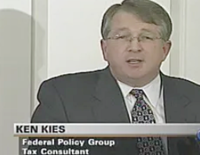
What is concerning, at least one person stated, is Kies’ past record on credit union taxation. Just over ten years ago Kies co-authored a seven-page report for Deloitte that advocated the repeal of the federal tax-exempt status for credit unions of all sizes.
Kies, currently managing director of the Federal Policy Group, LLC, has also done consulting work for the American Bankers Association and has been outspoken on his position of favoring taxing credit unions.
The seven-page report, co-authored by Kies and Bert Ely, principal of Ely & Associates, states: “Unlike other financial institutions like banks and thrifts, credit unions do not pay corporate taxes on their income. This puts them at a competitive advantage relative to other financial institutions for tax reasons. Eliminating this exemption would raise revenue and level the playing field.
“Credit unions have grown to control a significant share of the market for banking services, particularly in retail banking. However, unlike their direct competitors—commercial banks and thrift institutions—credit unions do not pay corporate income taxes,” the report continues. “This huge tax expenditure—nearly ten billion dollars over the next five years, according to the Office of Management and Budget—no longer has any policy or economic justification. Credit unions have evolved to become large financial institutions which provide services that are identical to their taxpaying competitors. In order to level the competitive playing field in the banking industry, all credit unions should pay corporate income taxes.”
Washington credit union advocate John McKechnie pointed out Kies is a well-established and prominent figure on the D.C. tax policy scene.

John McKechnie
“I am aware of his past comments that criticized the credit union tax exemption, essentially characterizing it as an unfair competitive threat to the banking industry,” McKechnie said. “In this new role, I am hopeful he takes broader factors into account—particularly the negative impact that ending the credit union tax exemption would have on consumers. I don’t think voters sent Donald Trump to Washington to raise taxes on American families and workers.”
The Defense Credit Union Council weighed in on the appointment of Kies.
“DCUC has always been a leader in the credit union industry defending the industry’s tax status,” said DCUC Chief Advocacy Officer Jason Stverak. “We look forward to engaging with the Treasury Department and the entire Trump administration to show the importance of preserving the current credit union tax status. Eliminating credit unions’ tax status is a short-sighted solution that will just create long term problems for millions of Americans.”