

WASHINGTON—In a comment letter to the CFPB on proposed changes relating to Small Creditors and Rural or Underserved Areas under Reg Z, CUNA called on the agency to largely exempt CUs or make other changes in the new rules.
CUNA said that while it understands “that the CFPB has a Congressionally mandated mission to protect consumers with respect to financial products and services, and we support protection for consumers from abusive financial products and services. However, credit unions, regardless of size, are member-owned financial cooperatives and, as such, put their members first. Simply put, the consumers of credit union products and services are also the owners of the credit union, which results in different operating motivations compared to for-profit financial services providers. We believe it is critical that consumer protection regulation reflect this important difference. Any regulation that results in a reduction in credit union-provided services is a consumer protection failure.
“Instead,” CUNA continued, “the Bureau should be actively looking for ways to ensure credit unions are able to more actively engage in the providence of financial services. Respectfully, we urge the agency to work with us and the Credit Union Advisory Council to identify more ways in which regulatory requirements for credit unions can be reduced.”
Addressing various aspects of the proposal, CUNA offered these views:
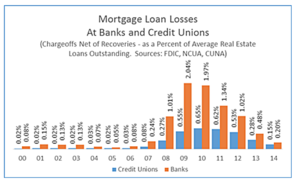
- Impact on Consumers of Providing Regulatory Relief That Is Not Based on Asset Size or Number of Mortgages. “Consumers in need of mortgage credit that have the ability to repay will be better served if credit unions and community banks have more incentives and fewer disincentives to make mortgage loans, in light of the history and current practices of these institutions,” CUNA said. “CFPB should take into consideration the default rates on covered loans and allow institutions with default rates of, for example, less than 1% in the previous calendar year, to make up to 4,000 mortgage loans per year and still qualify for the small creditor exemption.”
- “Small Creditor” Loan Threshold. “The proposal would increase the loan origination limit for eligibility as a small creditor under Regulation Z. Under the proposal, the threshold would be raised from 500 first-lien covered transactions to 2,000 such originations,” CUNA noted. “Loans held in portfolio by the creditor or its affiliates would not count toward the loan limit.”
CUNA said it applauds the direction of these proposed changes, but it is unclear how the CFPB settled on the new threshold of 2,000, except that it was recommended by commenters during previous rulemakings. “We encourage the agency to provide impact analyses that demonstrate how communities, consumers and creditors would be affected if the limit were raised to 2,500, 3,000, 3,500 or 4,000 as well as the proposed threshold of 2,000 so that stakeholders and the agency would have more informed comments regarding what the new limit should be.”
- “Small Creditor” Asset Limit. The CFPB’s proposal would not raise the asset limit for small creditors, which is no more than $2 billion in assets as of the end of the preceding calendar year, adjusted annually. The proposal would require a creditor to include the assets of any affiliate(s) that originate(s) mortgage loans in determining whether a creditor meets this threshold.
CUNA noted that it continues to believe that the $2 billion threshold is too low; “we urge the agency to consider raising the threshold to $10 billion. Increasing the loan origination and asset limits as we suggest would not expose consumers who borrow from credit unions to greater risks and would provide even more encouragement to credit unions and community banks to increase their pro-active yet prudent lending programs.”
- CUSOs Should Not be Affiliates for the Small Creditor Asset Limit. “We also have concerns regarding the provision that would require affiliates’ assets to be included in determining whether the creditor has reached the $2 billion assets level. Because the proposal relies on the definition of “affiliates” found in the Bank Holding Company Act, it is not clear whether the CFPB intends to treat credit union service organizations (CUSOs) as affiliates for the purposes of the proposal,” CUNA said. “We urge the CFPB to clarify that CUSOs are not affiliates for purposes of determining the applicability of the small creditor exemption.”
- Grace Periods. “The CFPB proposes to add a grace period to the annual asset limit and the origination limit to allow a creditor that exceeds those limits in the preceding calendar year to operate as a small creditor for applications received before April 1 of the current calendar year. The Bureau also proposes to add such a grace period for small creditors that fail to meet the threshold for lending in rural or undeserved areas in the preceding calendar year to continue operating as if it had met the threshold for applications received before April 1 of the current calendar year. CUNA supports these changes.”
- Definition of “Rural.” “The proposal would expand the definition of ‘rural’ to include a county that meets the current definition of a rural county or a census block that is not in an urban area as defined by the U.S. Census Bureau. CUNA has long supported this approach and urges the CFPB to include these changes in the final rule.”
- Time Period for Determining a Creditor Is Serving Rural or Underserved Areas. “The proposal would decrease the time period for determining whether a creditor has more than 50 percent of its total first-lien covered transactions secured by properties in rural or underserved areas from the current approach in which the threshold could be met in any of the three preceding calendar years to having to meet the threshold in only the preceding calendar year. It is not clear why this change is necessary; it will reduce flexibility for creditors; and, as a result, we oppose the change.”
- Escrow Accounts. “The proposal would allow small creditors that serve rural and underserved areas that established escrow accounts for higher priced mortgage loans under the current rule to be eligible for an exemption from the escrow account requirements under the proposal even though such accounts were already set up,” the trade group wrote. “CUNA supports this change and urges the CFPB to include it in the final rule.”
- Safe Harbors. “The proposal includes safe harbor provisions for creditors related to the use of tools on the CFPB’s website to determine whether a property is located in rural or underserved areas and to determine if a property is located in an urban area,” wrote CUNA. “The current safe harbor for the CFPB’s lists of rural and underserved counties would be continued. CUNA supports these provisions.
- Balloon Payments. “We generally support extending the temporary period under which small creditors may originate balloon-payment qualified mortgages and balloon-payment high cost mortgages even if they do not operate predominantly in rural or underserved areas if the application for the covered transaction was received before April 1, 2016,” the trade group wrote.