

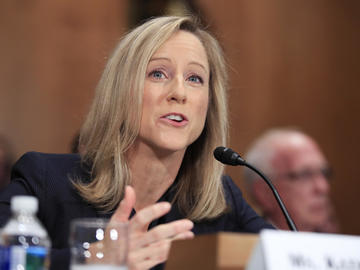
Kathy Kraninger
WASHINGTON—CUNA has written to newly confirmed Bureau of Consumer Financial Protection Director Kathy Kraninger to highlight key consumer protection priorities for credit unions. CUNA also extended an offer to provide any necessary feedback, data and expertise.
“Consumers lose when one-size-fits-all rules force credit unions to pull back safe and affordable options from the market, pushing consumers into the arms of entities engaged in the very activity the rules were designed to curtail,” the letter reads. “Under your leadership, the Bureau has an opportunity once again to examine and, where necessary, modify its approach to regulation in a manner that ensures it's fulfilling its consumer protection mission without impeding the availability of safe and affordable financial products and services.”
CUNA strongly urged the Bureau to closely monitor the impact its rules have on credit unions and their members, and to appropriately tailor regulations to reduce burdens or exempt credit unions entirely, as appropriate.
“Congress very clearly conveyed to the Bureau the authority to exempt any class of covered entities from its rules. CUNA has strongly urged the Bureau to use this authority to help protect credit union members from the many problems associated with creating one-size-fits-all rules that are inappropriate for the different not-for-profit structure of credit unions,” the letter reads. “Credit unions and credit union service organizations (CUSOs) should receive appropriate exemptions from the Bureau’s regulatory requirements.”
Other Recommendations
CUNA also offered several recommendations be incorporated into Bureau rulemakings, including:
- Debt collection: “CUNA requests the focus remain on practices of third-party debt collectors, which have been the subject of more frequent consumer complaints. Any rulemaking in this area should be reasonable and tailored to mitigate any potential indirect impacts on credit unions and other lenders.”
- Short-term, small-dollar lending: “Rules governing these loans should be meaningfully tailored to address predatory practices and should be crafted so not to inhibit credit unions from participating in the emergency credit market.”
- Remittances: “The Bureau should make three key revisions in its current rules:
- Raise the safe harbor threshold from 100 to 1,000 remittance transfers in both the prior and the current calendar years
- Eliminate or allow a consumer to opt out of the 30-minute cancellation requirement
- Urge Congress make permanent the fee estimates safe harbor.”
- Home Mortgage Disclosure Act: “CUNA suggests the following modifications to the rule:
- Allow reporting for Home Equity Lines of Credit (HELOCs) to once again be voluntary
- Reduce the data set for all credit unions to data points specifically enumerated in the Dodd-Frank Act
- Increase the mortgage thresholds to exempt as many credit unions as possible from HMDA reporting
- Clarify which fields the Bureau currently plans to make public and solicit additional comment on the use of a privacy ‘balancing test.’”
- Unfair, Deceptive, or Abusive Acts or Practices (UDAAP): “CUNA supports a Bureau UDAAP rulemaking that including the following actions:
- Solicit feedback on whether to eliminate or clarify the overly-subjective ‘abusive’ prong of UDAAP and whether other aspects of its UDAAP authority should be changed
- Clarify that previous enforcement actions or consent orders that conflict with statutory or judicial precedent create no new expectations for compliance
- Clarify and reaffirm the bureau’s narrow authority under the Dodd-Frank Act in regulating the business of insurance—particularly as it applies to credit unions and banks selling insurance—and that UDAAP is not a backdoor to regulate insurance activities.”
- Ability-to-repay/Qualified Mortgage: “CUNA recommends the Bureau engage in a meaningful and prolonged feedback process to ensure any amendments to this rule does not create overly burdensome requirements on credit unions”
- Small business data collection: “This is one of the last rulemakings required of the Bureau by Dodd-Frank, and CUNA recommends any rule issued expressly exempts credit unions from reporting requirements.”