

MADISON, Wis.—After the COVID-19 crisis passes, how credit unions fare will largely depend on their ability to balance the greater emphasis on digital with the expectation members have that service levels will remain high, according to four CU leaders who shared examples of how they are attempting to do just that.

Dave Larson
Success will also depend on how well CUs keep their individual cultures thriving.
That is the opinion of four credit union CEOs who spoke during CUNA Mutual Group’s Discovery 2020 online meeting. The leaders shared how they—and their teams—have managed though the health crisis and what lies ahead for the industry.
Dave Larson, CEO of $2.8-billion Affinity Plus CU in St. Paul, Minn., as many CU leaders have stated, does not see credit unions returning to the ways business was run prior to the pandemic. But he does believe that spells trouble for credit unions.
“I don’t envision us going back to the way things were before March,” Larson said. “That does not mean we won’t have branches, but I could see us going without teller lines, for instance.”
Larson noted the shift to digital delivery had been happening, but COVID rapidly accelerated the migration.
“I was concerned in March and April in terms of the drop-off we saw in new members and loans,” said Larson. “But now, in August, we are adding as many new members as we did one year ago and consumer loans are above the level we saw one year prior. That tells us we can continue with this new approach to business. It might mean changing hours, days we are open. It might mean having to go out into the community more, work more closely with schools on financial literacy to keep that personal touch. The biggest reason our members love us is the member/employee interaction. That is Affinity’s secret sauce.”
Larson said credit unions will have to find new ways to deliver the personal touch via digital. He said Affinity Plus did that early on in the pandemic by waiving fees.

Shruti Miyashiro
“We waived fees on members’ statements,” explained Larson. “And we labeled the returned fee a ‘COVID-19 Refund.’ Members saw the note and so many of them told us they appreciated us and that it showed how much the credit union cares for them in these difficult times. We have to continue to look for more ways to deliver a personal touch via digital.”
Orange County CU’s Approach
One way to keep the personal touch as the credit union shifts to a higher level of digital service, said Shruti Miyashiro, CEO of $1.9-billion Orange County's Credit Union in Santa Ana, Calif., is a greater emphasis on outbound calling.
“We have combined high touch with digital,” Miyashiro said. “When COVID-19 first hit, we redeployed more of or staff to conduct outbound calls—especially to older members who don’t have an email address. We made tens of thousands of outbound calls to those members. And then, we shifted our calls to members who were having trouble with online banking. In all of our calls we asked members how they were doing, do they feel comfortable with the new digital service environment, asked what we could do to help them…That has been a big focus for us.”
The CEOs addressed how they have been helping staff mange through the crisis and have been closely monitoring how employees are not only performing, but feeling as well.
Mental Health Time
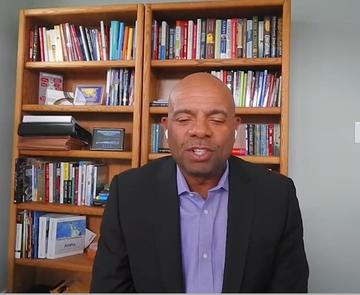
Jeff Benson
Affinity Plus has given each of its staff 40 hours of “COVID-19” time.
“We gave them 40 hours of mental health time. They take the days or the hours as they need them, no questions asked,” said Larson. “All of our employees have taken advantage of this and they really appreciate it.”
Creative use of Zoom meetings is helping to keep teams connected, the CEOs stated.
“We have had full-staff meetings over Zoom,” said Jeff Benson, CEO of $347-million Case CU in Lansing, Mich. “We feel it is important for people to see each other regularly—keep that engagement. I also regularly hold half-hour Zoom ‘Rap Sessions’ where we all just talk. People share their thoughts, talk about how they are feeling…”
Zoom Walks
Benson also holds Zoom walks, where staff are invited to connect in the morning via Zoom on their phones.
“They can bring their dogs along, the kids…,” explained Benson. “We have had as many as 75 employees walking together at one time.”

Maria Martinez
Maria Martinez, CEO of $193-million Border Federal Credit Union in Del Rio, Texas, said she developed a game for staff to not only kept things light and fun during stressful times but add some hope and inspiration.
“I would draw 12 employee names out of a hat each week during a Zoom meeting, and send each of them a gift card,” explained Martinez. “With half of that money they were to buy something for themselves and then buy something for another employee. But the most important thing with this effort was they had to also write an inspirational note to they employee they sent the gift to. Those have really gone over well and I have seen some very touching notes.”
Finding New Ways
Larson reiterated if credit unions are going to succeed in the new normal it will take finding ways to deliver credit unions culture of caring over digital channels.
“Three weeks into the shutdown a member and his entire family came to the credit union,” recalled Larson. “They could not come in as our branches were closed. So they held up a sign that said ‘We will get through this crisis with people like you.’ That made me, and our team, feel so good. What this member was doing was conveying our culture of caring. The old quote that culture eats strategy for lunch is so true. As we move forward and out of this crisis and into a more digital world we have to make sure we keep and convey our culture.”