

NEW YORK–With asset growth remaining strong at many credit unions, CFOs and other finance executives here tackled issues they are facing when it comes to growing capital.
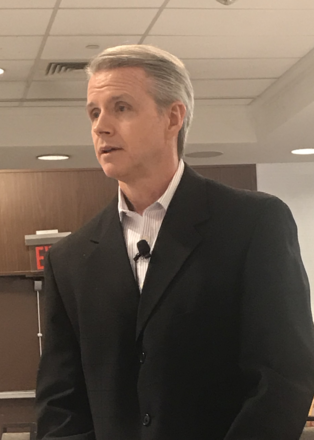
Jeff Rendel
Jeff Rendel, who heads up consulting firm Rising Above Enterprises and who previously worked for the California and Nevada leagues and was also a national bank examiner, noted that at credit unions growing capital is both an “easy and frustrating road.” The easy part: there is one-step process of building capital through retained earnings (unless there is access to secondary capital). The frustrating part: capital can only be built through retained earnings (unless there is access to secondary capital). Note: CUToday.info will have separate reporting around the issue of secondary capital.
Pointing to a forecast from CUNA for 2019-20, projections that call for a slowdown in lending and growth at CUs, which impacts the profit models built by CUs for capital accumulation, Rendel covered a number of related issues and shared examples of how some CUs have built capital during a session at the CUNA Finance Council annual conference here. By a show of hands, those CUs in the session indicated they were feeling liquidity pressures much more than capital pressures, and were using capital to make investments in data analytics (one CU said it had just contracted with an analytics firm at a cost of $3,000 a month), removing “friction” from the member journey, and investing in people and technology.
Lessons from ‘Great by Choice’
Rendel recommended the book “Great by Choice” by Jim Collins, the follow up to “Good to Great,” which looked at 20,000 companies over 25 year and identified seven companies that had seen 10 times the success of industry peers over the time span.
“What I found most interesting was where and how these companies chose to deploy their capital,” said Rendel. “They were heavily focused on making sure they did not ignore the core book of their business. With adjacent opportunities, they did not lose focus on core. Even transformation opportunities were not chased down at the expense of the core book of business.”
Core Examples of 10x Growth Strategies
As examples of core book of business opportunities, Rendel pointed to increased lending capacity, mobile access and growing the physical CU footprint.
As examples of adjacent business opportunities, Rendel cited CUSOs offering a variety of services, mergers or expansion into wealth management.
As examples of transformational opportunities, Rendel named the purchase of a bank, the move to private deposit insurance, or buying an equity stake in a local business.
Four Options to Grow Capital
As Rendel reminded, a credit union has four options to grow capital: Grow revenue, manage expenses, buy a revenue-producing business, or go to secondary capital sources.
When it comes to growing revenue, Rendel acknowledged his audience know what’s in the toolbox, as the options include yield management, loan mix, investment management, cost of funds management, non-interest income, etc.
As an example, Rendel pointed to Navy FCU, which grew $60 billion in assets over a decade by deploying risk-based lending; finding ways to say “yes”; partnering with the FHLB for funding, ensuring mobile functions equally to online features; offering 10-minute car loans; rolling out a simple, killer credit card; offering instant debit; expanding into private student loans, and reducing the call time at its call center to 45 seconds from 45 minutes.
Other credit unions have recognized they could not add a member for years and still grow significantly in size by just capturing greater share from among the members they already have, he said.
Revenue Producing Businesses
Rendel said he believes commercial lending is the “next untapped opportunity for credit unions, particularly under $2 million in funding, as most commercial banks aren’t looking at that market.”
In terms of managing expenses or creating efficiencies, the options are also known to most CU finance execs, and include aggressive collections, operating efficiencies using scale, branch and staffing efficiencies, improved member-facing technology, reductions in internal operational costs, and doing a better job of negotiating.
He added that under CECL, it’s probably going to cost most CUs an extra provision to ALLL, so revenue-offsets are going to be needed.
Other Points
Among the other points made by Rendel:
- Rendel quoted one CEO at a credit union that had focused on efficiencies and value and had driven 1.50% ROA vs. .89% for peer, as saying, “Efficiency provides room for value, and value is in pricing. Pricing drives growth.”
- Many CUs have realized the branch of the future is much smaller, as small as 600 square feet or even tinier The data show 60% of walk-in traffic is assisted electronically.
- When it comes to backoffice savings, many CUs have found it best to partner with out-of-state credit unions in order to avoid the whole issue of competition.