

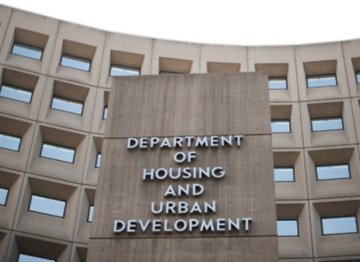
WASHINGTON–CUNA is calling on the Department of Housing and Urban Development to put a safe harbor as part of new rules codifying a discriminatory effects standard that would help credit unions limited by field of membership limitations.
The new rules seek to clarify portions of the Fair Housing Act (FHA), which prohibits discrimination in the sale, rental, or financing of dwellings and in other housing-related activities because of race, color, religion, sex, disability, familial status, or national origin.
Following a 2020 court ruling, HUD published its final rule that same year and it was again challenged in court. Now, in 2021, HUD has issued a Proposed Reinstatement of its 2013 Final Rule, saying it believes it has been consistent with the Supreme Court’s decision and the limitations it describes, noted CUNA in the introduction to its letter.
Saying credit unions support the goals of the FHA to prohibit discrimination in housing finance and that it further supports the codification of a discriminatory effects standard, CUNA said credit unions are careful to draft policies and procedures that comply with FHA regulations, and to identify and assess potential compliance, litigation, and reputation risk to the credit union that might arise in connection with housing-related policies.
‘Limited’ Guidance
“However, as there is limited regulatory guidance on the topic and the standards for disparate impact claims are found in case law which may vary among jurisdictions, establishing compliant policies and assessing risks often requires the use of outside counsel―an expensive option for smaller credit unions,” CUNA wrote. “Codifying a single, authoritative standard for these claims simplifies this analysis and creates a consistent level of protections across the country.”
In addition, CUNA said the “intricacies of credit union field of membership remain not widely understood by the general public as many are unfamiliar with technical aspects of credit unions’ unique legal structure,” and that this “built-in legal limitation and a plaintiff’s inability to overcome” was specifically recognized by the Supreme Court in its 2015 opinion in Texas Department of Housing and Community Affairs.
“Because credit unions are legally unable to lend to non-members, it is absolutely true that a disparate impact case based on a credit union’s failure to lend to persons outside its field of membership would fail under the existing burden-shifting framework for discriminatory effects cases, and dismissal would be appropriate,” CUNA wrote. “However, the practical reality is that many credit unions have been and will continue to be subject to unnecessary litigation on a variety of issues which plaintiffs cannot win as they are ineligible to join the credit union.
Costs are Cited
“As credit unions are cooperatively owned, the cost of this unnecessary litigation is ultimately paid for by credit union members,” the letter continues, citing the limited assets of most credit unions and the heavy burden such litigation would represent.
“CUNA therefore urges HUD to include in its burden shifting framework an explicit safe harbor for policies which are the direct result of facially neutral statutory obligations such as credit union field of membership requirements,” CUNA wrote. “CUNA would similarly urge HUD to explicitly mention credit union field of membership limitations as an illustrative example of a statutory limitation satisfying the safe harbor.”