

ORLANDO, Fla.–It may seem obvious, but real-time payments are really about time–and consumers increasingly expect to use as little as possible to make purchases or exchange money, according to one person.
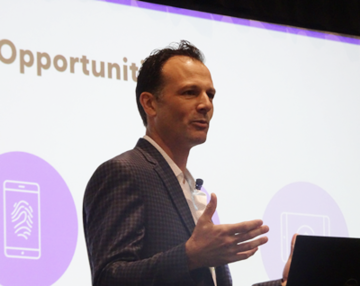
Ian McAllister speaks about real-time payments at ACUC conference
In remarks to CUNA’s America’s Credit Union Conference here, Ian Macallister of Early Warning, which is owned by seven large banks and which owns and operates the Zelle Network, said consumers are really driving the evolution in payments.
Macillister noted there have really only been six core changes in payments: cash, checks, wire, credit cards, debit, and the last one to develop some 45 years ago, ACH. The seventh core change is real-time payments he said.
“This is consumer behavior driven by the digital age,” he said. “Consumers have asked for increased convenience, they expect real time interaction with their friends and real time finality around payments. It’s not really about the younger generation. It’s about what you have in your pocket and at your fingertips. People are going to thin wallets.”
An Old Prediction, But…
Macillister agreed it’s become an age-old prediction that cash is “on the way out,” but he said research now shows 84% of U.S. consumers have made a P2P payment. “The everyday need for cash is slowing down,” he said, noting that in 2017, more than $1 trillion was moved via P2P.”
One myth credit unions must move away from is that P2P payments are all about younger consumers, according to McAllister. He cited research showing that over the last year 49% of Millennials, 42% of Gen Xers and 32% of Baby Boomers have made a P2P payment at least once per week.
“This is about capturing the desire to bank with you and moving (consumers) from a cash and check age by using the trust they have in you to use their phones to move money,” McAllister said.
Seventy percent of Boomers, he added, have indicated a willingness to use P2P if offered by their bank or credit union.
Why Send Funds?
Why do people send funds P2P?
According to Macallister, the chief reasons are birthday gift (54%,) gift for another occasion (45%), Christmas gift (43%), purchased goods from an individual (37%), and emergency 34%.
From Zelle perspective, Macillister said it has seen growing usage to pay for rent and utilities. But he also noted the top two emojis that appear along with payments via Venmo, which competes with Zelle, are pizza and beer.
What’s Next?
According to McAllister, the next frontiers in P2P payments are:
- Small business payments
- Business to consumer payments
- ‘Real time’ payments
- Bill pay
- B2B payments
- Voice-enabled P2P payments
“Cash and check are the competition,” he told ACUC. “Checks are very expense. We have heard it costs more than $4 to process a check payment. That’s significant to your operational load.
This is about understanding your members and where they live, and engaging them back into your digital spaces so even when they move away they know that if they do move away, you’re still with them because your still on their phone. P2P is just the foundation, just the start. P2P is what gets people engaged.”