

BOULDER CITY, Nev.–The story of how TruStage has gone from a company where nearly everyone—especially management—all looked the same and where one leader once said it wasn’t ready for diversity, to becoming a champion of DEI was shared by one person who has been a key driver in that evolution.
Cedric Ellis, EVP and chief enterprise services officer with TruStage, related to the CU Pride Leadership Conference the journey the company went through, including overcoming some potential roadblocks, as well as his own personal story and some of what he has faced in life as an African-American man who is gay.
CU Pride, which has grown rapidly since being formed three years ago by cofounders Linda Bodie, Dan Marquez, Brandi Stankovic, and Zach Christensen, is aimed at promoting diversity and supporting what its founders said is the often “invisible” LGBTQ plus community in credit union.
Christiansen, who is executive director of CU Pride and also director of DEI and digital services at Mitchell Stankovic and Associates, moderated the Q&A with Ellis. Here is a look at what was discussed during the session that was part of the CU Pride Leadership Conference, which was held virtually.
Here is some of what was discussed:
Christensen: Can you tell us a little bit about your journey within the credit union industry?
Ellis: I'll start by saying this: I didn't know about credit unions, quite frankly, until I became a state employee in Connecticut and they offered an opportunity to join a credit union. So, I joined Connecticut State Employees credit union way back when…and enjoyed a great financial relationship with them. And then I went to go work in the insurance industry. I worked for Aetna for a while. I worked for The Hartford for a while. And then I jumped to the four-letter B word, I jumped to a bank.
But how I ended up in the industry—it’s all about relationships. One of my former bosses at Aetna (Bob Trunzo) had gone to go work at (what is now) TruStage. And he called me. I was like, ‘Hey, Bob, no, I'm not moving to Wisconsin…So, I went to go meet Bob, who's now the CEO, (but) at that time was head of sales and we hit it off famously. I then became head of HR for the sales area of CUNA Mutual almost 18 years ago.
So, that's how I got kind of reintroduced to the credit union movement. But I had a very different perspective because we were providing products and services largely to the credit union movement…It's all relationship based.
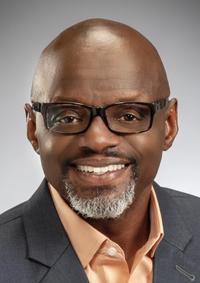
Cedric Ellis
Christensen: TruStage is really considered a leader when it comes to DEI within the industry. A few birdies have told me that you were an integral part of that DEI journey for TruStage. Can you share how that unfolded?
Ellis: WhenI joined CUNA Mutual I joined as an HR leader with a sales organization. And I remember they used to do this thing called Congress where they were bringing all the sales folks together…I looked around the room and literally, there were no people of color. I said to Bob, ‘Where's the diversity?’ And he said, ‘You know, I think we're going to have to do something about that.’
So it was at that point that I got a kind of license, if you will, to begin to make a change. Shortly after that I met with the HR team, and I remember having a very candid discussion with what I call the gatekeepers of HR, the recruiting folks. I was trying to just understand why don't we see more diversity? You know, what's the candidate pool look like? I was meeting with the recruiting team and I said, ‘Can you guys tell me, where is CUNA Mutual when it comes to diversity?’ And the manager of the recruiting team at that time said, ‘CUNA Mutual is not ready for diversity,’ which completely blew my mind. Being who I am I said, ‘Well, wait a minute, as HR professionals, you guys are the gatekeepers. If you're thinking that way, you shouldn't be in this seat because you might be the problem for why we're not getting diversity.’
That was the impetus for me to start to help change CUNA Mutual and now TruStage. I'm in a far more inclusive organization. Shortly after that--we had a different CEO at the time--I began to have some conversations with him about implementing some policies around diversity. He wasn't particularly inviting or accepting of it--it was kind of put on the back burner. So, I kept having conversations with Bob about the need to figure out what we're doing on diversity, equity, and inclusion, especially with the changing demographics and all the things that are happening in the world. We need to be ready. And Bob was really steadfast, like, we can do some stuff.
We started doing little things within the sales organization and that all accelerated when he became CEO. He and I had a number of discussions and I said, ‘Bob, you know, the best thing that you could do is to take a look at our organizational values. And the best thing that you could do is really name inclusion as a value.’ And it was probably within a week of him being appointed CEO, he named inclusion as a value, and was really specific with the organization about what we were going to try to do.
Christensen: How does TruStage work to ensure inclusion and belonging for your LGBTQ-plus employees?
Ellis: As a gay black man, it was pretty important for me to be broadly inclusive, including my gay community. One of the things that I worked on pretty directly when I used to be the head of HR for the company was really helping the organization implement policies and programs that really set the signal that this is a safe place, that we as a company are embracing everyone.
One of the things that I was really proud of, and it kind of sent a signal around, is we flew the pride flag. Now, I will tell you, that did not come without some controversy, because there were a number of people who were like, ‘What are you guys doing?’ But we were adamant about sending an appropriate sign of this is a safe place, that we welcome all.
The other thing I think we've done to send a real clear message about embracing my community is we take the time to listen to the gay community, we take the time to be really clear about what policies and programs we needed. What do we need to do to change the culture?
We implemented ERGs, employee resource groups, to really tap into them as a place to say, ‘What can we do better, to make this a way more inclusive environment?’ As a company we really have done a lot of things to make sure people feel like they belong at our company, that they can actually help change our mission, change our focus, and be far more inclusive.
We still have work to do. I mean, let's not kid ourselves, because most companies are a microcosm of what exists in the world. We’re going have challenges, but we're really clear about listening and trying to make sure that we send the right messages, and that we also act in a way in which says, this is a safe place, and all are welcome.
Christensen: One of the voices we continue to miss in a lot of conversations is that of the BIPOC community, black indigenous people of color, and the Latinx community. I've had personal conversations with people who are out in aspects of their life but not comfortable in doing so right now within the industry. Did you ever come across some similar things as you were coming out as a gay man?
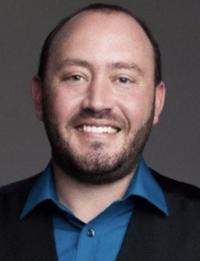
Zach Christensen
Ellis: I'll share what I experienced when I finally moved to Madison, Wis. It was really fascinating, because I would say the community clearly embraced me as a leader of color in the city of Madison. I ended up getting a lot of (contacts) from the leaders of the black community, but after they learned I was gay, those invitations ceased. I stopped getting invited to things, the walls started to close in a bit, particularly when it came to the Black community. There was a level of discomfort that I experienced in the Black community that wasn't inclusive.
Different racial and ethnic groups have challenges and struggles with the kind of outward expressions of embracing gay people, especially if you're out. I experienced that to an interesting degree in Madison. And I have to admit I also did not receive a welcoming door from the gay community. There’s this interesting kind of struggle within our community along racial lines. And I will tell you I've experienced it in every city I've lived in. I think that got to figure out as a community how to knock down those barriers, to be inclusive within our own space.
It's a challenge I think we're going to continuously experience. Because, again, we're a microcosm of society. You might be gay, but we all come with bias of some sort.
Christensen: For leaders of color, what's something you would tell them to be better at when it comes to being inclusive of the LGBTQ plus community?
Ellis: As I think about that question, I think about what are we doing in terms of implementing policies. We have been really clear on where we stand. But I think that we have got to figure out how to provide resources to my community, we've got to figure out how do we show up and support, and not just our employees, but how do we get actively involved? How do we actively participate in events and activities? And how do we speak out against injustice is particularly at this time?
Not to get political, but it's personal and it's political. There's a lot going on around the country to kind of strip the rights of people like me, strip the rights of people like you and in our gay community. I saw this on a t-shirt the other day that folks have got to get to the point where they have to understand that equal rights for others, doesn't mean less rights for you. It ain't pie. For the love of God, let's try to be as inclusive and embracing as possible. It doesn't mean that you're going to get less, it's not a zero sum game.
I want to constantly encourage organizations to stand up, but also to listen.
The other thing that I would really urge folks to do, and it’s one of the things we always do at (TruStage), is we always ask the questions of who's helped and who's harmed. That typically forces you to really examine policies, practices, all those things that you're putting in place. It really helps you make them better.
Christensen: Why is an organization like CU Pride important to the credit union industry?
Ellis: I think a little bit about the silent, or the unrecognized, folks in our organization. I think it's pretty important for us to acknowledge not just the shifting demographics, but that we're a part of this community and, I would add, a pretty critical part, if you really take a look at the numbers. I mean, if you really want to get down to brass tacks, it's about looking at the numbers, understanding how do you make sure you're not missing out on providing products and services to that community, that that community needs. (It’s about) listening and really paying close attention to what our experiences are, and what our wants needs…t’s pretty important for us to be seen.