

WASHINGTON–Testifying before the House on Wednesday, Rachel Pross, chief risk officer with Maps Credit Union in Oregon, called on Congress to resolve legalities around serving cannabis businesses, saying not doing so means lost tax revenue and increases in crime.
“As a community-focused organization, we have seen and experienced first-hand the many challenges facing both financial institutions and state-sanctioned cannabis businesses seeking to operate within the financial mainstream,” said Pross.
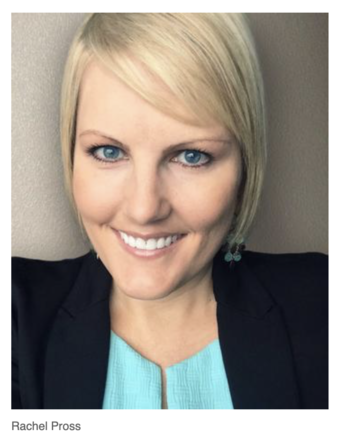
During the hearing on “Challenges and Solutions: Access to Banking Services for Cannabis-Related Businesses,” Pross shared with the House Financial Services Committee, Subcommittee on Consumer Protection and Financial Institutions the $850-million Maps CU’s own efforts and challenges in attempting to serve the cannabis industry since 2014, saying it has been the only financial institution in Oregon to do so. Over the last five years it has come to serve more than 500 Oregon-sanctioned cannabis businesses, Pross said.
Pross cited statistics showing the increase in crime that result when businesses must deal in cash only, and said during 2017 and 2018 Maps received well over $500 million in cash deposits from cannabis businesses—"meaning that $500 million in cash was removed from the sidewalks of Oregon’s communities just in the last two years. That’s millions of dollars that used to be carried around in backpacks and shoeboxes by legitimate, legal business owners in the state of Oregon, making them prime targets for thieves and other criminals.”
Rigorous Screening
Pross reviewed for the committee the compliance framework Maps utilizes, and said the credit union has “established a rigorous screening and compliance protocol and has invested considerably in the robust infrastructure required to appropriately monitor and maintain these high-risk accounts. We have a centralized team of dedicated professionals in our cannabis banking program, and the staffing averages one full time employee for every 40 cannabis business accounts.”
She also detailed the credit union's evaluation and ongoing monitoring of cannabis-related accounts, including filing more than 13,500 individual reports related to cannabis business accounts in 2017 and 2018 alone.
“We firmly believe that providing banking services to this industry delivers a significant benefit to law enforcement, because Maps is essentially providing free, highly-detailed information at least every quarter on cannabis-related monetary activity in the state of Oregon,” Pross stated. “Furthermore, we educate each and every one of our cannabisrelated accountholders about the FinCEN Guidance and the criticality of compliance and transparency. This ultimately reduces the likelihood of financial crime on their parts. They want to keep their accounts with us, so they carefully adhere to the requirements given to them.”
‘Unscrupulous Players’
Pross told the committee there remain “numerous unscrupulous players trying to benefit from the severe shortage of legitimate financial services available to cannabis businesses,” and that other non-regulated entities are frequently offering their own
“solutions” that are “often very clearly a form of money laundering.”
With cannabis remaining illegal under federal law, Pross said “The current rift between federal and state law has left credit unions and other financial institutions trapped in a scenario where their mission to serve the financial needs of their local communities is directly pitted against the inability to have perfect information regarding every indirect business activity and the threat of federal enforcement action.
“Without banking services, cannabis businesses and the businesses indirectly related to them are less able to obey the law, pay taxes, and follow state regulations,” Pross continued. “The public safety risks posed by these businesses are easily mitigated through access to mainstream banking service providers and keeping the cash off the streets. This is a critically important public service…In the absence of a federal law providing explicit legal clearance for financial institutions to provide banking services to the Cannabis industry, it is highly likely that many of these businesses will be forced to continue operating outside of the financial mainstream.”
The result of that situation, said Pross is lost tax revenue and the increase in criminal activity.
Call for Resolution
Pross called on Congress to resolve the issues faced by financial institutions and said both Maps Credit Union and CUNA, on whose behalf she was testifying, support legislation such as “The SAFE Banking Act,” previously sponsored by Representative Perlmutter as H.R. 2215 in the House and Senator Merkley as S. 1152 in the Senate during the 115th Congress.
“We strongly believe that financial institutions should be permitted to lawfully serve businesses that engage in activities that are authorized under their state laws, even when such activity may be inconsistent with federal law,” Pross told the committee.