

RANCHO CUCAMONGA, Calif.–How can CUs compete against big banks in the current environment? What behavior changes are likely to last beyond the pandemic? Which group of members deserves special attention when it comes to contactless?
Those questions and numerous others were put to a panel of experts for their viewpoints during CO-OP’s THINK20 Virtual event.
Participating in the Q&A were Michael McNamara, senior principal with Mastercard SpendingPulse; Nick Calcanes, chief operating officer with CO-OP Financial Services, and Ryan Battles, principal in the Financial Services office of EY. The discussion was moderated by Jean Chatzky.
Here’s a look at the questions posed and the answers provided:
Chatzky (on behalf of an event viewer): Many of us were forced into remote work, without much time to prepare. Will it become more acceptable? Should it become the norm for many back-office positions? Will outsourcing of more back-office positions become more acceptable?

Ryan Battles
Battles: I do think it becomes the new norm. The technology has matured considerably. The ability to get telepresence up and running and even monitor work from a remote position has become much easier. Until there is a vaccine and we know we can keep the workforce safe, it’s obviously a prudent measure to limit physical contact.
Outsourcing, I think, is interesting. I think it will change for us, as well, for several reasons. One, there are countries we rely on for outsourcing where lockdowns are even stricter, so you can cause as much, if not more disruption, with outsourced functions. Another topic discussed is around the gig economy. Gig economy can onboard people very quickly. I think we’ll see a lot of services come out where those gig workers can be quickly certified and they can be brought into an operational environment.
Chatzky: What will new normal look like in financial services in the short term and as we project out further?
Calcanes: Another piece of this is how do we analyze the data and understand the traffic flows and how a client wants to interact, then assess if that is temporary or more of a permanent change. A lot of that is going to tie to the data and not overreacting. Right now, we’re just 60 to 90 days in.
Chatzky: How can small financial institutions compete against big banks in this environment?
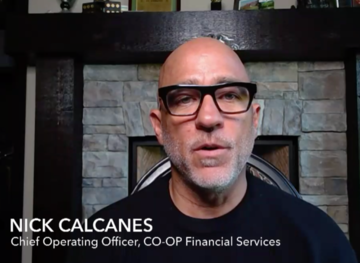
Calcanes: In many instances we should be looking at how do we align to or almost surf in the wake of what they are doing from a credit union perspective or a payments perspective. There are ways to do that, like getting your card top of wallet. You don’t need to take on the behemoths. I don’t think it needs to be a competition per se, and I’m not saying it’s a co-opetition either, but in some instances there is an opportunity to cooperative with a fintech or a Google. I think looking at this as an opportunity is a better way to look at it.
Chatzky: What trends are you seeing that you think credit unions should be in particular looking out for?
McNamara: Overall, we have been seeing some extraordinary numbers for the past few weeks…There are numbers that are growing. The growth rate in grocery (payments via plastic) surged in March and then settled into year-over-year 20% increase in April. Online spending surged by more than 60% in April, so that’s another area where you want to make sure you have appropriate areas to serve members.
(Companies) under pressure are in apparel, department stores, travel, restaurants. One other thing to keep in mind, geographically there are some pretty big differences. There is less damage in relative terms in the south and Midwest. The west coast, MidAtlantic and the Northeast are taking the hardest hits.
Chatzky: With contactless technology, which requires a pretty substantial investment, in regions without mass transit is there really a use-case to justify?
McNamara: Yes, there have been some spikes and COVID-19 has acted as an accelerant to trends we were seeing earlier.
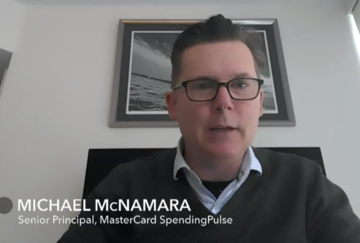
Baby Boomers represent a third of retail sales, so I think it would be especially important to make sure that group knows how to make safe contactless transactions at retail locations.
Chatzky: Thinking about how you want to be portrayed, what new products should CUs think about implementing to offer both long and short-term relief?
Battles: Well-executed support of the government relief programs, I think, is probably most important. Moving forward, relief on loans, offering short-term loans, collections, etc. These always looked at from the product level, but it’s more important to start looking at those from the member point of view. If a member is having trouble paying their mortgage, they are probably also going to have problems paying their credit card. So, finding ways to preserve the relationship going to be important.
Calcanes: Contactless cards is something I think you are going to want to accelerate. We may see people move away from a car loan, as they realize after having been at home that they don’t need it, and it may become a credit card flow.
The other part of this is service and support. The products and services we have on our roadmap are proving to be still valid; it’s can we get those faster. We need to be prepared and nimble for the things that are going to happen over the next 60 or 90 days so we can smooth that out.