

WASHINGTON—CFPB Director Kathy Kraninger – during a House Financial Services Committee hearing to review the Bureau – restated her position the agency will no longer defend the Bureau's single-director structure in a lawsuit set to be considered by the Supreme Court in March.
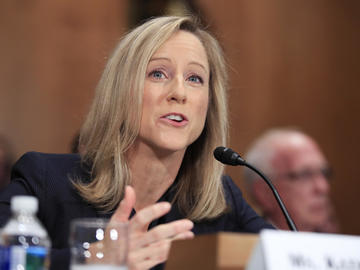
Kathy Kraninger
In addition, Kraninger said during the hearing the qualified mortgage (QM) rule will “move away” from 43% debt-to-income ratio requirement and moving to a new threshold.
The alternative will “better ensure that responsible, affordable mortgage credit remains viable for consumers,” said Kraninger.
Kraninger added the CFPB would also “welcome legislation through which Congress could weigh the important policy objectives at issue.”
Separately, Kraninger also told the committee that the Bureau plans to cite or challenge abusive conduct when the harm to consumers exceeds the benefits. As CUToday.info reported earlier, the CFPB announced a “framework” on how to apply the abusiveness
In addition, during the hearing, Kraninger also discussed issues related to payday lending, indicating the CFPB's new rule, expected to be released in April, intends to provide more clarity.
Previous Calls
In its analysis, NAFCU said it has previously called on the Bureau to extend its safe harbor under the rule to include all future payday alternative loans (PALs) products following the NCUA's expansion of its PALs program.
In addition, Kraninger spoke on the Bureau's ongoing rulemaking to revise the definition of qualified mortgage (QM) ahead of the expiration of the government-sponsored enterprise (GSE) patch.
In a letter to lawmakers earlier this month, Kraninger outlined the Bureau's plan, which includes an extension of the GSE Patch until a new rule is finalized or when either of the GSEs is removed from conservatorship (whichever occurs first).
Committee members also addressed the CFPB's new policy statement "providing a common-sense framework" for addressing the "abusive" prong of the unfair, deceptive or abusive acts or practices provision (UDAAP). In response to questions on the possibility of a rulemaking, Kraninger indicated that there would need to be more engagement on the issue.