WASHINGTON–CUNA is calling on the CFPB to minimize the regulatory burdens created by the CARD Act.
In response to a request for information on the credit card market, as is required by the Credit Card Accountability Responsibility and Disclosure Act of 2009 (CARD Act), CUNA told the CFPB that while it supports the intent of the Act, which is to eliminate predatory credit card practices caused by irresponsible lenders, it does not want to see regulatory requirements becoming any more “cumbersome.”
The full content of the letter can be found in CUToday.info’s The Gov here. Among the areas on which CUNA provided comment:
Online Disclosures. Calling on the CFPB to explore ways to simplify card disclosures, CUNA also urged the agency to be “mindful of the financial resources credit card issuers incur with each change to a required disclosure—even if that change is minor. In addition, any changes contemplated by the Bureau, should retain the responsibility of consumers to review their billing statements.”
Grace Periods. “We agree with the Bureau that disclosing the rules governing the availability of a grace period is quite challenging. Since the calculation of grace period is often quite complex, it is not surprising that even the most clearly and simply disclosed grace period inherently includes a degree of complexity. With that said, we caution the CFPB from contemplating significant changes to the disclosures for grace periods before thoroughly reviewing the potential benefits and certain costs—particularly on small and mid-sized credit unions—of such changes,” CUNA said.
Add-On Products. When it comes to add-on products, CUNA urged the CFPB to focus on the “bad actors” and said it would be “inappropriate for the Bureau to initiate any across-the-board changes to add-on products in response to the behavior of a few.”
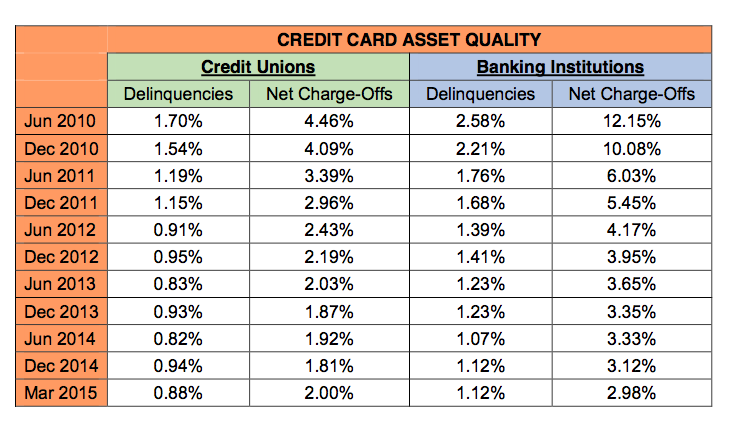
Debt Collection. “When discussing debt collection, it is critical to understand the stark differences of delinquencies and charge-offs between banks and credit unions, as noted in the table (shown at the bottom of this article). These differences are due in large part to the relationship between a credit union and its members; a credit union is much more likely to work with its members and members are much more likely to contact the credit union if financial hardship arises,” CUNA said.
The letter was signed by CUNA’s Luke Martone, senior director of Advocacy and Counsel.