

WASHINGTON--The CFPB's overdraft rule is now one step closer to being repealed with the Senate's recent passage of S.J.Res.18.
The joint resolution targets the CFPB's controversial OD rule that caps overdraft fees at $5 for financial institutions above $10 billion in assets. As CUToday.info has extensively reported, analysts predict the CFPB's overdraft limit of $5 will trickle down to all FIs through competitive pressure, possibly forcing some credit unions to discontinue the service.
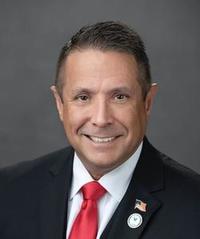
Anthony Hernandez
"We thank Chairman Tim Scott for his leadership in bringing this critical reform to the CFPB's flawed overdraft fee rule," said Anthony Hernandez, DCUC president and CEO. "This resolution affirms that when regulatory agencies exceed their authority or impose policies that harm consumers, Congress must intervene. Chairman Scott's leadership has ensured that the perspectives of America's hardworking families and community-based financial institutions are heard amongst the national conversation on financial fairness and accessibility."
DCUC Activity
On Tuesday, DCUC sent a letter to Chairman Tim Scott (R-SC) expressing support for his leadership in introducing a Congressional Review Act (CRA) resolution to overturn the CFPB’s rule and his efforts to bring the measure before the Senate.
DCUC voiced its opposition to the CFPB rule since it was first introduced, sending a letter to the Senate Banking, Housing, and Urban Affairs Committee, both Houses of Congress, and former CFPB Director Rohit Chopra.
"We respectfully request that you oppose the CFPB’s overdraft fee rule and utilize the Congressional Review Act to repeal this blatant overregulation and to ensure that future regulations are appropriately targeted and balanced to preserve access to financial services for all Americans," DCUC wrote to the congressional committee leaders.
DCUC's letters added:
"The imposition of a $5 cap on overdraft fees disregards the operational realities of financial institutions and the costs incurred in providing overdraft protection services. This policy not only jeopardizes the sustainability of these services but also shifts the financial burden back onto consumers in unintended ways. It risks creating a perverse incentive for individuals to overdraft their accounts more frequently, undermining the financial responsibility that overdraft policies are designed to encourage, the trade association wrote.
"Worse, without any safety net that would allow consumers to keep payments on time, this rule risks more decline rates due to non-sufficient funds. These can result in higher penalties from non-bank entities such as landlords, utility companies, and even municipalities. Instead of addressing cases of actual abuse, this sweeping regulation penalizes the entire financial sector indiscriminately. Such an approach fails to distinguish between responsible institutions, such as credit unions, and bad actors who may engage in exploitative practices. By forcing credit unions to absorb the costs of overdraft protection, this rule jeopardizes their ability to reinvest in their communities and provide low-cost financial services to their members—many of whom are active-duty military personnel, veterans, and their families.
"Furthermore, we are concerned that this rule will have the opposite of its intended effect," DCUC continued. "Limiting overdraft fees to such an extent may incentivize consumers to overdraft their accounts more frequently, undermining the financial stability of individuals and credit unions alike. When these consequences inevitably materialize, the CFPB will likely seek to impose additional regulations, exacerbating the already burdensome regulatory environment for credit unions."
The CFPB's rule applied to financial institutions with more than $10 billion in assets, and mandated that these institutions either cap most overdraft fees at $5 or treat overdraft programs as credit under the Truth in Lending Act (TILA).
Prior to today's vote on the Senate floor, the bill gained bipartisan support from Senators Mike Rounds [R-SD]; Bill Hagerty [R-TN]; Mike Crapo [R-ID]; Thomas Tillis (R-NC); Kevin Cramer (R-ND); Katie Boyd Britt (R-AL); Jerry Moran (R-KS); James Risch (R-ID); John Boozman (R-AR); Roger Wicker (R-MS); Cynthia Lummis (R-WY); Pete Ricketts (R-NE); Bernie Moreno (R-OH); Mike Lee (R-UT); Steve Daines (R-MT); and John Thune (R-SD).
DCUC Commends Congresswoman De La Cruz For Reintroducing VA Home Loan Awareness Act
DCUC also commended Congresswoman Monica De La Cruz (TX-15) for her leadership in reintroducing the VA Home Loan Awareness Act.
Congresswoman De La Cruz’s official announcement shared: The legislation will incorporate an impactful disclosure on the Uniform Residential Loan Application (URLA) to direct applicants to consult their lender for more information about the VA Home Loan Program, which has benefits that can include zero down payments, no mortgage insurance, and often lower interest rates compared to conventional FHA loans. The legislation was introduced alongside Rep. Al Green (D-TX). Original co-sponsors of the legislation include: Rep. August Pfluger (R-TX), Rep. Mike Lawler (R-NY), Rep. Lance Gooden (R-TX), Rep. Brian Fitzpatrick (R-PA), Rep. Dan Crenshaw (R-TX), Rep. Brittany Pettersen (D-CO), Rep. Joyce Beatty (D-OH), Rep. Josh Gottheimer (D-NJ), Rep. Josh Harder (D-CA), Rep. Deborah Ross (D-NC).
"We are forever grateful to our Veterans and their families for their sacrifices to our nation. Though we can never fully repay them, we can ensure they can access the benefits they deserve. Only a fraction of veterans are utilizing the significant advantages offered by the VA Home Loan Program. My bipartisan legislation ensures that our nation's heroes can access the benefits they earned, achieve homeownership, and live the American dream they fought to protect," De La Cruz said.
The legislation has garnered support from the Veterans Association of Real Estate Professionals (VAREP) and DCUC.
“Too many veterans are unaware of the VA home loan benefit they’ve earned. This legislation adds visibility at the loan application stage. While using the benefit is their choice, awareness empowers them to ask the right questions and make informed decisions—ultimately increasing usage among those who qualify," said Son Nguyen, president of the Veterans Association of Real Estate Professionals.
"We thank Congresswoman Monica De La Cruz for her leadership in reintroducing the 'VA Home Loan Awareness Act' to address the housing challenges faced by military families," stated DCUC's Hernandez. "The affordable housing crisis continues to place financial strain on service members and veterans, and policy solutions like this are essential to ensuring they have access to stable and affordable housing. Defense credit unions remain committed to supporting military families through innovative mortgage products and financial counseling, but legislative action is critical to expanding the overall impact we can offer to these communities. We look forward to assisting congressional leadership in their efforts to strengthen VA home loan programs and improve housing affordability for those who serve our nation."
In recent letters, DCUC has urged Congressional committees for necessary reform to the current VA Home Loan program to enhance and ensure improved housing access and resources for our Nation’s military and veteran communities.
In January, DCUC celebrated the introduction of the Senate companion bill sponsored by senators Tim Sheehy’s (R-MT) and Chris Van Hollen’s (D-MD), the VA Home Loan Awareness Act of 2025. The bill quickly garnered bipartisan support from senators Ted Cruz (R-TX), Raphael Warnock (D-GA), Ted Budd (R-NC), Sheldon Whitehouse (D-RI), John Boozman (R-AR), Bernie Sanders (I-VT), Kevin Cramer (R-ND), Peter Welch (D-VT), Eric Schmitt (R-MO), John Kennedy (R-LA), Thom Tillis (R-NC), Bernie Moreno (R-OH), Jacky Rosen (D-NV), and Amy Klobuchar (D-MN).
DCUC has called on Congress to require that the Department of Housing and Urban Development (HUD), in collaboration with the Department of Veterans Affairs, address these challenges by streamlining the appraisal process and launching initiatives to educate sellers and real estate professionals about the benefits of VA loans, especially in current housing markets with high-interest rates.DCUC has also raised concerns over the lack of affordable housing and credit access to military and veteran families, as well as mortgage regulations.
“The rising cost of housing disproportionately affects military families, particularly those stationed near high-cost urban areas. This issue is exacerbated by the limited availability of affordable housing options, especially rental properties for short-term assignments…while defense credit unions work diligently to ensure credit access, regulatory burdens often create barriers. Strict compliance requirements for mortgage lending, coupled with differing interpretations of guidelines, increase costs for credit unions and reduce loan affordability for our members,” said Jason Stverak, DCUC chief advocacy officer.