

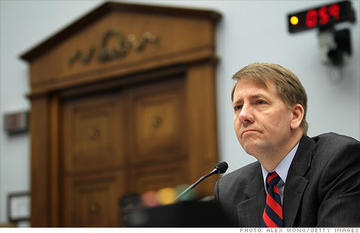
Richard Cordray
WASHINGTON–The Consumer Financial Protection Bureau has outlined consumer protection principles to guide mortgage servicers, investors, government housing agencies, and policymakers as they develop new foreclosure relief solutions.
The Bureau’s action comes as the Department of Treasury’s Home Affordable Modification Program, a foreclosure relief program put in place in response to the financial crisis, is nearing its expiration date. The CFPB’s proposed principles are meant to inform the discussion of potential options to help prevent avoidable foreclosures, the Bureau said.
“We aim to help consumers avoid foreclosures, which upset their personal and financial lives,” said CFPB Director Richard Cordray. “The modification program was put in place to provide alternatives to foreclosure. Our principles will serve as helpful guardrails for servicers, investors, and regulators to consider as we continue to protect consumers who are struggling to pay their mortgages.”
During the financial crisis, the Department of Treasury created the temporary Home Affordable Modification Program to provide relief to families at risk of foreclosure. “Consumers who could not make their mortgage payments have been able to seek changes through the program to reduce their monthly payment and prevent foreclosure,” the CFPB said. “With the program expiring in January 2017, the industry is beginning to develop new foreclosure relief options appropriate for a post-crisis environment.”
The CFPB principles announced call for assistance to consumers facing foreclosure that is accessible, affordable, sustainable, and transparent. These principles span the spectrum of home-retention options such as forbearance, repayment plans and modifications, and home-disposition options such as short sales and deeds-in-lieu. In summary, the CFPB said the principles promote:
- Accessibility: Consumers should easily be able to obtain and use information about loss mitigation options, and how to apply for those options.
- Affordability: Repayment plans and mortgage loan modifications should generally be designed to produce a payment and loan structure that is affordable for consumers.
- Sustainability: Loss mitigation options used for home retention should be designed to provide affordability throughout the remaining or extended loan term.
- Transparency: Consumers should get clear, concise information about the decisions servicers make.
The Departments of Treasury and Housing and Urban Development and the Federal Housing Finance Agency have also issued a joint white paper on this topic that details lessons learned from the program, and core principles they deem necessary in future loss mitigation frameworks.