

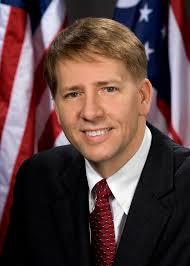
Richard Cordray
WASHINGTON—The Consumer Financial Protection Bureau announced that it is suing the nation’s largest servicer of both federal and private student loans for “systematically and illegally failing borrowers at every stage of repayment.”
“For years, Navient, formerly part of Sallie Mae, created obstacles to repayment by providing bad information, processing payments incorrectly, and failing to act when borrowers complained,” the Bureau stated. “Through shortcuts and deception, the company also illegally cheated many struggling borrowers out of their rights to lower repayments, which caused them to pay much more than they had to for their loans. The Bureau seeks to recover significant relief for the borrowers harmed by these illegal servicing failures.”
“For years, Navient failed consumers who counted on the company to help give them a fair chance to pay back their student loans,” said CFPB Director Richard Cordray in a statement. “At every stage of repayment, Navient chose to shortcut and deceive consumers to save on operating costs. Too many borrowers paid more for their loans because Navient illegally cheated them and today's action seeks to hold them accountable.”
Navient is the largest student loan servicer in the United States. It services the loans of more than 12 million borrowers, including more than six-million accounts under its contract with the Department of Education. Altogether, it services more than $300 billion in federal and private student loans.
Named in the lawsuit are Navient Corporation and two of its subsidiaries: Navient Solutions is a division responsible for loan servicing operations; Pioneer Credit Recovery specializes in the collection of defaulted student loans.
“Starting in 2009, the vast majority of federal student loan borrowers gained a right to make payments based on how much money they earn by enrolling in repayment arrangements known as income-driven repayment plans. These plans are part of the federal government’s effort to make student loans more affordable. For borrowers who meet certain income and family-size criteria, these plans can offer monthly payments as low as zero dollars,” the CFPB explained.
Another important benefit of income-driven repayment plans is that for the first three years after enrollment, many consumers are entitled to have the federal government pay part of the interest charges if they can’t keep up. All federal student loan borrowers enrolled in these plans may be eligible for loan forgiveness after 20 or 25 years of monthly payments, the CFPB said.
In Wednesday’s action, the Bureau alleges that Navient has failed to provide the most basic functions of adequate student loan servicing at every stage of repayment for both private and federal loans.
“Navient provided bad information in writing and over the phone, processed payments incorrectly, and failed to act when borrowers complained about problems. Critically, it systematically made it harder for borrowers to obtain the important right to pay according to what they can afford. These illegal practices made paying back student loans more difficult and costly for certain borrowers,” the Bureau said.
Specifically, among the allegations in the lawsuit, the Bureau charges that Navient:
- Fails to correctly apply or allocate borrower payments to their accounts: As soon as a borrower begins to pay back their loans, student loan servicers are supposed to take a borrower’s payment and follow instructions from the borrower about how to apply it across their multiple loans, stated the CFPB. “Navient repeatedly misapplies or misallocates payments — often making the same error multiple times over many months. The company all too often fails to correct its errors unless a consumer discovers the problem and contacts the company.”
- Steers struggling borrowers toward paying more than they have to on loans: When borrowers run into trouble repaying their federal student loans, they have a right under federal law to apply for repayment plans that allow for a lower monthly payment. “But the Bureau believes that Navient steers many borrowers into forbearance, an option designed to let borrowers take a short break from making payments. But interest continues to add up during forbearance. Certain consumers with subsidized loans end up paying a heavy price because they could have potentially avoided those interest charges. From January 2010 to March 2015, the company added up to $4 billion in interest charges to the principal balances of borrowers who were enrolled in multiple, consecutive forbearances. The Bureau believes that a large portion of these charges could have been avoided had Navient followed the law,” the CFPB stated.
- Obscured information consumers needed to maintain their lower payments: Borrowers who successfully enroll in an income-driven repayment plan need to recertify their income and family size annually. “But Navient’s emails and annual renewal notice sent to borrowers failed to adequately inform them of critical deadlines or the consequences if they failed to act. Navient also obscured its renewal notices in emails sent to borrowers that did not adequately alert them about the need to renew. Many borrowers did not renew their enrollment on time and they lost their affordable monthly payments, which could have caused their monthly payments to jump by hundreds or even thousands of dollars. When that happens, accrued interest is added to the borrower’s principal balance, and these borrowers may have lost other protections, including interest subsidies and progress toward loan forgiveness,” the CFPB explained.
- Deceived private student loan borrowers about requirements to release their co-signer from the loan: Navient told borrowers that they could apply for co-signer release if they made a certain number of consecutive, on-time payments. “Even though it permits borrowers to prepay monthly installments in advance and tells customers who do prepay that they can skip upcoming payments, when borrowers did so, Navient reset the counter on the number of consecutive payments they made to zero. So borrowers who tried to get ahead of their loans and prepay would have been denied co-signer release and had to start over,” the agency said.
- Harmed the credit of disabled borrowers, including severely injured veterans: Severely and permanently disabled borrowers with federal student loans, including veterans whose disability is connected to their military service, have a right to seek loan forgiveness under the federal Total and Permanent Disability discharge program, the CFPB explained. “Navient misreported to the credit reporting companies that borrowers who had their loans discharged under this program had defaulted on their loans when they had not. This potentially caused damage to their credit reports.
The Bureau also alleges that Navient, through its subsidiary Pioneer, made illegal misrepresentations relating to the federal loan rehabilitation program available to defaulted borrowers. Pioneer misrepresented the effect of completing the federal loan rehabilitation program by falsely stating or implying that doing so would remove all adverse information about the defaulted loan from the borrower’s credit report. Pioneer also misrepresented the collection fees that would be forgiven upon completion of the program, the Bureau said.
The lawsuit alleges that Navient has been in violation of the Dodd-Frank Wall Street Reform and Consumer Protection Act, the Fair Credit Reporting Act, and the Fair Debt Collections Practices Act. The suit seeks redress for consumers harmed by Navient’s illegal practices. The CFPB is also seeking to keep Navient from continuing the illegal conduct described in the complaint, and to prevent new borrowers from being harmed.
The complaint against Navient Corporation, Navient Solutions, and Pioneer Credit Recovery is available at: http://files.consumerfinance.gov/f/documents/201701_cfpb_Navient-Pioneer-Credit-Recovery-complaint.pdf