

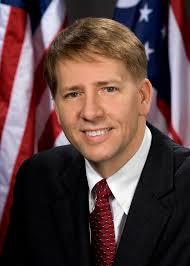
Richard Cordray
WASHINGTON—The Consumer Financial Protection Bureau has acted against Security National Automotive Acceptance Company (SNAAC), an auto lender specializing in loans to service members, for violating a Bureau consent order.
In 2015, the CFPB ordered SNAAC to pay both redress and a civil penalty for illegal debt collection tactics, including making threats to contact service members’ commanding officers about debts and exaggerating the consequences of not paying. SNAAC violated the 2015 order by failing to provide more than $1 million in refunds and credits, affecting more than 1,000 consumers. The consent order requires SNAAC to make good on the redress it owes to those consumers and pay an additional $1.25-million penalty.
"This company violated a Bureau order when it failed to get money back to service members it had hounded with illegal debt collection tactics,” said CFPB Director Richard Cordray. "We are making sure this company finally rights its wrongs."
SNAAC, based in Mason, Ohio, is an auto-finance company that operates in more than two dozen states and specializes in loans to service members, primarily to buy used vehicles. In June 2015, the CFPB sued SNAAC for aggressive collection tactics against consumers who fell behind on their loans. If service members lagged behind on payments, SNAAC’s collectors would threaten to contact—and in many cases did contact—their chain of command about their debts, the CFPB stated.
Also, the company exaggerated the consequences of not paying. For instance, they told some consumers that failure to pay could result in action under the Uniform Code of Military Justice, demotion, discharge, or loss of security clearance. But these consequences were extremely unlikely. The CFPB alleged that SNAAC’s aggressive tactics, which took advantage of service members’ special obligations to remain current on debts, victimized thousands of borrowers, the Bureau explained.
In October 2015, a CFPB consent order found that SNAAC had indeed engaged in unfair, deceptive, and abusive acts and practices while collecting on these auto loans. The order required SNAAC to pay $2.275 million in consumer redress through credits and refunds, and a $1-million civil penalty. Consumers with an account balance were to receive credits to their accounts, and consumers with a zero balance were to receive cash refunds. While SNAAC submitted two plans that claimed to provide the full amount of redress ordered, both were designed to underpay such redress. Acting on a tip from a service member’s father, the CFPB discovered that SNAAC had issued worthless “credits” to hundreds of consumers and failed to provide proper redress to many more, the CFPB said.
The CFPB said it is issuing the consent order against SNAAC for violating the terms of the 2015 consent order by failing to properly give refunds or credits to affected borrowers.
The text of the consent order is found here.
In response to the CFPB action, Security National Automotive Acceptance Company issued a statement in which it said it "agreed to this settlement to close this matter and move forward in serving customers in the respectful, honorable manner that has been the company’s tradition. The CFPB acknowledges in the settlement agreement that 'SNAAC has consented' to the order 'without admitting' to its findings."
The SNAAC statement went on to read, "The original Consent Order covered approximately 2,200 of the more than 83,000 accounts serviced by SNAAC between 2011 and 2015. At issue in this disagreement was the application of credits provided to a fraction of those accounts that had already benefited from a settlement balance for substantially less than was owed.
"Although SNAAC disagreed with the CFPB’s interpretation of the 2015 Consent Order, the company offered to pay all the disputed amounts in order to move forward. The CFPB declined the offer and began an inquiry. SNAAC fully cooperated and responded quickly to all requests for data, reports and testimony.
"SNAAC is proud of its work over the past 30 years for its customers, many of whom would not have had access to the credit they and their families need."