

AUSTIN, Texas–Credit union CFOs here were told to watch for interest rates to continue to rise over the next few years and lending to remain strong even as it slows, but also to be prepared for a “technical recession” in 2020, according to one economist’s projections.
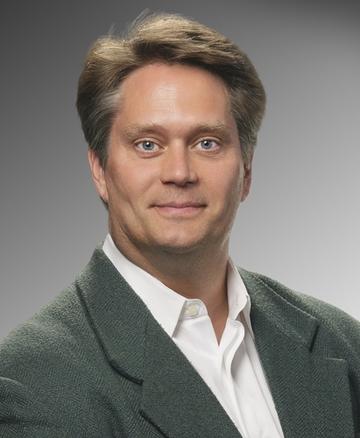
Steve Rick, CMG
Steve Rick, chief economist with CUNA Mutual Group, told the CUNA CFO Council meeting here he anticipates the 10-year Treasury will rise to 4% by 2020 and that it will pull mortgage rates up with it by about one percentage point over the next year. He further expects liquidity pressures to continue as he offered risk factors to watch for.
Noting that “the most important price in any economy is the price of money, and that’s what we do,” Rick reviewed a host of global and national factors that drive economies, but said the best bellwether for what’s ahead can actually be found in historical credit union data.
Five Areas of Focus for Fed
Rick noted the top five areas of focus for the Federal Reserve include:
Inflation. “Two percent is the perfect level of inflation. Right now, we’re running at 1.7%, so running too low, as it has for too many years. To get that number up, people need to purchase more things, and to get people to purchase more things, interest rates need to be kept low. Most economists believe we will go over 2% later this year.”
Full Employment. “The Fed wants unemployment rate to be right around 4.7% to 5%. That is where the economy naturally tends to go to. Right now, we’re at 3.9%, and it’s an incredibly tight labor market. When I talk to CFOs they say their number-one goal is finding people. There are more than six-million job openings, the highest in labor history. That is going to push up wages and with it, inflation. We forecast it will trend down to 3.5% or so, one of the tightest labor markets since the 1920s.”
The Output Gap. The output gap looks at potential level of goods and services and compares it to where the economy stands. For a company to exceed its output gap, it means adding production, and that means overtime. The cost of that overtime is then added into the price of the product. “As a result, the Fed is pushing up the Fed funds rate to slow down the economy just a bit to keep it from getting overheated. Every time we have a recession, it’s because the economy became overheated, and we will get into an overheated economy in the next year or two.”
Short-Term Interest Rates. Rick said some believe the Fed is behind the inflation curve just a little bit, as most economists believe 3% is the neutral level of interest rates. “Expect interest rates to continue to increase through 2020,” he said.
Long-Term Interest Rates. With the federal deficit hitting nearly $1 trillion in 2018, the pressure is on the Treasury to sell more bonds. Rick said the 10-year Treasury should be priced around 4% right now, but it’s below that mark due to quantitative easing by the European Central Bank. “What happens in Europe doesn’t stay in Europe. Recently, we have seen a turnaround. The Europeans have started to slow their purchase of 10-year Treasuries and have become sellers. Here in the U.S., corporations are also starting to slow their demand for Treasuries. That’s why the 10-year Treasury is rising, as the government is also increasing the demand for money. Rates will rise to 4% over the next couple of years.”
The Federal Deficit. Rick noted that in 2017 the federal deficit was $661 billion deficit. In 2018, the CBO is forecasting a $899 billion deficit and a $1.1 trillion deficit in 2019. “You increase the demand for money, the price of money goes up.” As a result, he forecast the 30-year mortgage will rise by one percentage point over the next year.
“We shouldn’t be running these massive deficits when the economy is doing fantastic. We should be running surpluses,” said Rick. “This is a worrisome chart for economists. Because of the tax cut and the massive government spending bill, we have this huge deficit. And 10,000 Baby Boomers are retiring every day. By 2027, it’s projected the deficit will hit $1.44 trillion and that assumes no recession. And there will be a recession.”
And Speaking of a Recession…
Rick said the U.S. is now in the ninth year of economic expansion, the second-longest period in U.S. history. Not surprisingly, Rick said he is always being asked when the next recession might take place. To answer that, he looked at both global and national data, as well as historical credit union data, which he said is a very strong indicator of economic direction.
From a macro view, he said recessions stem from overheated economies that get warmer and warmer as labor tightens and wages and prices rise. Some sort of bursting asset bubble can also kick an economy into a recession; the last two were caused by crashes in the stock market and housing market, respectively.
External factors, too, can “shock” an economy into a recession, such as a terrorist attack, a war, or a trade war, such as against China.
A third factor: high inflation. “The Federal Reserve for last couple of years has been printing a lot of money through quantitative easing. Banks have $2.6 trillion in cash or excess reserves. That’s huge amounts of money just sitting there. In 2007, banks and credit unions were sitting on about $2 billion in excess cash.”
Rick said he expects 2.8% growth in the U.S. economy in 2018 followed by 2.5% growth in 2019. But 2020 will likely see a recession, although he stressed it will be a “technical” recession as the market corrects and growth falls below 2%.
“The one economic variable that is the best predictor of recessions is credit union data, in this case, the ‘Growth Rate Gap.’ That’s loan growth less deposit growth,” said Rick, who is also chairman of University of Wisconsin Credit Union. “It’ 10% loan growth vs. 6% savings growth right now. That means loans are growing faster than deposits. Whenever we go from a positive number to a negative, we get a recession. I believe by 2020 this will hit zero, and we will have a recession as people start saving and not spending, and that’s the definition of a recession.”
He added no one should be surprised by the correction.
What always happens to the savings rate right before a recession? Savings rates plummet. “Everybody is spending, nobody is saving. Where are we today? If you spent your money this year, what are you spending next year?”
13 Risks to Watch For
Rick told CFOs they should also be watching:
- U.S. inflation moving higher than expected
- ECB exiting QE in 2018
- Negative EU government bond rates coming to an end
- U.S. investment grade and high yield bond spreads widen because of lower foreign appetite
- New Fed leadership to be tested on whether they are driven by politics or data
- Rising term premium in Treasuries as global central bank QE comes to an end
- Valuation and fundamentals mismatch n U.S. equities
- A Bitcoin crash that would affect consumer confidence
- Bigger than expected impact of tax reform
- Continued rise in U.S. inequality of income
- Robert Mueller’s investigation’
- Rising commodity prices
- A housing bubble burst in China
The Credit Union Numbers
Rick also reviewed recent credit union performance, including:
- The delinquency rate at 0.75, which he said is the natural rate that’s hard to drop below. “This has caused a lot of banks and CUs to loosen their underwriting standards.”
- Rick told CFOs to anticipate their cost of funds will rise over the next few years, in part due to the “mix effect” as consumers move money out of savings into certificates. He noted the CU one-year CD rate over the last 20 years has pretty much walked in sync with the Fed.
- He said that when Fed raises interest rates by one percentage point, CUs typically raise CD rates by .7, MMA rates by .35, and savings rates by .1. “That’s how we have priced in last 30 years in three different rising rate environments, which is how we are pricing now.”
- He said CU yield on assets will rise in 2018 as interest rates rise and loan growth remains strong.
- Rick said loan-to-share ratios in credit unions are at 86%, the highest point this century. “That means very tight liquidity. The last time at 86% in CUs it was May of 1980. That’s why NCUA is concerned about liquidity. And it is going to be very tight liquidity for the next year or two.”
- Rick said credit union loan growth over last four years has averaged 10%. But that pace has slowed a bit, and Rick sees 9% this year, 8% next year and 5% in 2020.
- As CUToday.info has reported, Rick cited the disparity of growth rates between the smallest and largest credit unions.
- What about ROA? “Eighty is the new 100 due to the interest rate environment, with the biggest CUs at 93 and the smallest in the twenties.”
- Rick pointed to the 4.4% growth in membership in 2017 at CUs due largely to indirect lending. He projected that number will slow to 2.5% in 2018 and 2020 as population growth also slows.