

WASHINGTON–Sen. Tim Scott (R-SC) has introduced a bill blocking a provision in the Build Back Better Act that would give the Small Business Administration (SBA) direct lending authority.
The provision is opposed by both credit union trade groups.
Co-sponsors on the bill include include Sen. John Barrasso (R-WY), John Boozman (R-AR), Sen. Bill Cassidy (R-LA), Sen. John Cornyn (R-TX), Sen. Kevin Cramer (R-ND), Sen. Mike Crapo (R-ID), Sen. Steve Daines (R-MT), Sen. Jim Inhofe (R-OK), Sen. John Kennedy (R-LA), Sen. James Lankford (R-OK), Sen. Roger Marshall (R-KS), Sen. Jerry Moran (R-KS), Sen. Rand Paul (R-KY), Sen. James Risch (R-ID), Sen. Mike Rounds (R-SD), Sen. Rick Scott (R-FL), Sen. John Thune (R-SD), Sen. Thom Tillis (R-NC), and Sen. Pat Toomey (R-PA).
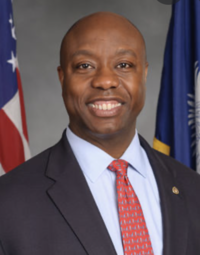
Sen. Tom Scott
“NAFCU applauds Senator Tim Scott for introducing the Protecting Access to Credit for Small Businesses Act, a critical piece of legislation prohibiting the SBA from having the explicit direct lending authority to originate and distribute loans to small businesses," said NAFCU Senior Vice President of Government Affairs Greg Mesack. "Senator Scott’s bill protects the relationships between small businesses and their trusted community financial institutions, including credit unions.
"We wholeheartedly support the need to give small businesses access to capital, and we believe other, more sustainable, ways to address this challenge exist, including reinforcing the way lenders give out small-dollar loans," added Mesack. "NAFCU stands firmly in support of Senator Scott’s bill and remains committed to working with Congress to get this bill passed.”
CUNA: ‘Negative’ Effect
“The current public-private partnership between lenders and the SBA benefits everyone involved, helping foster important relationships between businesses and their community. Turning the SBA into a direct lender would negatively affect these relationships and disrupt the current system at a time when small businesses need access to capital more than ever,” said CUNA President/CEO Jim Nussle. “We support all efforts to prevent SBA from becoming a direct lender and thank Sen. Scott for this legislation.”
Call for Level Playing Field on Payments
Separately, NAFCU has written to the CFPB in response to its series of orders to collect information on the business practices of large technology companies operating payments systems in the U.S., urging the Bureau to ensure a level playing field exists.
The notice and its accompanying investigative orders call attention to "several issues which are concerning to NAFCU and its member credit unions, in particular the extent to which nonbank payment service providers are responsive to consumer inquiries regarding payment errors," wrote Senior Counsel for Research and Policy Andrew Morris.
"NAFCU supports the CFPB's use of its market monitoring authority to better understand the consumer compliance and business practices of technology companies offering payment services," stated Morris. "The rules and expectations that apply to traditional financial institutions must apply to all participants in the financial sector and the CFPB should utilize its investigative powers to ensure that a level playing field exists `for credit unions and fintech companies alike."
‘Marginal Customer Service Operations’
Morris told the Bureau that payment service providers that operate "marginal customer service operations relative to the total transaction volume on their platforms place an unfair burden on credit unions that have responsibly invested in call centers and compliance management systems."
"The CFPB should devote particular attention to the complaint data and metrics it collects through the Orders and determine whether resolution of electronic funds transfer errors or billing errors by large technology companies matches the expectations for supervised and examined financial institutions," added Morris.
Through the orders, first issued in October, the CFPB said it is aiming to gain a better understanding of how these firms use personal payments data and manage data access to users to ensure adequate consumer protection.