

WASHINGTON–Legislation has been introduced in Congress that would exempt all member business loans (MBLs) made during the declared coronavirus pandemic from the MBL cap for three years.
Separately, the Federal Financial Institutions Examination Council (FFIEC), which includes NCUA, has released several updates to the Bank Secrecy Act/Anti-Money Laundering (BSA/AML) examination manual.
On the MBL relief bill, the credit union trade groups have been advocating for such relief. The bill was introduced by Reps. Brad Sherman (D-CA), Suzanne Bonamici (D-OR), Don Young (R-AK) and Brian Fitzpatrick (R-PA).
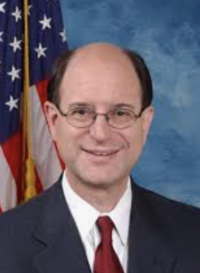
Rep. Brad Sherman
"This legislation would ensure that all available business credit is deployable during and after this crisis, so that small businesses can get back to business and Main Street communities can recover quickly from this unprecedented crisis,” said CUNA President/CEO Jim Nussle. “We thank Reps. Sherman, Bonamici, Young and Fitzpatrick for their bipartisan leadership on this issue and look forward to moving this bill forward.”
Added NAFCU President and CEO Dan Berger, “We thank Representatives Brad Sherman, Suzanne Bonamici, Don Young, and Brian Fitzpatrick for working with NAFCU and standing with credit unions that are looking to help small businesses and local communities overcome the financial impact of the coronavirus. This legislation will go a long way toward ensuring more loans and capital reach those in need, and NAFCU stands to advocate for its passage during these uncertain economic times.”
The bill would exempt the loans from the member business lending cap, currently set at 12.25% of a credit union’s assets.
Rebuilding Communities
“Congressman Sherman’s legislation will ensure that credit unions will be able to help America’s small businesses retain access to credit long after the Paycheck Protection Program expires, allowing our communities to focus on rebuilding,” said Diana Dykstra, President/CEO of the California and Nevada Credit Union Leagues
The bill was announced via a Dear Colleague letter circulated by the sponsors, according to CUNA.
"For over twenty years, credit unions have been subject to a federal member business lending cap, which currently limits a credit union’s loans to its member businesses at 12.25% of its assets,” the letter reads. “Given the urgent financial needs of so many small businesses because of the COVID-19 crisis, now is the time to provide credit unions with additional flexibility to serve their business members.”
Congress is not expected to return to session until early May when a phase IV stimulus package is expected to dominate the agenda.
Regulators Release Updates to BSA/AML Examination Manual
Meanwhile, also in Washington, the Federal Financial Institutions Examination Council (FFIEC), which includes NCUA, has released several updates to the Bank Secrecy Act/Anti-Money Laundering (BSA/AML) examination manual. The manual is used to evaluate compliance with the Bank Secrecy Act and anti-money laundering requirements.
The agencies said in a statement they are aware of the uncertainty faced by financial institutions “during this unprecedented time. The manual update, which supports tailored examination work, has been in process for an extended period and should not be interpreted as new instructions or as a new or increased focus.”
According to the agencies, the updates offer further transparency into the examination process and establish no new requirements. Today’s updates provide instructions to examiners for risk-focusing BSA/AML examinations and assessing a bank’s BSA/AML compliance program.
Joining NCUA in releasing the new guidance were the Federal Reserve, FDIC, OCC and the State Liaison Committee that worked closely with Treasury’s Financial Crimes Enforcement Network.