

WASHINGTON–The Federal Reserve Board has released the results of its annual bank stress test, which it said “demonstrates that large banks are well positioned to weather a severe recession and continue to lend to households and businesses even during a severe recession.”
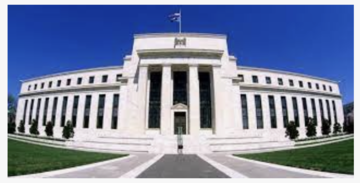
"Today's results confirm that the banking system remains strong and resilient," Vice Chair for Supervision Michael S. Barr said in a statement. "At the same time, this stress test is only one way to measure that strength. We should remain humble about how risks can arise and continue our work to ensure that banks are resilient to a range of economic scenarios, market shocks, and other stresses."
‘Resilience’ Shown
The Fed described the stress test as one tool to help ensure that large banks can support the economy during economic downturns.
“The test evaluates the resilience of large banks by estimating their capital levels, losses, revenue and expenses under a single hypothetical recession and financial market shock, using banks' data as of the end of last year,” the Fed said.
The Fed reported that all 23 banks tested remained above their minimum capital requirements during the hypothetical recession, despite total projected losses of $541 billion.
According to the Fed, under stress, the aggregate common equity risk-based capital ratio—which provides a cushion against losses—is projected to decline by 2.3 percentage points to a minimum of 10.1%.
‘Severe Recession’ Scenario
“This year's stress test includes a severe global recession with a 40% decline in commercial real estate prices, a substantial increase in office vacancies, and a 38% decline in house prices,” the Fed stated. “The unemployment rate rises by 6.4 percentage points to a peak of 10% and economic output declines commensurately.”
In addition, the Fed said the test's focus on commercial real estate shows that while large banks would experience heavy losses in the hypothetical scenario, they would still be able to continue lending.
The Fed reported that the banks in this year's test hold roughly 20% of the office and downtown commercial real estate loans held by banks.
“The large projected decline in commercial real estate prices, combined with the substantial increase in office vacancies, contributes to projected loss rates on office properties that are roughly triple the levels reached during the 2008 financial crisis,” the Fed said.
Additional Findings
The Fed further reported:
- The $541 billion in total projected losses includes over $100 billion in losses from commercial real estate and residential mortgages, and $120 billion in credit card losses, both higher than the losses projected in last year's test.
- The aggregate 2.3 percentage point decline in capital is slightly less than the 2.7 percentage point decline from last year's test but is comparable to declines projected from the stress test in recent years.
First-Time Shock Test
For the first time, the Fed said it also conducted an exploratory market shock on the trading books of the largest banks, testing them against greater inflationary pressures and rising interest rates.
“This exploratory market shock will not contribute to banks' capital requirements but was used to further understand the risks with their trading activities and to assess the potential for testing banks against multiple scenarios in the future,” the Fed stated. “The results showed that the largest banks' trading books were resilient to the rising rate environment tested.”
The individual results from the stress test factor directly into a bank's capital requirements, mandating each bank to hold enough capital to survive a severe recession and financial market shock. If a bank does not stay above its capital requirements, it is subject to automatic restrictions on capital distributions and discretionary bonus payments.”
You Can Now Get CUToday.info’s Daily News Headlines in Your Mailbox at the Low, Low Price of Free
Are you missing out on the latest news in credit unions? Missing the trends and developments you need to be aware of? We can help. Each morning CUToday.info delivers its daily Fresh Today news update offering the latest headlines and breaking news right to your email, with the easy-to-read headlines format allowing you to click on the stories that interest you most in order to learn more.
And it’s free!
If you haven’t yet signed up for the new email solution on which CUToday.info has partnered with ResponseGenius, you can do so here. Signing up requires less than one minute of your time—and it’s free!
Please note that after signing up you may need to go to your Spam/Junk folder and mark the morning headlines email as safe. CUToday.info does not provide its list of readers and emails to outside parties, and we will not be contacting you to sell you an extended warranty or sending you any links so you may cash in on an inheritance you didn’t know was coming.
And did we mention it’s free?
Please note and/or make your IT department or email administrator aware the emails will be coming from the