

WASHINGTON—President Joe Biden has signed an executive order on government oversight of cryptocurrency that urges the Federal Reserve to explore whether the central bank should jump in and create its own digital currency and to further examine the risks and benefits of cryptocurrencies.
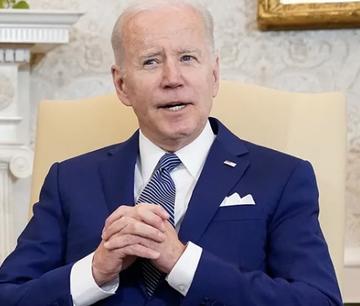
Joe Biden
The order calls on federal agencies to take a unified approach to regulation and oversight of digital assets, according to a White House fact sheet.
But as NAFCU noted in its analysis, the executive order is also largely short on specifics, as outlined below.
The Biden administration views the explosive popularity of cryptocurrency as an opportunity to examine the risks and benefits of digital assets, a senior administration official who previewed the order told the Associated Press.
In its analysis, CNBC noted Biden isn't saying whether the U.S. should launch its own digital currency. Rather, he's calling on the government to place "urgency" on research and development of a potential CBDC.
Additional Aspects of Order
Under the executive order, Biden also has directed the Treasury Department and other federal agencies to study the impact of cryptocurrency on financial stability and national security.
Brian Deese and Jake Sullivan, Biden's top economic and national security advisers, respectively, said the order establishes the first comprehensive federal digital assets strategy for the United States, the AP said.
"That will help position the U.S. to keep playing a leading role in the innovation and governance of the digital assets ecosystem at home and abroad, in a way that protects consumers, is consistent with our democratic values and advances U.S. global competitiveness," Deese and Sullivan said in a joint statement.
Concerns Over Russian Evasion
As CUToday.info reported earlier, the action comes as lawmakers and administration officials are increasingly voicing concern that Russia may be using cryptocurrency to avoid the impact of sanctions imposed on its banks, oligarchs and oil industry due to the invasion of Ukraine.
The topic of stablecoins was notably absent from the White House's announcement Wednesday, though Yellen has made clear she wants to see Congress introducing regulation for the sector, CNBC reported in its analysis.
Part of the language in the White House announcement focuses on giving the U.S. a competitive edge over other countries when it comes to crypto development. This is especially significant now that China has effectively banned cryptocurrencies, CNBC added.
NAFCU Analysis
In its analysis of Biden’s executive order, NAFCU noted:
- The EO is primarily a directive for various federal agencies to complete crypto reports. “Generally speaking, the EO directs agencies, including federal banking regulators, to investigate the risks and benefits of digital assets through a series of reports, most of which will be due in September. However, there are no specific regulatory or legislative actions recommended directly through the EO.
- The EO focuses a lot on consideration of CBDC. “Section 4 of the EO indicates that CBDC is a high priority for the Administration,” NAFCU said. “This section also conveys a greater sense of urgency regarding CBDC development than what we saw in the Federal Reserve’s public discussion paper. On the other hand, there is no specific endorsement being made.”
- There's an accelerated timeline for consideration of CBDC. “The timeline for producing the report on the future of money and payments (described above) is 180 days from the date of the EO,” stated NAFCU. “Another report is due within 210 days of the EO, which would consist of a corresponding legislative proposal. This seems like a highly compressed timeline given that the interagency report on CBDC is due at the same time as a legislative assessment, with actual proposed legislation soon to follow.”
- Preventing financial crime is top of mind. “The EO directs Treasury and other law enforcement agencies to produce several reports analyzing the role digital assets might play in terms of facilitating illicit finance and certain criminal activity. These reports could produce new regulatory recommendations which could impact financial institutions whose members engage with digital assets.”