

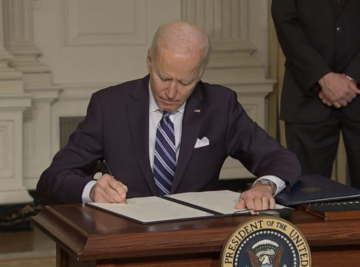
WASHINGTON–President Biden has issued an executive order that directs federal agencies to launch or expand efforts to analyze and lessen economic risks stemming from climate change.
Among other things, the order lays the groundwork for new oversight and mandates that would affect banking and other sectors. It also signals growing concerns that the government lacks sophisticated understanding of how global warming creates new or growing jeopardy for financial and government institutions and consumers, some analysts have said.
"Our modern financial system was built on the assumption that the climate was stable," said National Economic Council director Brian Deese in a statement released in conjunction with the order. "And today it's clear that we no longer live in such a world."
What’s In The Order
The order calls for:
- Development of a strategy within 120 days to "identify and disclose climate-related financial risk to government programs, assets, and liabilities." It would identify "public and private financing" needed to reach net-zero U.S. emissions by 2050.
- The Treasury secretary, as head of the multi-agency Financial Stability Oversight Council, to specifically analyze risks to financial system stability. That effort would bring ideas within 180 days to reduce risks, including agency steps to improve risk disclosures and stitch climate-related financial risks into regulation and supervision.
- The Labor Department to explore how to protect pensions and assess how the Federal Retirement Thrift Investment Board weighs climate risk.
- Efforts to weave climate risk consideration into federal lending and procurement. Those include potential new requirements on federal suppliers to disclose emissions and financial risks, and ensure that agency procurement practices reduce them.
Other Efforts
The order is just the latest effort from the Biden Administration related to climate change. The Treasury Department has already created a climate change "hub" and appointed a leader who reports directly to Secretary Janet Yellen, while the SEC has been moving closer to beginning to write new disclosure rules for public companies.
National climate adviser Gina McCarthy said during a briefing with reporters that some form of mandatory risk disclosure is in the works.
This cannot be voluntary. This cannot be optional," McCarthy said. "The stakes are simply too high. The federal government has to lead by example in its own operations, and we need to require the same level of responsibility from those we do business with," she added.