

WASHINGTON–The fallout from the failure of two big banks in recent weeks continues, and it suggests credit unions will be caught up in the tailwinds.
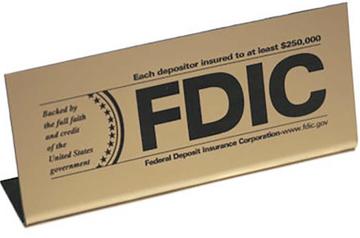
That includes a potential increase in deposit insurance beyond the $250,000 limit currently in place under the FDIC and NCUSIF programs, and even different types of insurance schemes depending on an institution’s risk profile.
As has been widely reported, including in CUToday.info, when it was revealed more than 90% of the deposits in the failed Silicon Valley Bank exceeded the deposit insurance limits of FDIC coverage, the federal government stepped in and announced it would guarantee all deposits. SVB had more than $210 billion in assets at the time it was seized by the government.
Robert Hockett, a financial regulation expert at Cornell University, told the New York Times he believes it’s time to make the overarching guarantee explicit.
Moreover, the Times reported, within the next few days, Rep. Ro Khanna (D-CA) is expected to introduce a bill that proposes raising or removing the FDIC’s coverage cap.
Addressing Moral Hazard
“Mr. Hockett and others argue that insuring all deposits could improve the banking system. They say it wouldn’t introduce moral hazard, because putting deposits at risk is not what keeps banks in check,” the Times stated. “Instead, what’s supposed to keep bankers from acting too recklessly is the knowledge that if their bank fails, shareholders and bondholders will be wiped out, executives will be investigated and, in many cases, the government will try to claw back compensation.”
According to the report, Hockett’s scheme would obviously require larger contributions — and tighter regulations — but he also foresees a tiered system in the future as well as a return of measures like stress tests, which Congress eliminated for midsize banks during the Trump administration.
Preventing a Run
Hockett told the Times that explicitly insuring all deposits could prevent a run on a troubled bank, because customers would know ahead of time that their money was safe. He also said such a move could also help preserve small and midsize banks.
Former FDIC Chairman Sheila Bair, who was at the agency during the financial crisis, is critical of the idea of insuring all deposits.
“These were big tech companies like Roku whining and crying about their uninsured deposits,” Bair told the Times. “If a $200 billion bank can bring down the banking system, then we don’t have a stable, resilient system.”
Bair added she believes the banking system is “mostly resilient” and that the real problem has been regulators didn’t communicate well enough to the public that the crisis was limited to a small group of banks.
Community Banks Want Expansion of FDIC Insurance
Meanwhile, a coalition of midsize banks is asking federal regulators to extend FDIC insurance to all deposits for the next two years, arguing the guarantee is needed to avoid a wider run on those smaller banks.
“Doing so will immediately halt the exodus of deposits from smaller banks, stabilize the banking sector and greatly reduce chances of more bank failures,” the Mid-Size Bank Coalition of America said in a letter to regulators that was reported by Bloomberg News.
“Notwithstanding the overall health and safety of the banking industry, confidence has been eroded in all but the largest banks,” the group said in the letter. “Confidence in our banking system as a whole must be immediately restored,” it said, adding that the deposit flight would accelerate should another bank fail.
Yellen’s Comments Cited
Bloomberg noted that the group pointed to comments made by Treasury Secretary Janet Yellen that the backstops put in place so far will protect uninsured deposits only if regulators found it “necessary to protect the financial system.” That’s a category unlikely to include the smaller banks represented by the MBCA, the report states.
The group of community banks is proposing the expanded insurance program should be paid for by the banks themselves by increasing the deposit-insurance assessment on lenders that choose to participate in increased coverage.
The letter was sent to Yellen, the Federal Deposit Insurance Corp., the Comptroller of the Currency and the Federal Reserve.
It’s Called Fresh for a Reason. And We Offer Home Delivery. For Free!
The biggest, best and freshest news reporting in credit unions remains free in ’23! Each morning CUToday.info delivers its daily Fresh Today news update offering the latest headlines and breaking news right to your email, with the easy-to-read headlines format allowing you to click on the stories that interest you most in order to learn more.
If you haven’t yet signed up for the new email solution on which CUToday.info has partnered with ResponseGenius, you can do so here. Signing up requires less than one minute of your time—and it’s free!
Please note that after signing up you may need to go to your Spam/Junk folder and mark the morning headlines email as safe. CUToday.info does not provide its list of readers and emails to outside parties, and we will not be contacting you to sell you an extended warranty or sending you any links so you may cash in on an inheritance you didn’t know was coming.
And did we mention it’s free?
Please note and/or make your IT department or email administrator aware the emails will be coming from the domains CUTodayinfo.com and CUTodayinfoReply.com