

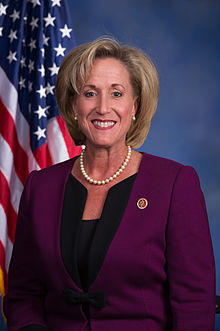
Ann Wagner
WASHINGTON—House Financial Services Subcommittee on Oversight Chairman Ann Wagner (R-MO) is being urged to correct the "mistruths and half-truths" asserted to the lawmaker last week by the Independent Community Bankers of America about credit unions.
The ICBA, referencing the fees the NCUA has paid in its legal contracts, asserted in a letter to Wagner that the attorney’s fees paid by the agency burden taxpayers. The group then proceeded to restate its long-running complaints about the tax-exempt status of the nation's not-for-profit, member-owned credit unions, credit union powers generally and credit union member business lending in particular.
As CUToday.info reported here, NCUA has paid $1.1-billion in contingency fees to St. Louis-based Korean Tillery and Washington-based Kellogg, Huber, Hansen, Todd, Evans & Figel, which have represented NCUA in 26 lawsuits filed against various entities seeking damages for failed investments. To date, NCUA has recovered more than $5 billion after placing five corporates into conservatorship a decade ago.
As CUToday.info also reported, following a story first broken by Politico, Wagner has sent a letter to NCUA Chairman Mark McWatters stating “The payment of over one billion dollars in legal fees to private counsel raises serious questions about the propriety of the NCUA’s legal fee arrangements, including whether the arrangements were in the best interest of the NCUA.”
In a letter to the Rep. Wagener, NAFCU President/CEO Dan Berger pushed back on the ICBA claims, noting first that credit unions and their members – not Treasury and taxpayers – pay for the NCUA's costs. But he welcomed the notion of another look at credit union powers.
"The ICBA did get one thing right: Congress does need to take a look at the Federal Credit Union Act," he wrote. "We support Congress modernizing credit union powers and ensuring that the agency has the tools and flexibility it needs to help credit unions continue to thrive in the 21st century."
In attacking credit unions' tax exemption, Berger wrote, the ICBA has glossed over the fact that one-third of banks are Subchapter S corporations and pay no corporate income tax. He said credit unions, while exempt from federal corporate income tax, do pay other taxes, and their 110 million member-owners pay taxes on dividends paid by their credit unions.
The NAFCU president also pointed to the 2011 study commissioned by the Small Business Administration that showed banks' business lending is not impacted by credit unions' business lending; and further that credit union business lending can help – and has helped – offset declines in banks' business lending during a recession.
He added, "With the ever increasing regulatory burden on community financial institutions, we would hope that the ICBA and their members would be more focused on working with their counterparts in the financial services industry to achieve meaningful regulatory relief that will allow all financial institutions to better serve consumers, rather than spending their efforts attacking credit unions. We hope they will join NAFCU in focusing on these regulatory relief efforts."