

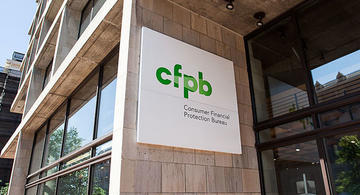
WASHINGTON–Two bank trade associations are expressing opposition to any move by the Consumer Financial Protection Bureau to cede to NCUA any supervisory authority over the largest credit unions. In turn, both NAFCU and CUNA have responded by saying the bankers are looking to draw attention away from the numerous fines they have been assessed for various abuses of consumers.
In a letter to the CFPB, the American Bankers Association and the Consumer Bankers Association is taking issue with a CUNA proposal calling for NCUA to have expanded authority. As CUToday.info reported here, CUNA said in its letter, “We believe credit unions are best positioned to succeed when supervised and examined by a regulator particularly familiar with their unique characteristics, and there is no regulator more familiar with credit unions than NCUA.”
The full CUNA letter can be found here.
The ABA and CBA are arguing the Dodd-Frank Act makes clear Congress’ intention that the credit unions be held to the same supervisory standards as other large depository institutions. Granting CUNA’s request would be in direct conflict with congressional intent and would contribute to an unlevel regulatory playing field between banks and credit unions, they banking groups said.
“While we believe that the Bureau should take every opportunity to reduce the regulatory burden for all financial institutions and eliminate duplicative supervision, we strongly disagree with the premise that the consumer financial services offered by credit unions inherently differ from those offered by other financial institutions competing in the marketplace,” the ABA and the CBA said. “Policymakers have reason to seriously question the appropriateness of the special treatment being sought by credit unions and their federal prudential regulatory authority, the National Credit Union Administration.”
NAFCU Responds
In response to the bankers' letter, NAFCU CEO Dan Berger said in a letter of his own, "It is not surprising that the trade associations that represent entities such as Wells Fargo would want the CFPB preoccupied with examining credit unions, while their member banks have continued to abuse consumers even after the enactment of the Dodd-Frank Act.

Dan Berger
“Just last year, the CFPB and the Office of the Controller of the Currency (OCC) jointly levied a $1 billion fine against Wells Fargo for abuses related to home and auto lending. This adds to a long list of banks that have seen massive fines for consumer protection violations in recent years: Citibank (2015, 2018) - $1+ billion; Bank of America (2014) - $747 million; SunTrust Bank (2014) - $550 million; JPMorgan Chase (2013, 2015) - $515 million; Capital One (2012) - $165 million; Ally Bank (2013) - $98 million; and U.S. Bank (2014) - $53 million.
“If the ABA and CBA truly had consumer protection in mind, they would focus on preventing consumer abuses by their members instead of targeting member-owned not-for-profit credit unions.
"The ABA/CBA are distorting the truth when they say returning supervision to the National Credit Union Administration (NCUA) would place credit unions outside of consumer rules. The NCUA would still have authority to implement and supervise for consumer protection.”
In the letter, Berger also stressed the importance of consumer protections, noting that the Federal Credit Union Act has many built in, including a usury ceiling and a guarantee of one-member, one-vote.
"We urge the CFPB to call on Congress to extend similar consumer protections to all financial institutions over $10 billion. We hope that the ABA and CBA, in their new-found consumer protectionism, will join us in supporting those statutory changes for their members."
CUNA Response
CUNA's chief advocacy officer, Ryan Donovan, said in response to the bankers' letter, "What we have here is a letter from the associations representing institutions that have been fined billions of dollars by the CFPB suggesting there is equivalency in how consumers are treated by credit unions and their too-big-too-fail Wall Street banks. It would be laughable if it weren’t so shameful. The structure, mission and, indeed, practice of credit unions is so significantly different from banks that their latest missive to the CFPB is barely worth the paper it’s printed on."