

JACKSON, Miss.–The Federal Reserve’s vice chair for supervision told a conference organized in part by Hope Credit Union here that he believes regulators need to engage with techniques and models for ensuring financial inclusion.
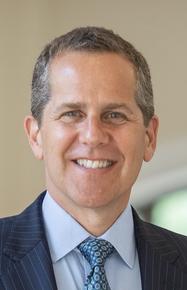
Michael S. Barr
Speaking to the Hope Economic Mobility Forum at Jackson State University with remarks themed “Banking on Financial Inclusion” the Fed’s Michael S. Barr noted that 25 years earlier, on his first trip to the state as a government official, he visited a local cabinet manufacturer with Bill Bynum, the president and CEO of Hope Credit Union who has been instrumental in driving numerous initiatives in the Mississippi Delta region. Barr said that in his judgment, Barr is “one of the heroes of the economic justice movement.”
Barr recalled how the company had received financing from Hope, which was then known as the Enterprise Corporation of the Delta.
A Call by the President
“On that hot day, President Clinton called on banks to do more to meet the needs of their communities, to do more under a revamped Community Reinvestment Act (CRA), and to help set up or support Community Development Financial Institutions, or CDFIs, such as Hope, partnering with the newly created CDFI Fund at Treasury,” Barr said. “And he called on Congress to pass the New Markets Tax Credit (NMTC) to provide tax credits to individuals and corporations for making equity investments in Community Development Entities (CDEs) in places such as the Mississippi Delta. This, in turn, would help establish and grow local businesses, create jobs, increase local purchasing power, and generate more local investment opportunities.”
To date, the NMTC program has awarded over $71 billion of tax credits, which translates, among other things, into 857,000 jobs and almost 239 million square feet of commercial real estate, Barr said, noting Hope CU has been a distribution point for funds.
Discrimination & the Racial Wealth Gap
“We all have an interest in promoting a vibrant economy as well as resilient families and communities. In such an economy, people would have access to credit on fair and equal terms to build a secure financial foundation,” Barr said. “Yet, despite widespread acceptance of this vision, we have a way to go in making it a reality, particularly for Black households. I'm going to speak to three drivers of this disparity, and three ways that the financial services community should work together to address them.”
Those three drivers, Barr said, include:
- Significant and Troubling Disparities in Lending Outcomes for Black Individuals and Businesses Relative to Others
- The Racial Wealth Gap
- Racial Disparities in Financial Services. “While there has been significant progress over the last 25 years in expanding access to banking services, the Federal Deposit Insurance Corporation’s most recent annual survey of the unbanked and underbanked found that the unbanked rate for Black households was 11.3%, compared to just 2.1% for White households,” Barr said. “The unbanked rate for Black households in Mississippi was more than double the national average for Black households—23.2%. Lacking a bank account can present challenges for saving—leading to the same insecurities I noted above—and lead to reliance on expensive, alternative products.”
How to Make Progress
Barr said in his keynote address there are some ways to make progress. Those include:
- First: “Eradicate discrimination in lending and other financial services, and protect consumers from other unfair, abusive, or illegal practices. It is incumbent on financial institutions to devote resources to stamp out these practices, and on regulators to reinforce the importance of this goal through supervision and enforcement.”
- Second: “Look for opportunities to support a vibrant and thriving economy for the benefit of everyone. This means seeking out opportunities to invest in low- and moderate-income (LMI) communities, small businesses, and community infrastructure.”
- Third: “Develop products and services that can help people save and build wealth.”
Responsive Products
Barr said there is a need to develop products that are responsive to consumer needs.
“As many have said, it's expensive to be poor. And many poor people lack any financial slack, such as savings, to tide them over through an emergency. No slack often means that a small problem can snowball into larger ones,” Barr said. “As a result, low- and moderate-income consumers often use alternative financial services, such as payday loans, which can help fill needs but are often high-cost and can lead to debt traps. There is an opportunity for traditional banks and mission-driven organizations to fill this gap, but to be effective, they need to understand consumer preferences and behavior to provide products and services that meet these needs in a safer and fairer way.”
Barr’s full remarks can be found here.
Still Free in ’23! The Freshest CU Headlines. Right to Your Inbox.
The biggest, best and freshest news reporting in credit unions remains free in ’23! Each morning CUToday.info delivers its daily update offering the latest headlines and breaking news right to your email, with the easy-to-read headlines format allowing you to click on the stories that interest you most in order to learn more.
If you haven’t yet signed up for the new email solution on which CUToday.info has partnered with ResponseGenius, you can do so here. Signing up requires less than one minute of your time—and it’s free!
Please note that after signing up you may need to go to your Spam/Junk folder and mark the morning headlines email as safe. CUToday.info does not provide its list of readers and emails to outside parties, and we will not be contacting you to sell you an extended warranty or sending you any links so you may cash in on an inheritance you didn’t know was coming.
And did we mention it’s free?
Please note and/or make your IT department or email administrator aware the emails will be coming from the domains CUTodayinfo.com and CUTodayinfoReply.com.