

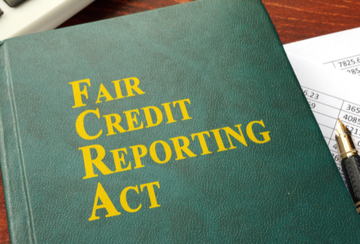
WASHINGTON–The Fair Credit Reporting Act (FCRA) turned 50 years old this week. The law has gotten plaudits from various consumer groups even as ‘flaws and abuses” are cited.
“The FCRA was a landmark law for its time and the first truly significant financial privacy law in this nation. And in many ways, it is still one of the strongest, because it allows consumers to seek relief in court on their own behalf without waiting for under-resourced or politically hobbled regulators to take action,” said National Consumer Law Center attorneys Chi Chi Wu, Ariel Nelson and Sarah Bolling Mancini in a joint statement. “The FCRA embodies several basic principles of fair information practices: The right to access information about ourselves, the right to know when that information is used against us, privacy protections to prevent inappropriate dissemination, the right to have information be accurate, and the right to correct errors.
“In the 50 years since the FCRA’s passage, we’ve seen the rise of the Computer Age, the Internet, the smartphone, big data, artificial intelligence and machine learning, and more,” the statement continued. “But the FCRA, by sticking to fundamental principles and broad standards, continues to provide critical protections to consumers. And its scope is wide, contrary to assertions of tech and data companies who might claim that the law does not apply to them simply because they use advanced technologies.
No Time to Celebrate
“But it would be too much to say this is a day of celebration. There are still numerous abuses and flaws in the system. Credit reports contain too many errors and the system is still biased against consumers trying to correct them,” the statement goes on to read. “Data companies refuse to comply with the law, using tortured arguments that courts unfortunately sometimes accept. Errors by background check and tenant screening companies---like the reporting of expunged criminal records or another person’s criminal records--shut consumers out of jobs and housing. Credit reports and scores are misused for purposes for which they were never intended, such as employment, insurance, and even immigration. And credit scores reflect and perpetuate thorny racial disparities, playing a role in financially entrenching America’s original sin.
‘Inherently Dysfunctional’
“Fundamentally, the credit reporting industry is inherently dysfunctional in its very nature, which accounts for many of its problems. It is an oligopoly of three private companies with the primary mission of generating profit, not of treating consumers fairly or furthering the public good. As the Equifax data breach starkly reminded us, consumers and our data are their commodity. Normal market forces for even oligopolies don’t apply – consumers are not the customers, so we cannot go to a competitor or opt out of the system if we are to survive and thrive financially. That is likely part of the reason that the credit reporting industry is often the number one source of complaints to the Consumer Financial Protection Bureau, including during this pandemic,” the statement added.
The organization called for an alternative to credit reporting, a public credit registry option, and said it also wants to see reforms to stop the multitude of abuses and problems at both the Big Three credit bureaus and other types of reporting agencies, such as criminal background check, tenant screening, and account screening companies.”