

CHICAGO–While American consumers continue to be negatively affected one year after the onset of the COVID-19 pandemic, there are also some positive signs to be found in TransUnion’s newest Consumer Pulse study.
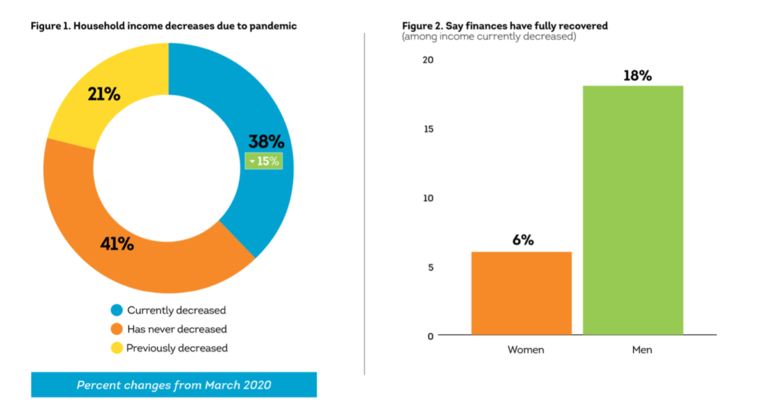
The study found the percentage of consumers who said their household income remains negatively impacted by the pandemic stands at 38%, which is significantly down from 53% one year ago in March 2020.
The Consumer Pulse study is based on a survey of 2,995 U.S. consumers contacted between February 26 and March 1, 2021.
“As the impact to household income lessens, early indicators point to the COVID-19 vaccine having a positive impact on consumers’ outlook,” TransUnion reported, noting that of those persons who said they had been fully vaccinated, 77% stated they are optimistic about the future compared to just 59% of those who had not been vaccinated.
“Over the last 12 months, TransUnion has maintained a monthly study of the economic hardship experienced by millions of consumers impacted by COVID-19 around the world,” said Chris Cartwright, CEO of TransUnion. “The insights from this rich data set provide an invaluable global barometer of the pandemic’s financial impact.”
Consumer ‘Types’ Affected Differently
According to TransUnion, in the one year since the pandemic began, the Consumer Pulse study exhibited that three primary U.S. consumer types have formed as result of COVID-19:
- Stable (35% of population): Those consumers whose income has not decreased, and finances are as planned
- Hopeful (27% of population): Consumers with income that has decreased, but believe their finances will recover
- In Limbo (22% of the population): People with income that has decreased, but say they are unsure or slightly doubtful their finances will recover
The Resilient, The Devastated
The remaining U.S. consumer types include those persons who are resilient, thriving, devastated or financially hit, TransUnion reported. Of those:
- Resilient consumers, who make up 8% of the population, saw their income decrease, but say their finances have fully recovered.
- Thriving consumers (5% of population) had no income drop and better than planned finances
- Devastated consumers (2%) had decreased income and don't think they'll ever recover
- Financially hit people (1%) include those whose household income has not been impacted, but say finances are worse than planned
Focus on ‘In-Limbo’
The study focused on the in-limbo group since its participation in the financial recovery may play an outsized role. Comparing them to the total population, 62% of in limbo individuals cut back on discretionary spending vs 45% overall and 38% cancelled subscriptions/memberships vs 24% overall, TransUnion reported.
“The uncertain future of those in limbo is leading them to curb future spending as 54% expect to decrease discretionary spending vs 37% overall,” the company said in its analysis. “Though the in-limbo group may be struggling, the report highlighted that many consumers may soon release pent up demand for spending that was curbed during the pandemic.”
‘Flexing’ Muscles
TransUnion added that the study further found more than half (53%) of resilient consumers and nearly one-third of thriving (27%) and hopeful (29%) consumers expect to increase discretionary spending.
“Whether you are in limbo, hopeful, or stable, the expectation is that many consumers will soon be flexing their spending muscle,” said Charlie Wise, head of global research and consulting at TransUnion. “In addition to more people receiving vaccinations, consumers have been or soon will be buoyed by an improved employment picture, stimulus checks, income tax returns and more access to credit.”
Resources for Struggling Consumers
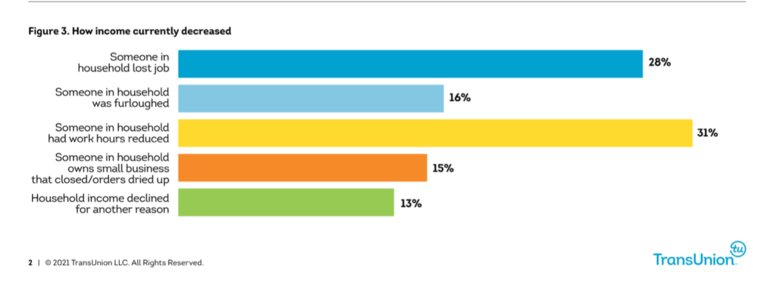
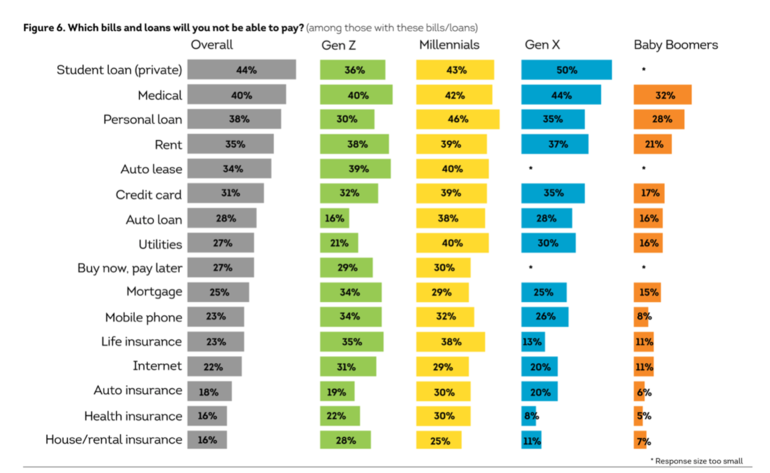
According to TransUnion, despite the positives observed in the report, some consumers continue to struggle. The study found concern about the ability to pay bills and loans among consumers who state their income is currently down (38% of the population) has remained consistently high (73% in March 2020 and 74% presently). Government assistance continues to be important to impacted consumers – nearly four in 10 (39%) middle- and low-income consumers plan to use stimulus checks to pay their current bills or loans, TransUnion found.
The study also reveals more consumers whose income is currently down are turning to borrowing cash (25% vs 17% in April 2020), taking out personal loans (16% vs 9% in April 2020) or opening a new credit cards (15% vs 8% in April 2020) to cover their daily expenses.
“A benefit to consumers is that lenders are incorporating alternative data into their lending strategies,” said Wise. “Leveraging such information can result in more trustworthy relationships between consumers and lenders, which is especially important when uncertainty has reigned over the credit landscape during much of the last year.”
Video for Consumers
TransUnion directing consumers who are still feeling the impacts of COVID-19 and seeking advice to help manage pandemic-related financial hardship to view segments of the “The Game Plan” at www.cnn.com/thegameplan. The five-part video series is produced by TransUnion, American Express and VantageScore. Segments discuss topics like debt management and saving for retirement, to managing finances in times of crisis and investing in the future.
For more info on the study, go here.