

WASHINGTON–Alleging that Apple and Google are setting the regulations around “tap to pay,” the Consumer Financial Protection Bureau (CFPB) has published a new issue spotlight it said highlights the effects of big tech companies’ policies and practices that govern tap-to-pay on mobile devices like smartphones and watches.
“Apple currently forbids banks and payment apps from accessing the tap-to-pay functionality on Apple iOS devices and imposes fees through Apple Pay,” the CFPB said. “Google’s Android operating system does not currently have such a policy. The issue spotlight explains how regulations imposed by mobile operating systems can have a significant impact on innovation, consumer choice, and the growth of open and decentralized banking and payments in the U.S.”
In a statement, CFPB Director Rohit Chopra said the CFPB is “carefully evaluating” big tech’s role in the banking and payments systems.
Marketshare by Device
According to the CFPB, as of the second quarter of 2023, Apple’s iOS operating system was on 55% of smartphones shipped in the U.S., and Google’s Android operating system was on 45% of smartphones shipped.
“Apple and Google set regulations that govern app developers’ ability to integrate near field communication (NFC) technology into their apps, which is needed to execute tap-to-pay transactions,” the Bureau said. “The dominant market share of these two operating systems, coupled with the increasing shift toward mobile device payments, underscores the important role their policies and practices play in retail payments.”
The Highlights
According to the Bureau, its new Spotlight has found:
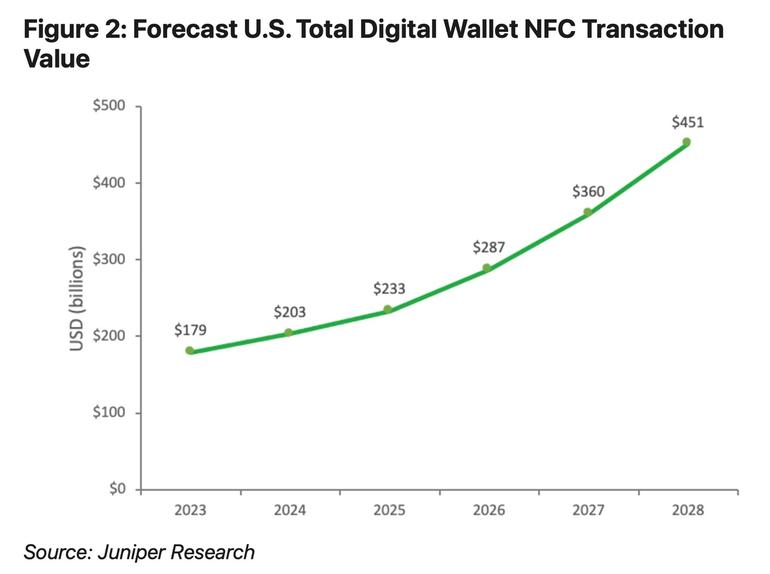
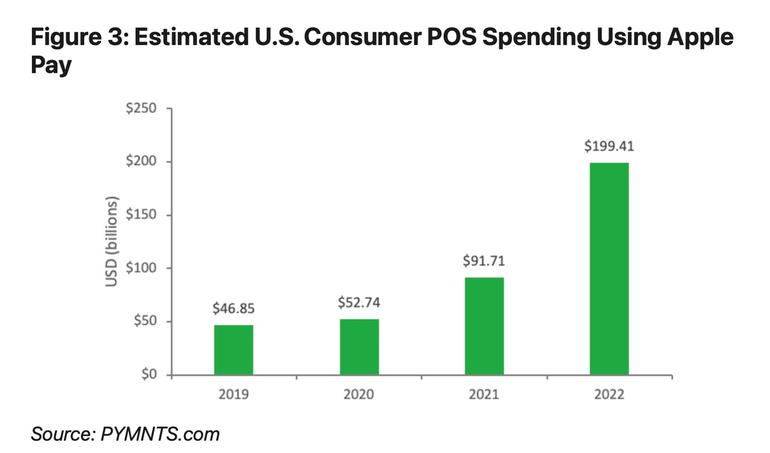
- Rapid growth of tap-to-pay usage. “Consumers’ usage of tap-to-pay options in the U.S. has grown considerably in recent years, nearing an estimated $300 billion across Apple Pay, Samsung Pay, and Google Pay, with some analysts estimating that digital wallet tap-to-pay transactions will grow by over 150% by 2028. In 2021, there were an estimated 25 million Google Pay users and 16.3 million Samsung Pay users. An estimated 130 million people in the U.S. use an iPhone at least once per month, and three-fourths of them have activated Apple Pay. An estimated 55.8 million made an in-store payment using Apple Pay in April 2023, accounting for nearly half of iOS users.”
- Dominant mobile operating systems impose different regulations on contactless payments. “Apple’s iPhone and other iOS devices do not permit third-party payment apps to access the NFC technology that is necessary to execute tap-to-pay contactless payments. Apple’s proprietary payment app, Apple Pay, is the only option for tap-to-pay payments on iOS devices. While Google’s Android operating system does not currently restrict third-party payment app access to the NFC chip on Android devices, this policy could change in the future.”
- Restrictive tap-to-pay practices may reduce consumer choice and hamper innovation. “Restrictions on the use of tap-to-pay reduce consumer choice and inhibit progress toward a more robust open banking ecosystem, where consumers have more control over their personal financial information and developers provide payments solutions that better meet consumers’ needs. For example, Apple’s current NFC policy prohibits directly integrating tap-to-pay functionality into existing banking applications and other payment apps (e.g., PayPal, Venmo, Cash App).”
A Broader Effort
The CFPB said the spotlight is part of its “broader effort” to monitor the shift to open banking in the U.S., including trends in consumer payments and the introduction of multi-service super apps into this space.
The new spotlight can be found here: Big Tech's Role in Contactless Payments: Analysis of Mobile Device Operating Systems and Tap-to-Pay Practices.
Are You Being Gouged for Bank-Like Subscription Fees for Old News? Here’s a CU-Like Way to Fix That
The biggest, best and freshest news reporting in credit unions remains free! Each morning CUToday.info delivers its daily Fresh Today news update offering the latest headlines and breaking news right to your email, with the easy-to-read headlines format allowing you to click on the stories that interest you most in order to learn more. So stop paying those bank-fee-like subscription prices from other so-called “news”” publications!
If you haven’t yet signed up for the new email solution on which CUToday.info has partnered with ResponseGenius, you can do so here. Signing up requires less than one minute of your time—and it’s free!
Please note that after signing up you may need to go to your Spam/Junk folder and mark the morning headlines email as safe. CUToday.info does not provide its list of readers and emails to outside parties, and we will not be contacting you to sell you an extended warranty or sending you any links so you may cash in on an inheritance you didn’t know was coming.
And did we mention it’s free?