

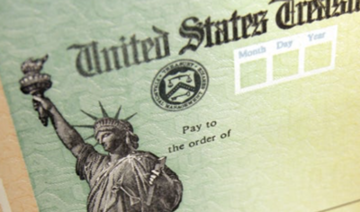
WASHINGTON —When will Americans start receiving checks of approximately $1,200 (or more depending on the number of children) from the government? The Treasury Department and the Internal Revenue Service said distribution of the so-called “economic impact payments” included in the recently enacted CARES Act will begin in the next three weeks and will be distributed automatically, with no action required for most people.
However, some seniors and others who typically do not file returns will need to submit a simple tax return to receive the stimulus payment, the IRS said.
Tax filers with adjusted gross income up to $75,000 for individuals and up to $150,000 for married couples filing joint returns will receive the full payment. For filers with income above those amounts, the payment amount is reduced by $5 for each $100 above the $75,000/$150,000 thresholds. Single filers with income exceeding $99,000 and $198,000 for joint filers with no children are not eligible.
Eligible taxpayers who filed tax returns for either 2019 or 2018 will automatically receive an economic impact payment of up to $1,200 for individuals or $2,400 for married couples. Parents also receive $500 for each qualifying child, the IRS said.
No Need to Take Action
“The vast majority of people do not need to take any action. The IRS will calculate and automatically send the economic impact payment to those eligible. For people who have already filed their 2019 tax returns, the IRS will use this information to calculate the payment amount. For those who have not yet filed their return for 2019, the IRS will use information from their 2018 tax filing to calculate the payment. The economic impact payment will be deposited directly into the same banking account reflected on the return filed,” the agency said.
In the coming weeks, Treasury said it plans to develop a web-based portal for individuals to provide their banking information to the IRS online, so that individuals can receive payments immediately as opposed to checks in the mail.
The IRS is posting related information at IRS.gov/coronavirus.