

NEW YORK–While recent reports indicate the residential real estate market may be cooling, one new analysis says the fundamentals underlying commercial real estate remain strong.
Still, some commercial occupancy rates do show signs of “peaking,” the same analysis has found.
“Although recent media attention has focused heavily on negative retail narratives concerning big-box downsizing and the exit of long-established chains from the industry, opportunities exist for the rise of new players with unique product offerings to fill their space,” said a provider of data, analytics, and technology solutions that specifically serves three sectors: structured finance, commercial real estate, and banking. “In fact, service-oriented retailers continue to dominate while niche lifestyle brands find new ways to expand into the physical realm. These up-and-coming retail categories, coupled with the trend toward more diverse tenant profiles, have contributed to stable property fundamentals and improving financial metrics across retail facilities in CMBS.”
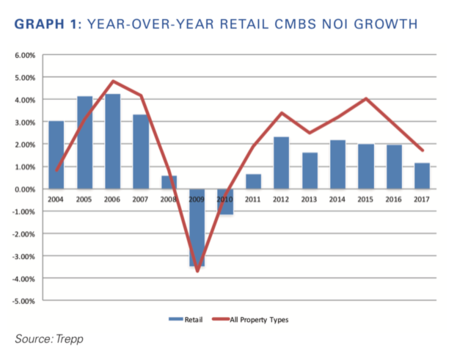
The company said the trend is reflected by persistent underlying growth in reported net operating income (NOI) and occupancy rates since 2011, with NOI netting annual gains and average occupancy rates for major cities and property subtypes surpassing 90%.
Retail CMBS properties across emerging US markets have posted consistent year-over-year NOI growth in the years immediately preceding and following the recent financial crisis, the company said in its latest analysis.
However, “Retail occupancy figures have steadily recouped to levels slightly less than their pre-recession prime, but they are showing signs of peaking,” the company cautioned. “While average retail vacancy stats are still trending below the national average for all CRE property types, planned store closures in the pipeline, weakening demand, and high asking rents are expected to put further pressure on shopping center operators. With the current real estate cycle in a very late stage, the number of vacant retail units is expected to tick up in upcoming quarters in conjunction with some erosion in rent rates.”