ST. LOUIS–A new analysis reveals how the racial gap between White Americans and Black Americans is evident in the housing market, affecting the ability of the typical Black family to build household wealth.
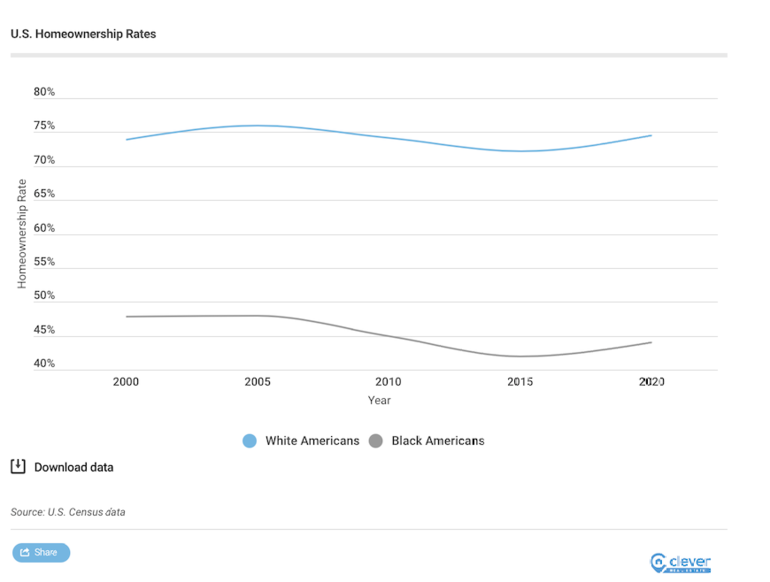
The analysis, performed by Clever, notes that lenders perceive borrowers to carry more risk if they have less money, so Black families are more likely to be denied mortgages. White Americans are 1.7 times more likely to own a home than Black Americans (74.5% versus 44.1%, respectively), Clever stated.
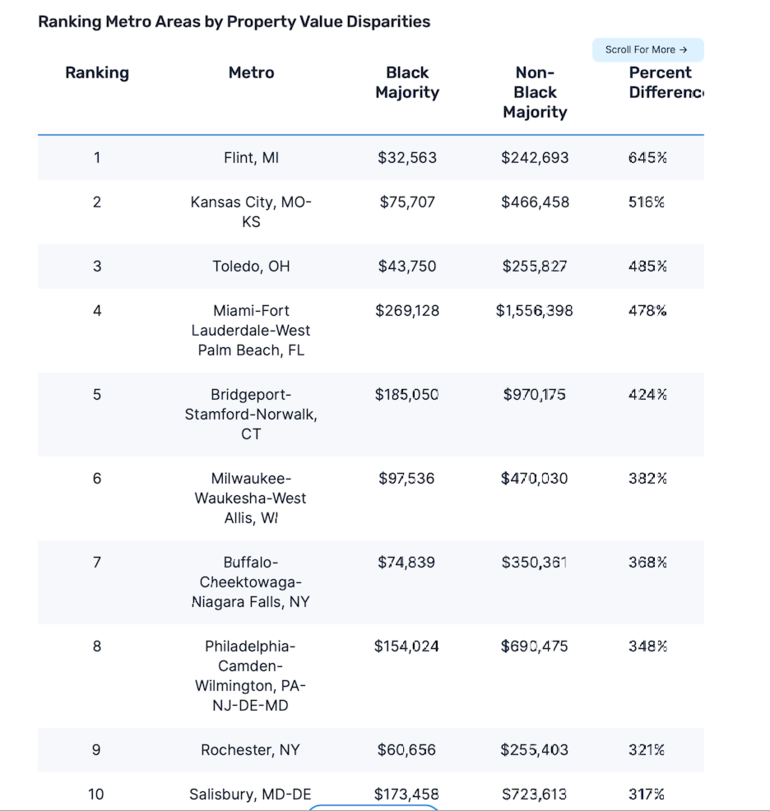
“Worst of all, our analysis found a negative correlation between home prices and the percentage of Black residents living in any given zip code,” Clever stated. “Houses in majority Black neighborhoods are valued at less than half as much as neighborhoods where less than 1% of the residents are Black. In some cities, houses in majority non-Black neighborhoods are valued over 600% more than Black neighborhoods.
Examining publicly available national housing data from Realtor.com, Zillow, and the U.S. Census, Clever said it found that the racial wealth gap hurts not only Black people but also all Americans. Clever cited economic models by that McKinsey Institute that found closing the racial wealth gap would add $1 trillion to $1.5 trillion by 2028.
Key Insights
Clever said some of the key insights from its analysis include:
- The typical Black family has approximately $12,780 in household wealth, compared to $139,300 for white families.
- The analysis found homes in predominantly white zip codes command approximately $193 per square foot, compared to around $115 in predominantly Black zip codes.
- With each 1% increase in the Black proportion of the population in a particular zip code, home values decrease by approximately $2,581.
- The average median listing price is around $167,508 in predominantly Black metro areas — compared to $355,000 in neighborhoods where the percentage of Black residents is under 1%.
- Inequity worsened after the 2008 housing crisis: In 2007, the difference between Black-owned and white-owned average home prices was about $57,668 — a gap that nearly doubled to $94,489 by 2020.
Benefits of Closing the Racial Wealth Gap
Clever said the benefits of closing the racial wealth gap include:
- Equalizing homeownership rates alone would decrease the racial wealth gap by more than $40,000.
- Revitalizing Black neighborhoods can lead to a healthier economy: Every 10% increase in total housing market wealth translates to $147 billion in additional consumer spending.
- Building just 100 new low-income housing units could immediately create 80 jobs, plus an additional 72 jobs supported by ripple effects and new residents.
For the full report, go here.