

WASHINGTON—A statistic that is frequently cited by credit unions will need to be updated, as a new report shows more Americans can cover a $400 emergency expense today than they could almost 10 years ago.
Overall, the new report from the Fed found Americans are reporting their highest levels of “financial well-being” in the eight years it has been conducting a survey on the topic.
The findings were released as part of the Federal Reserve’s Economic Well-Being of U.S. Households in 2021 report, which examines the financial lives of U.S. adults and their families. The report draws from the board's ninth annual Survey of Household Economics and Decision-making, or SHED, which was conducted in October and November of 2021, before the increase in COVID-19 cases from the Omicron variant and other changes to the economic landscape in recent months.
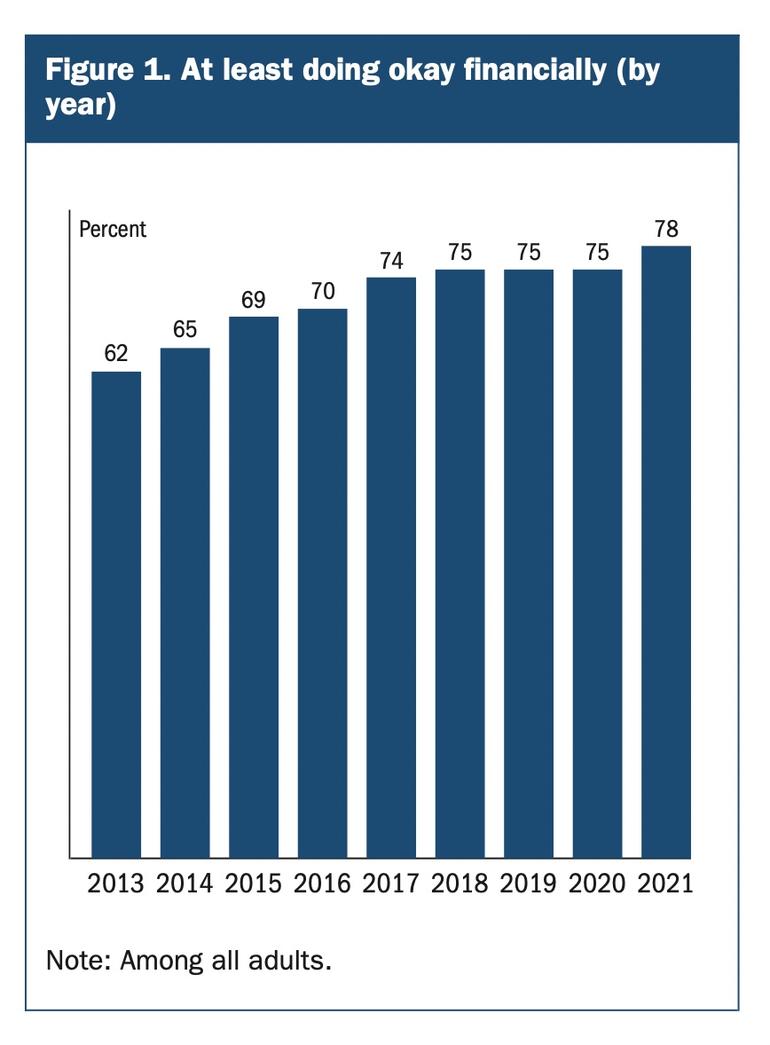
Highest Level in 8 Years
The report indicates that self-reported financial well-being reached its highest level since the SHED began in 2013. In the fourth quarter of 2021, 78% of adults reported either doing okay or living comfortably financially. Financial well-being also increased among all the racial and ethnic groups measured in the survey, with a particularly large increase among Hispanic adults, the Fed study found.
Parents were one group that reported large gains in financial well-being, with three-fourths saying they were doing at least okay financially, up eight percentage points from 2020.
The share of adults who reported that they would cover a $400 emergency expense using cash or its equivalent similarly increased to the highest level since the start of the survey—68%—and was up from 50% when the survey began in 2013, according to the Fed. Eleven percent of adults could not pay the expense by any method, the survey found.
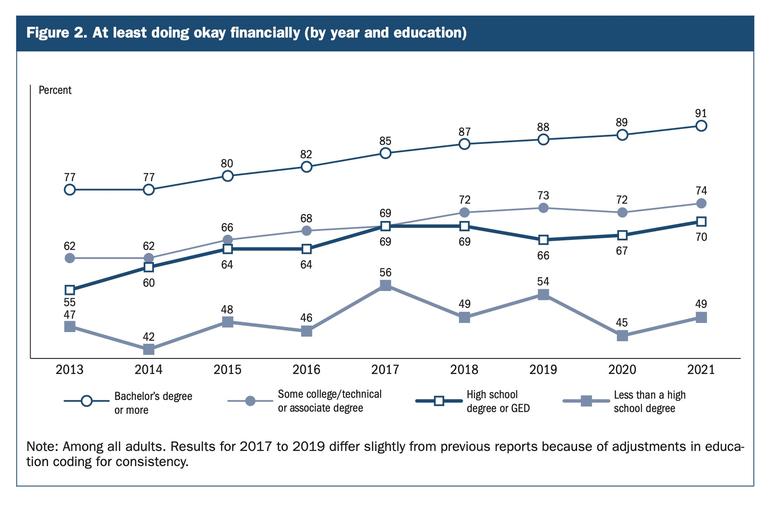
Other Findings
Other findings in the Fed report include:
- 15% of workers said they were in a different job than 12 months earlier. Most who changed jobs said the job change was an improvement.
- Remote work also continued to evolve in 2021. During the week of the survey in late 2021, 22% of employees worked entirely from home, down from 29% in late 2020, but well above the 7% who worked entirely from home before the pandemic. “Most employees who worked from home preferred to do so, often citing work-life balance and less time commuting,” the Fed stated. “Those working from home indicated that they would be about as likely to look for a new job if required to return to the office as if their employer instituted a pay freeze.
The survey included 11,000 adult respondents.
The full report, along with a fact sheet, downloadable data, data visualizations, and a video summarizing the survey's findings may be found here.