

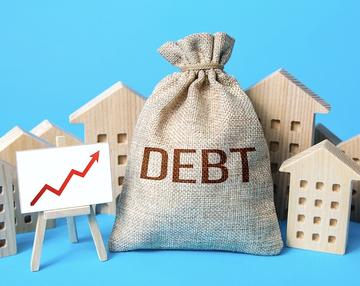
NEW YORK–The slowing of the economy coupled with inflation affecting the most basic of items over the last few months has led to a spike in people in need of “dire financial assistance,” many as the result of having taken out more payday loans and, now, as the result of taking buy now, pay later (BNPL) loans, according to a new report.
In Indianaola, Miss., for example, the local office of the Mississippi Center for Justice said it has seen a roughly 400% spike in calls from people who need help in recent months.
Payday lenders report they have seen an increase in business.
"Low unemployment plus inflation generally mean consumers may need loans for additional capital to manage through unexpected spikes and expenses while earning money to pay back these loans," said David Fisher, CEO of short-term, subprime lender Enova said during an earnings call, CNN reported.
Fisher said his company has "meaningfully leaned into the demand with our marketing efforts," and spent more to attract new customers. That has paid off. About 44% of all loans were issued to new customers in the last quarter, he said, according to the report.
A Void CUs Could Fill?
In news that should alert credit unions to a void that needs to be addressed, CNN cited LendingClub data showing the average credit score for low-earners in the U.S. is also dropping. About 40% of Americans earning less than $50,000 and living paycheck to paycheck have a subprime credit score of below 650 “making it difficult for them to get a loan through a traditional lending institution or to qualify for additional credit,” the report added.
As the report noted, there is currently no federal cap on maximum interest rates for small-dollar loans, and in the 32 states that allow payday loans, average annual interest rates range from 200% in Minnesota to 664% in Texas.
While credit unions were not cited, the CNN report cited seven large U.S. banks, including Bank of America, Wells Fargo and Truist, that have created programs that offer small-dollar borrowing options with low annual interest rates
Risk From BNPL Financing
Consumer advocates are also warning that BNPL offerings have grown between 200% and 350% during the past two years. As CUToday.info has reported, retailers across a host of industries have been partnering with BNPL providers to make the financing available, even on common items.
BNPL customers tend to be Millennial and Gen Z-aged and two-thirds of applicants are subprime borrowers, according to research by Marshall Lux, a research fellow at the Harvard Kennedy School, CNN reported.
In California, 91% of consumer loans made in 2020 were BNPL loans, and “24% of financially vulnerable BNPL recipients report challenges making payments.
BNPL lenders are not required by law to determine a borrower's ability to repay loans,” the report stated.
As CUToday.info has also reported, because BNPL purchases are not reported to the credit bureaus, consumers can take out multiple loans that would otherwise be declined by many lenders.
It’s the Best Source of News in Credit Unions. And It’s Free!
Don’t forget to check your Spam/Junk email folder if you haven’t been receiving your free, popular and daily CUToday.info news headlines.
And if you haven’t yet signed up for the new email solution on which CUToday.info has partnered with ResponseGenius, you can do so here. Signing up requires less than one minute of your time.
CUToday.info has received very positive response from readers following the move to an improved provider of the daily headlines, but many also noted they did need to go to their Spam/Junk folder and mark it as safe.
The new email solution has not only improved every reader’s delivery experience, but it also features a fresh, new format that is easy to read, especially on mobile devices.
Please note and/or make your IT department or email administrator aware the emails will be coming from the domains CUTodayinfo.com and CUTodayinfoReply.com.