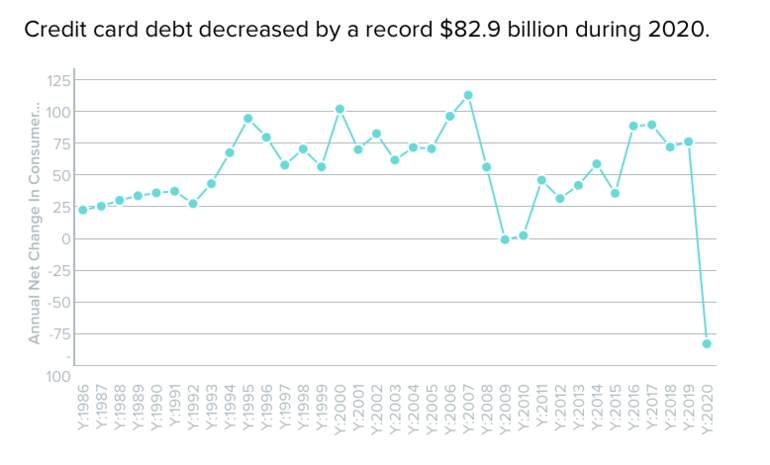
WASHINGTON–American consumers set a record in 2020 by paying down $82.9 billion in credit card debt, according to WalletHub’s latest Credit Card Debt Study.
WalletHub described the feat as a “major accomplishment,” considering that consumers have added an average of $54.2 billion in credit card debt per year over the past 10 years.
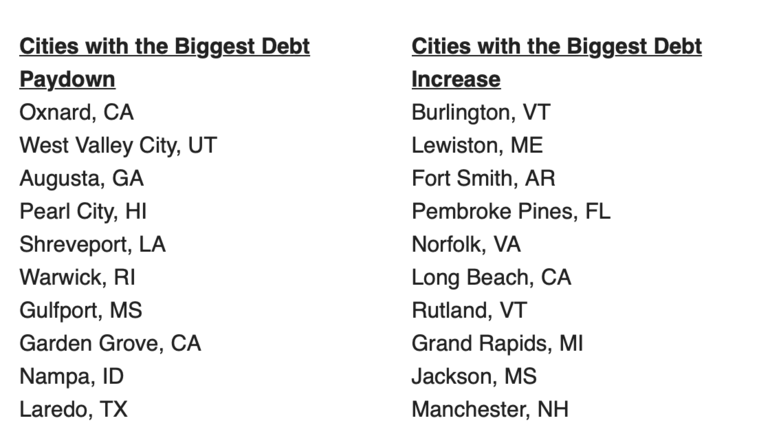
The cities where consumers posted the biggest debt paydowns and also had the biggest debt increases can be seen in the chart below, according to WalletHub.
Other key findings in the newest report:
- The average household credit card balance was $8,089 at the end of 2020
- Credit card debt rose by $36.7 billion during Q4 2020 – the lowest increase in 10 years
- Credit card charge-off rates are down 24.3% compared to Q3 2020
- The best balance transfer credit cards currently offer 0% APRs for the first 12-20 months with no annual fee and balance transfer fees as low as 3%.
What Consumers Are Saying
The survey further found:
- Few plan a post-pandemic shopping spree. More than 1-in-10 people plan to go on a spending spree when the COVID-19 pandemic is over
- COVID is an obstacle to debt. Almost 35% of Americans say that COVID-19 made it harder to get into serious credit card debt
- Men feel less debt stress. Women are 37% more likely than men to feel stressed about credit card debt
- Most agree, healthcare is debt-worthy. 60% of Americans say that healthcare expenses are worth going into credit card debt
- Fighting back against high rates. 66% of people will try to lower the interest rate on their credit card debt in 2021
The Forecast
“WalletHub is projecting that consumers will add around $50 billion in credit card debt during 2021. A short-term burst of spending is inevitable as pandemic restrictions are lifted,” said Jill Gonzalez, WalletHub analyst. “The question is which way the pendulum swings in 2022 and beyond. My hope is that consumers will internalize lessons learned during the pandemic and showcase a newfound frugality.”