

WASHINGTON–Americans are more optimistic—although that’s relative—when it comes to buying and selling houses.
The Fannie Mae Home Purchase Sentiment Index (HPSI) increased 3.3 points in March to 61.3, but it remains only slightly above its all-time low set late last year, Fannie Mae reported.
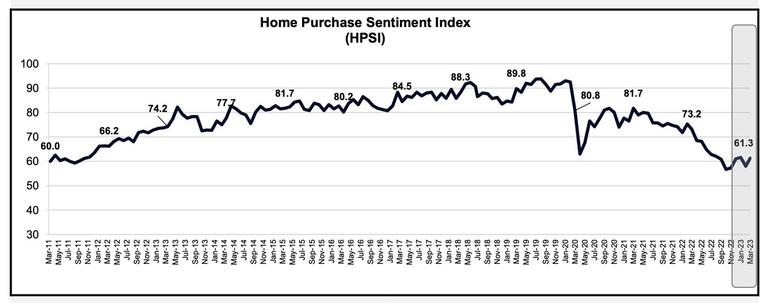
Overall, Fannie Mae reported four of the HPSI’s six components increased month over month, most notably those associated with home-selling conditions and consumers’ sense of job security. While the former component remains slightly positive on net, in March 40% of consumers reported that it’s a bad time to sell a home, down from 44% last month, and 21% expressed concern about losing their job in the next 12 months, down from 24% last month.
Year over year, the full index is down 11.9 points, Fannie Mae said.
Overcoming ‘Banking Turbulence’
“Despite the recent banking turbulence, the HPSI increased modestly in March, although it still remains near its historical low,” said Mark Palim, Fannie Mae vice president and deputy chief economist. “With the spring homebuying season now upon us, a large majority of consumers continue to believe that it’s a bad time to buy a home. Homeowners sharing this belief frequently cited ‘unfavorable mortgage rates’ as the primary reason for their pessimism, further corroborating the often-discussed disincentive – or ‘lock-in effect’ – that many mortgage holders who may be considering moving have toward giving up their lower rates. By contrast, surveyed renters once again indicated that high home prices are their primary concern for buying a home.
“Unsurprisingly, consumers also expressed apprehension about the direction of home prices,” Palim continued. “In March, there was an even split among respondents who said home prices over the next 12 months will go up compared to those who expect them to go down. With affordability constraints, the lock-in effect, and home price direction uncertainty weighing heavily on consumers’ minds, we maintain our forecast that total home sales for the year will remain subdued.”
The Highlights
According to Fannie Mae, other findings in the most recent survey include:
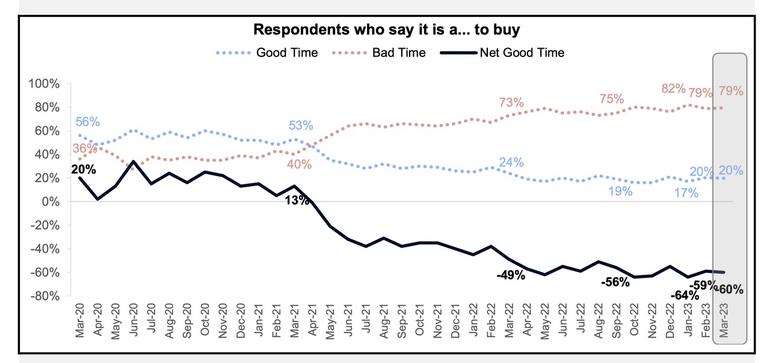
- Good/Bad Time to Buy: The percentage of respondents who say it is a good time to buy a home remained unchanged at 20%, while the percentage who say it is a bad time to buy remained unchanged at 79%. As a result, the net share of those who say it is a good time to buy decreased 1 percentage point month over month (due to rounding), Fannie Mae said
- Good/Bad Time to Sell: The percentage of respondents who say it is a good time to sell a home increased from 54% to 58%, while the percentage who say it’s a bad time to sell decreased from 44% to 40%. As a result, the net share of those who say it is a good time to sell increased eight percentage points month over month.
- Home Price Expectations: The percentage of respondents who say home prices will go up in the next 12 months increased from 30% to 32%, while the percentage who say home prices will go down decreased from 35% to 31%. The share who think home prices will stay the same increased from 33% to 35%. As a result, the net share of those who say home prices will go up increased four percentage points month over month, Fannie Mae said
- Mortgage Rate Expectations: According to Fannie Mae, the percentage of respondents who say mortgage rates will go down in the next 12 months decreased from 15% to 12%, while the percentage who expect mortgage rates to go up decreased from 55% to 51%. The share who think mortgage rates will stay the same increased from 28% to 34%. As a result, the net share of those who say mortgage rates will go down over the next 12 months increased one percentage point month over month.
- Job Loss Concern: The percentage of respondents who say they are not concerned about losing their job in the next 12 months increased from 73% to 78%, while the percentage who say they are concerned decreased from 24% to 21%. As a result, the net share of those who say they are not concerned about losing their job increased seven percentage points month over month, Fannie Mae said.
- Household Income: The percentage of respondents who say their household income is significantly higher than it was 12 months ago decreased from 22% to 20%, while the percentage who say their household income is significantly lower decreased from 12% to 11%. The percentage who say their household income is about the same increased from 63% to 68%. As a result, the net share of those who say their household income is significantly higher than it was 12 months ago decreased 2 percentage points month over month
Read the full research report.
Feeling the FOMO? We Can Help
The biggest, best and freshest news reporting in credit unions remains free in ’23! Each morning CUToday.info delivers its daily Fresh Today news update offering the latest headlines and breaking news right to your email, with the easy-to-read headlines format allowing you to click on the stories that interest you most in order to learn more.
If you haven’t yet signed up for the new email solution on which CUToday.info has partnered with ResponseGenius, you can do so here. Signing up requires less than one minute of your time—and it’s free!
Please note that after signing up you may need to go to your Spam/Junk folder and mark the morning headlines email as safe. CUToday.info does not provide its list of readers and emails to outside parties, and we will not be contacting you to sell you an extended warranty or sending you any links so you may cash in on an inheritance you didn’t know was coming.
And did we mention it’s free?
Please note and/or make your IT department or email administrator aware the emails will be coming from the domains CUTodayinfo.com and CUTodayinfoReply.com