

BOSTON–Credit unions were given the business case for investing in diversity–but it’s only for those CUs that wish to be around a decade from now.
And getting there will likely involve some uncomfortable and frank conversations for those currently serving on CU boards and in management, according to one person.
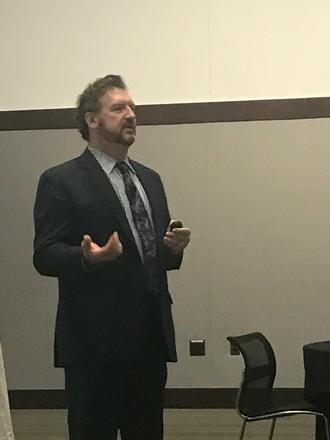
“This topic is red hot. Diversity and women are one of the solutions to solving many of our business issues,” said Jeffery Tobias Halter. “If you’re just starting this conversation, you are already behind.”
Halter, a former executive at Coca Cola (where he was director of Diversity Strategy) and Proctor & Gamble, told CUNA’s America’s Credit Union Conference here that race and gender equality is much more than just the issue du jour, it’s a bottom line imperative for organizations that plan to exist moving forward.
Halter, president of YWomen and author of the book, “Why Women: The Leadership Imperative to Advancing Women and Engaging Men,” defined that leadership imperative as moving “the organization to a deeply internalized approach regarding leveraging our differences, executed with a sense of urgency, to create competitive advantage.
What’s Missing?
Halter said his work involves identifying “ready now” men and training them to become advocates for advancing women in the workplace.
“We know this is a good idea. What’s missing is an operating strategy for how you go about it,” Halter said. “This is about taking all this information back in a strategic way and embedding it in your organization from top to bottom.”
While there is considerable discussion today around the issue of women in management, Halter said what has actually occurred is “women’s leadership advancement has plateaued in this country for about 10 years.”
Top 3 Challenges
Halter said when he speaks to companies about the three things that they consider their top challenges, the responses are:
- Growing revenue
- Improving operating profit
- Social media. “There are no secrets. Any information you have on your worst manager on their worst day could be videotaped doing something that you need to prepare for.”
The only real means any organization or company has for responding to those challenges, said Halter, is through not just increased diversity, but through embedded diversity.
For credit unions, the issue is especially critical, according to Halter, who said “women run the economy,” representing about $3.7 trillion in spending. “And their influence goes far beyond that. He noted 89% of banking accounts are opened by women, and that is it projected women will be inheriting $40 trillion from their parents or spouse.
“Those are big numbers. But you must localize it to your credit union and your management team. So what’s your local business case for change?” he asked.
The War For Talent
Gender diversity is the only issue to which credit unions should already be responding, according to Halter.
“Ten-thousand Baby Boomers per day are leaving the workforce over the next seven years. What does your board look like? What does your senior management team look like?” he asked. “How prepared are you for the very rapid change that is going to change? This is no longer a conceptual conversation; (older white males) are going away in seven years. In the new workforce, 85% of new entries are women, people of color, or Millennials. This is not just your new workforce, it’s your new consumer. So, in leadership, how are you able to service their needs if you don’t have an organization that understands and represents their daily lives?”
Millennials, the subject of much focus in credit unions, are no longer kids, observed Halter, pointing out that the leading edge of the Millennial generation is now turning 36.
“By 2020, they will be the largest percentage of the workforce, which means they should be the largest percentage of your client base,” he said.
‘You Need to Get There Real Quick’
Moreover, he said 12% of Millennials currently identify as transgender or gender nonconforming. “If your board and leadership are not willing to have a conversation around that, you need to get there real quick,” Halter said.
Halter also noted that any CU seeking a “bright educated workforce” needs to recognize that the majority of undergraduate, graduate and doctoral degrees are going to women.
“There will be 50 million job openings,” said Halter. “But the (candidate) pipeline is 29 million. So, there will not be enough people to fill the jobs we have. The competition for talent will be even more intense. You must build talent internally and provide environment so they don’t leave.”
Halter cited Starbucks as an excellent company when it comes to diversity, and even it found itself caught in the crossfire of bad publicity. But one bad manager had a bad day and it caused a “firestorm. Your organization could be on the front page tomorrow. Starbucks responded very quickly, said we’re going to solve these issues. Their CEO was very visible and said this is not how we do business. You can look at it as an offensive or a defensive strategy, but it is going to happen. Are you ready for that?”
What are Best in Class Companies Doing?
According to Halter, the best companies have a:
- Vocal, visible C-Suite commitment. This is driven down into the organizations with measures, scorecards, accountability, tying to executive compensation.
- Progressive corporate policies related to hiring, retention, promotion, pay equity, open job posting, succession planning, transparency in numbers, monetary commitment. This is the war for talent. How do you keep Millennials? Ask them what they want, and give it to them. And 90% don’t want more money. They want more feedback and more flexibility.
- Approach as a change initiative. According to Halter, 60% of companies have a compelling change story; 68% have integrated (not standalone) approach of programs, policies and environmental change initiatives; 48% have change agents and middle management embracing diversity.
“Most conferences on this topic are about ‘fixing women’,” said Halter. “I’m going to tell you women are fine. This is about culture and inclusion.”
When asked about promoting people based on gender or race, Halter responded, “Race and gender are not a pass on talent. Talent should always be the deciding factor.”