

COLORADO SPRINGS, Colo.–A former Army Ranger who was part of the “Blackhawk Down” mission that was immortalized in the book and movie of the same name shared lessons in leadership with credit unions here, including reminding that too often organizations become too wrapped up in the numbers, rather than “bringing people up.”
Keni Thomas told an audience here in Army leadership school the focus is always on communication, and the first lesson taught when it comes to communicating is to “start with a story,” which is what he then proceeded to do.
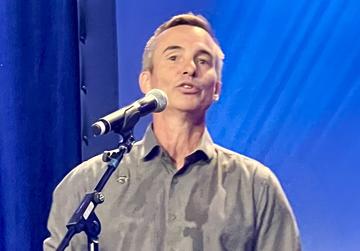
Keni Thomas
Thomas, author of the book “Get it On! What It Means to Live the Way,” shared with the Defense Credit Union Council’s annual meeting the story of the 1993 mission in Somalia that turned south after a Blackhawk helicopter went down and U.S. forces came under much heavier fire than had been expected and everyone on the ground was forced to improvise and fall back on their training. Thomas mixed heartfelt stories of courage and sacrifice with leadership lessons and even humor during his comments, often referencing specific members of his unit.
“Leadership is not a paygrade. Leadership is the example we set for the people we serve,” said Thomas. “When we need an example set is when it’s hard and when people need it most. Anybody can do it when it’s easy.”
Thought ‘We Were Going to Own the Place’
He said that has never been more true than during that challenged Mogadishu mission, when the Americans thought “we were going to own that place in three weeks. We had guys in pick-up trucks wearing football helmets.”
Thomas, by coincidence a graduate of Buchholz High School in Gainesville, Fla., just like NAFCU CEO Dan Berger, who followed him on stage, said at the time of the Blackhawk Down incident he had already done 44 missions and he was writing letters to his mother that began, “Dear Mom. You would love it here. It’s sunny. We’re on the beach. It’s just like Ft. Lauderdale.”
“And then the mission came down and you’re scrambling,” Thomas said.
Thomas shared the story of the five guys in his squad, and of being passed over to lead the unit for another soldier of equal rank. When he asked why he wasn’t selected, his commanding offer said of the other candidate, “He’s from Texas.” He said of another guy in the unit that he was in the Army because that was the option the judge gave him, but that solider had also gone through Ranger School, which Thomas described as a “three-month suck-fest that teaches you how to lead people who don’t want to be led.”
What Great Leaders Do
“If you’re going to be a great leader you better have been a great follower, because you are now going to lead all those other people to follow you,” Thomas said, sharing that during his time in Somalia he was frustrated with the performance of another soldier. That’s when Thomas was told he was the “weakest link,” not the underperforming solider, because he wasn’t holding him accountable.
Throughout his remarks Thomas repeated the credo, “My mission, my people, myself.”
“We put mission and people before ourselves. That doesn’t mean we don’t take care of ourselves,” Thomas said. “The better you are…the better your people are and the better your mission goes.
“Once you believe it—I’m in the service of others—you will begin to live it. You will move toward the problem,” he continued. “When things get difficult you will do what you can and move forward because you understand you are part of something bigger. Most people don’t. The research is clear--when you are in lifechanging, extreme moments you will revert to your fight, flight or freeze level of training. That’s why there is so much training in the military. It’s my mission, my people, myself.”
Additional Observations
Thomas, who today in addition to being a speaker is also a country music writer and performer who continues to work with soldiers as they transition back to civilian life, also offered these observations and thoughts, in no particular order:
- “Being shot isn’t that bad. Especially when they are missing. I had a Ranger instructor who said, ‘If people shoot at you and miss it’s like they never shot at you at all. So just stay calm and do your job’.”
- “We get wrapped around performance in the real world. What are the numbers? We forget about being stewards of the profession and bringing people up.”
- “You don’t have to be happy. It’s life. Sometimes life comes at you in a manner you do not want.”
- “We often hear in Washington ‘It’s not my fault.’ It may not be your fault, but it’s your problem. And since you don’t seem to be doing anything about it, I have to. When people aren’t being the leaders they need to be, we have to step up. If you don’t own it, who will? It’s not a rhetorical question. The real answer is someone else is going to have to own it. That’s at every level.”
- “The Army teaches you don’t need permission to make a good decision.”
- “I hate stories of ‘ordinary people who do the extraordinary things.’ It’s not a one-time thing. It’s a choice we make every day, moment by moment.”
- “You know how you know someone is a Navy Seal when you meet them? They will tell you.”
- “Who you want to be will dictate when you do.”