

NEW YORK–With the coronavirus pandemic receding for every vaccine that reaches an arm, the push by some employers to get people back into offices is clashing with workers who’ve embraced remote work as the new normal—and that is leading some to quit, according to several new reports.
Those reports are included here in CUToday.info as part of an ongoing series on how employers are handling back-to-work mandates and more.
While many large employers have promised greater flexibility, many chief executives have publicly extolled the importance of being in offices, noted Bloomberg. Some have lamented the perils of remote work, saying it diminishes collaboration and company culture. JPMorgan Chase & Co.’s Jamie Dimon said at a recent conference that it doesn’t work “for those who want to hustle,” the report added.
“But legions of employees aren’t so sure. If anything, the past year has proved that lots of work can be done from anywhere, sans lengthy commutes on crowded trains or highways. Some people have moved,” Bloomberg said in its analysis. “Others have lingering worries about the virus and vaccine-hesitant colleagues.”
‘Boomer Power Play’
One younger worker told Bloomberg that when it comes to senior management, “They feel like we’re not working if they can’t see us. It’s a Boomer power-play.”
Bloomberg noted it’s still early to say how the post-pandemic work environment will look. Only about 28% of U.S. office workers are back at their buildings, according to an index of 10 metro areas compiled by security company Kastle Systems. Many employers are still being lenient with policies as the virus lingers, vaccinations continue to roll out and childcare situations remain erratic, the analysis stated.
“But as office returns accelerate, some employees may want different options,” Bloomberg reported. “A May survey of 1,000 U.S. adults showed that 39% would consider quitting if their employers weren’t flexible about remote work. The generational difference is clear: Among millennials and Gen Z, that figure was 49%, according to the poll by Morning Consult on behalf of Bloomberg News.
Top Benefits
The lack of commutes and cost savings are the top benefits of remote work, according to a FlexJobs survey of 2,100 people released in April. More than a third of the respondents said they save at least $5,000 per year by working remotely, noted Bloomberg.
Not everyone has the flexibility to choose, the report reminded, noting that for the millions of frontline workers who stock the shelves of grocery stores, care for patients in hospitals and nursing homes, or drop off packages at people’s doors, there are scant alternative options to showing up in person.
But among those who can, many are weighing their alternatives, Anthony Klotz, an associate professor of management at Texas A&M University, who’s researched why people quit jobs, told Bloomberg.
‘Pretty Risky’
“If you’re a company that thinks everything’s going back to normal, you may be right but it’s pretty risky to hope that’s the case,” he told the publication.
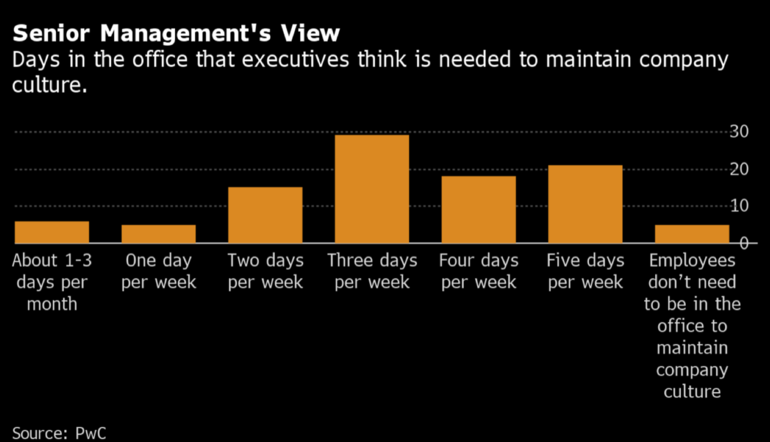
Bloomberg noted at least some atop the corporate ladder seem to be paying attention. In a Jan. 12 PwC survey of 133 executives, fewer than one in five said they want to go back to pre-pandemic routines. But only 13% were prepared to let go of the office for good.